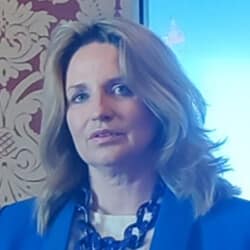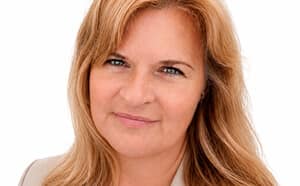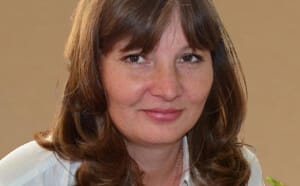


Tetiana Kireieva
Your organization field and mission
Zaporizhzhia Gymnasium No. 109 provides general secondary education, ensuring the teaching, upbringing, and comprehensive development of students. The school fosters key competencies and creates a safe, inclusive, and modern learning environment.
Mission: To provide high-quality and accessible education while developing creative, responsible, and competent individuals who are capable of critical thinking, lifelong learning, self-realization, and active participation in society.
Please tell us briefly about your role in the company / at your organization
Driver of Technology and AI: I implement cutting-edge trends—from SQL and app development on Glide to practical artificial intelligence (Experience AI). Media Literacy Expert: I teach children critical thinking and cybersecurity through top-tier programs (“Learn to Discern”, “Be Internet Awesome”). STEAM Innovator & EdCamp Community Member: I conduct unique integrated masterclasses (such as STREAM-start) and constantly bring fresh pedagogical ideas to the institution. Inspiring Class Teacher: I create a supportive environment for my students, organize unforgettable trips, and share their most memorable emotions (from victories to the graduation waltz). I am the innovative heart of the school, turning dry theory into live, modern skills.
Your interest in STEM
My interest in STEM wasn’t born out of textbooks—it grew from a desire to make learning alive, practical, and hands-on for my students.
It all started with a single step: designing a specialized, interactive STEM lesson for a 4th-grade class. Seeing how sparky and engaged the younger students became when combining technology with real-world problem solving changed everything for me.
That successful experiment quickly evolved into a larger professional path. I became an instructor for the interdisciplinary integrated STEM course, guiding older students through complex, real-world tech projects. For four consecutive years now, I have been actively co-authoring and authoring cutting-edge STEM and STREAM lessons, blending science, technology, reading, and art into a unified learning experience.
To keep sharpening my skills, I regularly immerse myself in the innovative atmosphere of the All-Ukrainian (Un)Conferences of the EdCamp Ukraine community. My passion for technology education also brought me into the competitive arena, where I serve as a judge at the World Robot Olympiad (WRO) and the FIRST International Initiatives (FII) during the All-Ukrainian “Robotica” Festival.
Today, STEM is not just a subject I teach—it is the core philosophy of how I help my students discover and build the future.
My First Role Model: My Mother, a Cello Teacher
My very first and most profound role model in life is my mother, who taught cello. Growing up, I witnessed her dedication firsthand and was fully immersed in an atmosphere of creativity, patience, and pedagogy. She showed me that being a teacher isn’t just a job; it is the art of listening to each child, helping them find their unique voice (or their unique sound), and step by step, through practice and effort, creating something beautiful.
The deep, velvety sound of the cello requires incredible precision, discipline, and, at the same time, an immense soul. It was from my mother that I inherited this approach: to teach with love, to believe in a student even when things don’t work out on the first try, and to pour your heart into what you do. Although I chose the world of technology and computer science, my work is built upon that exact same “music” I learned from her—a pursuit of harmony, inspiration, and personal growth.
My Current Role Models: The “White Crows” Community and My Students
Today, my sources of inspiration have shifted toward progressive, hands-on experience and the genuine spirit of children. My role models are:
Innovative Colleagues and the EdCamp Community (Educational “White Crows”): I am incredibly inspired by Ukrainian educators who don’t wait for change from above, but create it themselves. These are my like-minded peers who are passionate about media literacy and STEAM education—teachers who spend their nights mastering AI or no-code tools and are ready to share this knowledge through masterclasses. They are the ones driving Ukrainian education forward, regardless of any challenges.
My Students: As unusual as it might sound, children are my main contemporary role models. I am inspired by their spontaneity, their bravery, and their ability to instantly catch on to new technologies, build robots, and find genuine joy in life. Seeing how they are ready to dance their graduation waltz even through a heavy downpour and hail, or watching the passion with which they defend their first STEM projects, teaches me resilience, sincerity, and optimism.
Your studies
Weaknesses (Internal Challenges)
Psychological Exhaustion and Anxiety: Chronic stress reduces focus and concentration for both students and teachers. Learning requires double the effort just to absorb standard material.
Difficulty Focusing in Shelters: Limited space, a lack of standard technical equipment (interactive boards, individual computer stations), and constant ambient noise disrupt full immersion into STEAM projects or coding.
Interrupted Educational Process: Constant transitions from a regular lesson to an emergency descent into the shelter break the momentum of the class, causing students to lose track of hands-on work (such as writing code or modeling). Threats (External Threats)
Frontline City Status: The continuous risk of shelling and close proximity to the frontline pose a minute-by-minute threat to the life and safety of all participants in the educational process.
Martial Law Conditions: Unforeseen emergencies, threats of blackouts, and unstable internet/mobile connections can disrupt remote or blended learning at any given moment.
General Instability: The impossibility of long-term planning for lessons, hackathons, or off-site STEM events due to the unpredictable security situation in the region.
Main SWOT Conclusion: Even though these threats and weaknesses are critical, my ability to teach children AI, robotics, and no-code technologies under such conditions is a testament to the highest level of strengths and resilience.
My Advice to Girls and Women Seeking to Grow in IT and STEM:
Do not fear “complex” technologies or stereotypes: The world of code, artificial intelligence, SQL, and robotics has no gender. What truly matters here is your curiosity, logic, and perseverance. If I could map out a path from designing my first lesson for 4th graders to teaching a complex interdisciplinary STEM course and judging national robotics competitions, you can absolutely do it too!
Technology is a space for creativity, not just dry numbers: IT and STEM today are about so much more than just writing code. It is about creating mobile apps that help people, it’s about design, media literacy, and building a safe digital environment. Find what sparks your interest and create your own innovations.
Look for your “white crows” and build a community: Surround yourself with like-minded people who support your ambitions. Participate in professional communities (like EdCamp) and hackathons, find mentors, and never hesitate to ask for advice. Moving forward alongside those who share your values is much easier and far more exhilarating.
Allow yourself to make mistakes: In programming, just like in life, errors are simply part of the process (debugging). Every broken line of code or failed attempt is just experience making you stronger. The most important thing is not to stop out of fear of getting something wrong.
Develop flexibility and practice lifelong learning: The technology sector changes every single day. Stay open to the new: today it’s no-code platforms, tomorrow it’s new AI tools. Your superpower is your ability to adapt and constantly learn.
Remember: Your voice, your unique perspective, and your intuition are deeply needed in today’s technological world. Boldly take that first step—the future is being built right now, and you belong in it!
You at work
Here is the English translation of your comprehensive text:
When speaking about DEIS (Diversity, Equity, Inclusion, and Accessibility) initiatives within the context of my work at Zaporizhzhia Gymnasium No. 109, this approach serves as the foundation of our daily educational and upbringing philosophy. Especially now, under the conditions of a frontline city, these values have taken on a new, vital significance.
A prominent practical realization of these principles is our active implementation of coding activities within the framework of Europe’s Code Week, alongside our status as official participants in the Code Week Grant Program. This allows us to secure additional resources to make technology even more open and inclusive for our entire community.
Here are the key initiatives that I implement alongside my institution through the prism of DEIS philosophy and Code Week projects:
1. Diversity & Equity (In STEM/IT)
Engaging Girls in Technology (Girls in STEM): I actively break down stereotypes that IT is a “male-dominated” field. By involving girls in no-code app development (Glide), coding, AI studies (Experience AI), and participation in robotics competitions (WRO, FII), we ensure equal starting opportunities for all students, regardless of gender. During Code Week events, we place a special emphasis on girls’ digital creativity, shattering any existing biases.
Access to Innovation for Everyone: Regardless of a child’s initial level of digital skills or whether they have a computer at home, the material and technical support from the Code Week Grant Program allows us to provide everyone with the opportunity to try their hand at modern projects—from the 4th grade (where the initial spark for STEM is lit) to high school. We design a low barrier to entry so that every student can feel like a successful creator of code.
2. Inclusion (And Psychological Support)
Education Under Martial Law and Coding in Shelters: Creating an inclusive, safe environment inside the shelters during air raid sirens. Even during Code Week hackathons or workshops, we adapt the learning process so that children with varying levels of anxiety and emotional distress feel included and supported in their work. Collaborative coding or team-based algorithmic tasks in the shelter become a form of art therapy for the children, helping them detach from stress.
A Space of Trust Within the Class: As a class teacher, I implement principles of empathy and mutual support. We learn to be a unified team where everyone’s individuality is respected, navigating challenges together, traveling, and standing by each other during landmark moments (like our graduation waltz in the pouring rain and hail).
3. Accessibility (To Education and Digital Literacy)
Bridging the Digital Divide and Safe Coding: Through participation in programs like “Be Internet Awesome” and “Learn to Discern”, we make digital safety and media literacy accessible and understandable for every student and their parents. Within the scope of Code Week, we teach children not just how to code, but also how to understand cyber safety and data protection, transforming the internet into a secure environment for all.
Flexible Learning Formats: Developing adaptive learning materials for blended and remote formats. We select cloud-based and no-code tools that can be easily accessed even from a basic smartphone with a weak internet connection. This ensures continuous access to quality IT education for children who remain in the city, as well as those who were forced to relocate.
My Core DEIS Principle: Every child has the right to a modern, safe, and inspiring education. Thanks to initiatives like Code Week, we don’t just teach technology—we build an environment where every individual voice maters.
What I Am Most Proud of Accomplishing in My Work:
Winning the Grant Program and Driving Innovation: I am incredibly proud that our efforts received European recognition—we won a €1,000 grant from Code Week! These funds became a powerful resource for our school community, enabling us to enhance our hardware and technical setup, and opening up even more opportunities to provide children with free, high-quality, and modern education in coding, robotics, and digital creativity.
Resilience and Continuous Education in Shelters: Operating in a frontline city under martial law and constant air raid sirens, I managed to not just keep the educational process going, but to keep it exciting. Inside the shelters, my students don’t just wait out the danger—thanks to the grant support, they actively code, build projects, and study artificial intelligence through Experience AI. We turned severe challenges into a space of resilience.
Shattering Stereotypes and Advancing Equity (DEIS): It brings me immense pride to watch girls boldly break the myths of a “male-dominated IT field.” They write SQL queries, design their own mobile apps via no-code platforms, and win robotics tournaments (WRO, FII) on equal footing with boys. I am proud to have built a learning environment where financial or gender barriers disappear, clearing a path to success for every single child.
Professional Community Recognition and Moving Forward: For me, teaching means continuous growth. I am proud to have been awarded the City Mayor’s Prize, but even more so to remain an active part of the progressive EdCamp community of “white crows.” Leading masterclasses (such as our integrated STREAM-start for reading), and launching media literacy (Learn to Discern) and digital safety (Be Internet Awesome) programs is my personal contribution to building the future of Ukrainian education.
The Unbreakable Spirit of My Graduates: The ultimate reward for a class teacher is the character of her students. I am infinitely proud of my 9-B class. From our trip to Kyiv, which was entirely about genuine friendship, to our graduation waltz at the “Veselka” fountain cascade in Zaporizhzhia—danced through a heavy downpour, rain, and hail against all odds. That dance became the ultimate symbol of our shared strength.
My Ultimate Pride: I am proud to prove that even under the toughest conditions, Ukrainian teachers are capable of winning European grants, bringing in resources, and providing children with a world-class education. I teach children how to program code, but above all, I teach them to be strong, empathetic, and courageous individuals ready to change the world for the better.
Your point of view
Access to Education (Lifelong Learning): Online platforms allow women to master any tech profession from anywhere in the world, flexibly combining education with daily life either for free or affordably.
Financial Freedom and Remote Work: The digitalization of the job market, freelance platforms, and e-commerce give women the opportunity to work for international companies, launch their own startups, and achieve financial independence.
An Easy Start via No-Code and AI: Modern tools (like Glide or Bubble) lower the barrier to entry into IT. Creating mobile apps or automating business processes can now be done without deep coding skills.
Community Support: Social networks and professional platforms (Women in Tech, Girls in STEM) help women find mentors, shatter stereotypes, unite, and speak out for their rights.
Digital Safety: Media literacy and cybersecurity knowledge provide women with the tools to protect their data and confidently navigate the online space.
The Core Point: Technology has no gender. A line of code or an AI algorithm works exactly the same for everyone. Technology gives women the ultimate advantage—freedom of choice, a tool of influence, and the opportunity to build the future on equal terms.
Technology Has No Gender: The world of IT, AI, and robotics values your logic, curiosity, and perseverance—not your gender. Drop the “imposter syndrome” because you belong here.
Start Easy with No-Code and AI: You don’t have to memorize complex syntax right away. Build your first apps using no-code platforms (like Glide) and explore artificial intelligence. Seeing quick, tangible results will boost your confidence.
Mistakes Are Just “Debugging”: In programming, as in life, errors are not failures; they are simply part of the process. Every broken line of code makes you more experienced. The most important thing is to keep going.
Build Your Community: Surround yourself with like-minded people. Look for support in professional networks (Girls in STEM, Women in Tech) and never hesitate to ask for advice or mentorship.
Stay Flexible (Lifelong Learning): Technology evolves every day. Your ultimate superpower is your ability to learn quickly and adapt to innovation.
Remember: The tech world deeply needs your unique perspective, creativity, and intuition. Take that first step—the future is being built right now, and you should be a part of it!
My DEIS Goals for the IT Education Sector by 2030:
100% Digital Inclusion and Accessibility: My goal is to ensure that by 2030, every child in our region—regardless of the security situation, physical location, or family income—has continuous access to cutting-edge IT knowledge. I aim to scale our experience of holding classes in shelters and utilizing no-code tools into a fully adaptive educational system that remains resilient through any crisis.
Achieving Gender Parity in STEM/IT: I want the stereotype of a “male-dominated IT field” to be completely left in the past by 2030. Through sustained initiatives (like Code Week, Experience AI, and Girls in STEM), my goal is to reach a 50/50 ratio of girls and boys participating in coding, robotics, and AI development at the level of our school and local community.
Establishing a Regional DEIS Hub Built on Grant Success: Building upon our successful experience with the Code Week grant, I aim to create a sustainable network for attracting European resources. By 2030, I want to transform our initiatives into a permanent methodical hub that assists other teachers in frontline regions to implement the principles of diversity, equity, and inclusion in their own schools.
Integrating AI Ethics and Digital Literacy into the Core Educational Culture: My vision is that by 2030, the safe and ethical application of artificial intelligence, alongside media literacy, will be a foundational skill for every student. Coding must be viewed not just as a technical skill, but as a vehicle for creating accessible social projects that benefit the community.
My Vision for 2030: I want to see Ukrainian schools as spaces of absolute digital freedom. A place where technology serves as a bridge rather than a barrier, and where every girl and boy from Zaporizhzhia feels like a global innovator capable of competing at the highest international level.
To finish with
Human and empathy above all (Inclusion): I build a space of trust, where the voice of each child is important. It is important for me to notice the emotional state of the student, support him in a difficult moment and teach the class to be one family. My care extends to the entire living world – I love animals, support their rescue and protection.
Family and loved ones: My family is my unconditional support, source of strength and inspiration. I sincerely act with my children with a love of life, support their aspirations, am proud of my victories (such as in football) and cherish our family warmth as the greatest treasure. Equality and Breaking Stereotypes (DEIS): I believe that talent has no gender. I am passionate about proving that girls can be leaders in IT, coding and STEM, and I strive to give equal opportunities to every child, regardless of their circumstances or gender.
Resilience and optimism: Living and working in a frontline city is my daily choice to be strong. Coding in shelters, winning European grants or my class’s graduation waltz in the rain and hail are manifestations of my unwavering faith in the future.
Innovation and continuous development: Artificial intelligence, no-code, STEM and media literacy are what I live for. I am constantly learning myself, experimenting and inspiring colleagues in the educational community to change.My life motto: Technology is just a tool, and the main magic is people. You can teach how to program flawless code, but it is much more important to teach how to be a Strong, Kind, and Free Person in the circle of like-minded people and family.
Balance and Resource Preservation: Avoiding burnout while living and working in a frontline city, successfully balancing intense emotional dedication to my work, project leadership, and caring for my family.
Rapid Technological Evolution: Staying a step ahead by constantly adapting my lessons to AI, no-code tools, and digital trends that change on a monthly basis.
Scaling Leadership: Moving beyond the limits of a single school and transforming my experience (grants, Experience AI) into broader regional initiatives and mentorship for fellow educators.
New Ways to Motivate Students: Teaching critical thinking in a world where AI provides instant answers, and inspiring students to create their own unique digital products.
Psychological Resilience and Inclusion: Ensuring emotional safety and equal opportunities for children carrying diverse psychological states and backgrounds.
The Core Challenge: To preserve my inner light, optimism, and unwavering faith in people, remaining an inspiring leader for my students and colleagues no matter the circumstances.
Leader of Educational Transformations: I plan to actively develop in the field of educational management—leading large-scale innovative projects, attracting international donations for school digitalization, and speaking at top educational platforms (including EdCamp).
Harmonious Personality: For me, professional growth is inseparable from personal growth. My goal is to remain a happy mother, find inspiration in travel, make time to support important social causes (like animal rescue), and maintain a healthy balance between work and family warmth.
My Aspiration for 2030: Not just to adapt to the future, but to be the one who creates it. I want to see the results of my work in the successful, stereotype-free, and digital careers of my graduates who are changing the world for the better.
The current activity has been implemented in the framework of the Project: Code4Europe,
GA Number: 101158834. Official project website : https://codeweek.eu/