
[ September 9, 2026 by ECWT 0 Comments ]

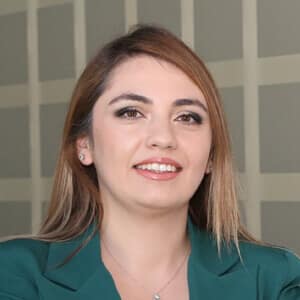
Sultan Nilay Sengol

Your organization field and mission:

Süleyman Demirel University is a research-oriented higher education institution committed to creating scientific, technological, and societal value through education, research, innovation, and collaboration.

Within this ecosystem, the Technology Transfer Office bridges academia, industry, entrepreneurs, and public institutions. Its mission is to transform knowledge and research into impact by supporting entrepreneurship, technology commercialization, university industry collaboration, intellectual property, and national and international innovation projects.

Please tell us briefly about your role in the company / at your organization:

As Technology Transfer Office Coordinator, I work at the intersection of academia, entrepreneurship, innovation, and industry. I coordinate programs that help researchers, students, entrepreneurs, and companies transform ideas and research outcomes into projects, collaborations, and scalable solutions.

My work includes entrepreneurship and technology commercialization programs, university-industry collaboration, national and EU-funded initiatives, mentoring, and capacity-building activities. I am particularly interested in how digital transformation, sustainability, and emerging technologies can create more inclusive innovation ecosystems and new opportunities for women and young people.

Your interest in STEM

My interest in STEM grew from a fascination with what happens when technology meets entrepreneurship and real-world problems. I was not originally trained as an engineer or computer scientist; my academic background is in entrepreneurship and business. This became an advantage because it taught me to approach technology through its human, economic, and societal impact.

Working within technology ecosystems showed me that STEM is not only about developing technology, it is also about asking the right questions, connecting disciplines, and turning knowledge into solutions. Today, my interest focuses particularly on artificial intelligence, digital transformation, sustainability, and technology-driven entrepreneurship.

My first role models were the educators who made me believe that curiosity and continuous learning could open doors beyond one’s original field of study.

Today, rather than having a single role model, I am inspired by women who move between disciplines and turn knowledge into impact researchers, entrepreneurs, educators, and leaders who make technology more accessible and inclusive. I particularly admire women who succeed professionally without feeling that they have to imitate traditional models of leadership and who create space for other women to succeed with them.

Your studies

My greatest strength has always been curiosity and the ability to connect different disciplines. Entrepreneurship taught me to see opportunities, while my academic journey taught me to question assumptions and build evidence.

My main weakness was initially believing that I needed to know everything before I could contribute confidently, particularly when entering technology-oriented environments without a traditional STEM degree.

The greatest opportunity has been interdisciplinarity. Moving between entrepreneurship, European studies, digital transformation, sustainability, and emerging technologies has allowed me to develop a perspective that would not have emerged from a single discipline.
The main challenge has been keeping pace with rapidly changing technologies while balancing academic development with an active professional career. Over time, I learned that continuous learning is not a temporary stage—it is part of working in innovation.

Do not wait until you feel completely ready. Technology changes too quickly for anyone to know everything, and confidence often comes after taking the first step, not before it.

Build strong foundations, but remain curious beyond your own discipline. Learn how technology works, how people use it, and what problems it can solve. Seek mentors, participate in international networks, develop your digital skills, and create projects rather than only collecting certificates.

Most importantly, do not eliminate yourself from an opportunity before anyone else has even evaluated you. Apply, speak, experiment, and allow yourself to grow into ambitious roles.

You at work

At Süleyman Demirel University, we contribute to DEIS through initiatives that broaden access to entrepreneurship, innovation, digital technologies, and international opportunities for students, researchers, entrepreneurs, and different stakeholder groups.

Through the Technology Transfer Office and our national and European collaborations, we support capacity-building activities in areas such as digital entrepreneurship, green transformation, emerging technologies, and innovation. We also work to connect academia with industry and entrepreneurship ecosystems, creating pathways for individuals from different disciplines and backgrounds to participate in innovation.

For me, inclusion means more than inviting people into existing systems; it also means designing innovation ecosystems in which different people have a genuine opportunity to contribute, lead, and create value.

I am most proud of creating bridges—between universities and industry, researchers and entrepreneurs, ideas and implementation, and local potential and international opportunities.

Throughout my career, I have contributed to entrepreneurship and innovation programs, technology transfer activities, national initiatives, and European projects that bring together academia, business, public institutions, and young innovators. Seeing an idea evolve into a project, a collaboration, or an entrepreneurial opportunity is still one of the most rewarding parts of my work.

What matters most to me is not a single project or title, but creating multiplier effects: helping people gain the confidence, networks, and opportunities that enable them to create further impact themselves.

Your point of view

Technology can reduce some of the traditional barriers that have limited women’s access to knowledge, networks, markets, finance, and professional opportunities. A woman can learn globally, build a company, access customers, collaborate internationally, and make her expertise visible without being limited entirely by geography or traditional institutional structures.

But access alone is not empowerment. Women must also participate in designing, developing, governing, and investing in technology. Especially in the age of artificial intelligence, women should not only be users of the future; they should be among its architects.

Learn the language of technology, but never underestimate the value of your own discipline. The future belongs increasingly to people who can connect different worlds: technology and society, research and business, sustainability and growth.

Build your network before you need it. Find mentors, but also become a mentor as you progress. Volunteer for projects that initially feel slightly beyond your experience. Learn to communicate your ideas clearly and make your work visible.

And remember: you do not need permission to become more ambitious.

By 2030, I hope we will have moved beyond discussing women’s participation simply in terms of numbers. Representation matters, but real inclusion means women having equal opportunities to lead research, build technology companies, attract investment, shape innovation policy, and participate in decisions about emerging technologies.

I would particularly like to see more women represented at the intersection of artificial intelligence, entrepreneurship, investment, and technology leadership. My goal is not only to see more women entering innovation ecosystems, but more women shaping how those ecosystems work.

To finish with

Curiosity, integrity, courage, continuous learning, collaboration, and impact.

I believe knowledge becomes more valuable when it is shared, leadership becomes stronger when it creates opportunities for others, and innovation becomes meaningful when it improves people’s lives. I also value the courage to remain a learner to question what we know, enter unfamiliar fields, and continually reinvent ourselves.

My next challenge is to deepen the connection between my academic research and my professional work, particularly in artificial intelligence, entrepreneurship, digital transformation, and sustainability.

I want to move from managing and supporting innovation to contributing more strongly to how innovation ecosystems are designed and shaped. This requires continuously developing my research capabilities, international networks, technological literacy, and leadership skills while remaining open to disciplines and perspectives beyond my own.

By 2030, I hope to have evolved into an internationally connected academic and innovation leader working at the intersection of artificial intelligence, entrepreneurship, sustainability, and European innovation ecosystems.

I aim to combine academic research with real-world impact: contributing to international projects, developing evidence-based approaches to entrepreneurship and innovation, mentoring the next generation of entrepreneurs and researchers, and building stronger bridges between Türkiye and European innovation networks.

Most importantly, I hope that some young women will be able to look at my journey and think, “There is a place for me there too.” For me, that would be one of the most meaningful measures of professional success.

The current activity has been implemented in the framework of the Project: Code4Europe,
GA Number: 101158834. Official project website : 
https://codeweek.eu/ 

[ August 30, 2026 by ECWT 0 Comments ]

Maria Roussou

Your organization field and mission:

The University of Athens (www.uoa.gr) is a leading higher education and research institution in Greece. Its mission is to provide high-quality education, advance scientific research and innovation, and contribute to society through the creation, dissemination, and application of knowledge.

Please tell us briefly about your role in the company / at your organization:

I am an Associate Professor at the Department of Informatics and Telecommunications of the National and Kapodistrian University of Athens (NKUA). My role involves teaching and supervising students, conducting research in the fields of virtual reality, human-computer interaction, and data visualization, and contributing to academic and research projects and collaborations.

Your interest in STEM

My interest in STEM developed towards the end of my undergraduate studies, when I discovered the potential of computer science applications in education and computer graphics. I was fascinated by how technology could be used not only to solve computational problems, but also to create new ways of learning, communicating, and interacting with digital content. This experience motivated me to pursue further studies and research in the field.

Dana Plepys (https://www.evl.uic.edu/dana/) was my first manager when I was a graduate students and reasearch assistant the Electronic Visualization Laboratory. Her gentle and fair conduct inspired me and guided my first steps as a manager later on.

Your studies

My biggest challenge was starting my undergraduate studies in Informatics in 1987, at a time when I had never used, or even seen, a computer before. Then again, when I went to grad school in the US. Adapting to a completely new field, a new country, and developing the necessary technical skills from scratch was challenging.

I would encourage girls and women to be curious, confident, and persistent. Computer science and technology need diverse perspectives, and there is no reason to see these fields as “men’s fields.” Build strong foundations, seek mentors and supportive communities, and do not be afraid to take on challenging opportunities.

Your point of view

Technology can empower women by providing access to education, knowledge, professional opportunities, and global networks, regardless of geographical or social barriers. It can also amplify women’s voices, support entrepreneurship and creativity, and enable greater flexibility in balancing professional and personal responsibilities.

Be curious, believe in your abilities, and do not be afraid to take up space in the technology sector. Build strong skills, seek mentors and supportive networks, and embrace challenges as opportunities to grow. Check out networks such as eugain.eu

I would also like to see inclusive practices become embedded in institutional culture, rather than treated as separate initiatives. And achieve what Norway has achieved: the percentage of female applicants to computer science studies in Norway has reached 36.7%.

To finish with

To inspire my students top “stretch and grow”.

Advancing to the highest level (Full Professor) in academia.

I hope to have completed a sabbatical which will then allow me to advance as a researcher in academia.

The current activity has been implemented in the framework of the Project: Code4Europe,
GA Number: 101158834. Official project website : 
https://codeweek.eu/ 
[ July 23, 2026 by ECWT 0 Comments ]

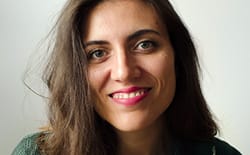
Brunella Balzano

Your organization field and mission

Education and Research.

Please tell us briefly about your role in the company / at your organization

I am a Senior Lecturer in Structural Design. My role involves designing and delivering lectures and workshops aimed at integrating the discipline of structural engineering within architectural practice. I also lead my own research on climate adaptation in the existing built environment, focusing on the development of smart technologies to monitor and mitigate damage within structural systems.

Your interest in STEM

My first vivid memory of STEM subjects dates back to my early teenage years, when I was first introduced to them at school. From the very beginning, I was fascinated by subjects such as physics and mechanics. Although I was still far from deciding what career path I wanted to follow, I knew that these subjects would have a significant influence on the choices I would eventually make and help shape my future.

I do not recall having one specific role model. Instead, I have always tried to learn from a variety of people and the qualities they embody. Growing up, I looked up to several adults in my family, each of whom inspired me in different ways. Over the years, I have been fortunate to encounter many remarkable individuals who have influenced my personal and professional growth. I continue to look up to them and draw inspiration from their example as I strive to become a better person every day.

Your studies

Strengths: One of the key strengths I developed during childhood, partly thanks to the education and values instilled at home, is discipline. I grew up with the belief that anything can be learned if enough dedication and effort are invested in it. This mindset has been fundamental to my success, helping me develop determination, resilience, and a strong sense of purpose.
Weaknesses: Balancing my studies with employment and a long daily commute was a significant challenge. For an extended period, I had to sacrifice sleep in order to meet my commitments, which inevitably affected my energy levels, well-being, and ability to maintain focus.
Opportunities: My education provided me with many opportunities, including the chance to build a life in a new country, establish a successful career, develop a professional network, and create a family. It opened doors both personally and professionally, allowing me to grow and achieve goals that might otherwise have seemed out of reach.
Threats: Time constraints and lack of sleep were constant challenges throughout my studies. In addition, the theoretical nature of academic learning occasionally clashed with the practical realities of professional practice. This sometimes led me to adopt an overly critical perspective when theoretical concepts did not align with workplace experiences.

To try it out! To get informed about various possibilities, make internships, follow webinars, courses, talk to people!

You at work

I am a member of my School’s Equality, Diversity and Inclusion (EDI) Committee, as well as an active member of the Marie Curie Alumni Association EDI Task Group. Each year, we engage in a range of activities aimed at promoting equality, diversity, inclusion, and a sense of belonging across our communities.

I am proud to have developed a highly multidisciplinary profile that is unique within my field. This has been possible because I had the courage to step outside my comfort zone and embrace new roles and opportunities, even when they required me to learn unfamiliar skills and knowledge. These experiences have broadened my expertise, strengthened my adaptability, and enabled me to approach research challenges from multiple perspectives.

Your point of view

Technology empowers women to participate fully in the workforce, drive innovation, and address complex societal challenges. By expanding access to education, reducing barriers to opportunity, and supporting more inclusive workplaces, technology plays a vital role in advancing gender equality and enabling women to reach their full potential.

Engineering is an incredibly broad field that encompasses a wide range of disciplines and opportunities. Let your curiosity be the driving force behind your journey, as technology and knowledge are constantly evolving, requiring continuous learning and professional development.
This advice extends beyond engineering. Success is not necessarily about working harder than everyone else, but about working consistently, with discipline and perseverance. Maintaining a commitment to steady progress and lifelong learning is, in my experience, the key to achieving your goals

By 2030, I would like Equality, Diversity, Inclusion, and Social Justice (DEIS) to be fully embedded in the culture of engineering and academia, rather than being viewed as a separate initiative or a box-ticking exercise. Success would mean that diversity is reflected at every career stage—from students and early-career researchers to senior leadership—and that everyone has equitable access to opportunities, resources, and career progression.

I also hope to see more inclusive research environments where different perspectives are actively valued, leading to more innovative and impactful solutions to global challenges. Flexible working practices, transparent recruitment and promotion processes, effective mentoring, and accountability for DEIS outcomes should become the norm rather than the exception.

Ultimately, I would like future generations to enter the sector without feeling limited by their gender, ethnicity, disability, socioeconomic background, or any other aspect of their identity. The focus should be on talent, potential, and contribution, in an environment where everyone feels respected, supported, and empowered to succeed.

To finish with

I value Curiosity, Courage, Inclusion, Integrity, Perseverance, Collaboration.

My future challenge is to continue growing as a leader while staying true to my values of curiosity, inclusion, and lifelong learning. I want to strengthen interdisciplinary collaborations that translate engineering research into real-world impact, while helping to build a more diverse and inclusive engineering community. Most importantly, I aim to continue learning, embracing new challenges, and creating opportunities for others to thrive.

By 2030, I hope to have established myself as a recognised leader in civil engineering, leading research that delivers meaningful benefits to our built environment. I also aspire to have expanded my role in mentoring early-career researchers, fostering interdisciplinary collaborations, and contributing to a more inclusive and diverse engineering community. Ultimately, I hope my career will be defined not only by scientific excellence but also by the positive impact I have on people and the opportunities I create for others.

The current activity has been implemented in the framework of the Project: Code4Europe,
GA Number: 101158834. Official project website : 
https://codeweek.eu/ 
[ July 15, 2026 by ECWT 0 Comments ]

Dimitra Anastasiou

Your organization field and mission

At LIST, we connect fundamental and applied research across natural, built, and industrial environments, while tackling global challenges like AI, space, and defence and security to turn science into tangible results.

Please tell us briefly about your role in the company / at your organization

I am a Lead Research and Technology Associate at the Luxembourg Institute of Science and Technology (LIST). I am currently coordinating the Erasmus project Chat4EFL: https://www.chat4efl.eu/. Chat4EFL aims to improve the quality and effectiveness of EFL instruction in secondary schools by using AI technologies to create personalized learning experiences that address diverse student needs (giftedness, bilingualism, special needs).

Your interest in STEM

I followed the literature path (ancient Greek, Latin, History). My STEM curiosity began later towards the end of my BA Translators Degree.

Your studies

S: Organisation, Professionalism
W: Stress, Anxiety of Failure
O: Going abroad, doing a PhD and postdocs afterwards
T: not good financing

To try it out! To get informed about various possibilities, make internships, follow webinars, courses, talk to people!

You at work

LIST is extremely active in DEIS. It has a gender policy, it participates in equality marches, in diversity breakfasts, special events on International Diversity Day, among others..There was also a leadership training program only for females, for which I was selected and learned a lot about mentorship, leadership models, efficient project and people management, etc.

To put my innovative ideas in practice. To make AI research as science engagement project. To inspire young generation.

Your point of view

I turn it around: Women can inspire technology. We need female voices to train AI models, to make tools more inclusive and diverse.

To dare! Not be afraid of other voices and believe in you! Build your expertise and network and you will reach your goal!

To finish with

Professionalism, integrity, transparency, loyalty

Continue to be a scientific leader, supervise and motivate the younger generation and particularly young females to STEM

The current activity has been implemented in the framework of the Project: Code4Europe,
GA Number: 101158834. Official project website : 
https://codeweek.eu/ 
[ July 9, 2026 by ECWT 0 Comments ]

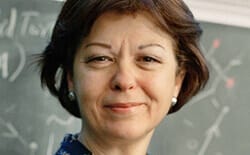
Sofia Lambropoulou

Your organization field and mission

The National Technical University of Athens is the top ranking higher education institution in Greece. It is structured according to the continental European system for training engineers, with an emphasis on solid background. The duration of courses leading, after the acquisition of 300 credit units to a Diploma, of Master’s level, is five years. The valuable work of NTUA and its international reputation are due to its well-organised educational andresearch system, the quality of its staff and students, and the adequacy of its technical infrastructure. NTUA graduates were pivotal to Greece’s pre-war development and to post-war reconstruction. The graduate engineers who staffed public and private technical services and companies were and remain by general consent, equal to their European counterparts. Many have been elected to distinguished teaching and research positions in well-known universities all over the world.

Under Article 16 of the Greek Constitution and consequent laws, and in accordance with its tradition and structure, the primary institutional component of the NTUA’s mission, effected through the integrated complex of studies and research, is to provide advanced higher education of outstanding quality in science andtechnology. For this purpose, NTUA operates as a State University with nine Schools, self-administered by the Senate, the Rector, the Vice-Rectors, the School Presidents, representatives of the academic staff and students from every School, as well as representatives from other university bodies.

Please tell us briefly about your role in the company / at your organization

I am a Professor in Mathematics specializing in Knot Theory, Low-Dimensional Topology and Applications. I teach Linear Algebra and Analytic Geometry; Algebra (groups, rings, fields); and Knot Theory, Low-Dimensional Topology and Applications undergraduate and postgraduate.

Your interest in STEM

I had a great teacher in junior high school, a man of utmost ethos and integrity with a great passion for mathematics and science, who taught with rigour, austerity and love at the same time. Through him I grew a like and a passion for mathematics.

My first role model was Madame Curie, then Michalis Manzaris, the mathematician I described above. While doing my PhD, my role model was the great man and mathematician Vaughan Jones, who had received the Fields Medal for his discoveries.

Your studies

At the time there was too much discrimination against women in the mentality of the Greek society, even from university professors who were about 94% of the total faculty. Some men, like my math teacher and my father encouraged me in pursuing maths. My family was strongly supporting success in school and in university studies. The greatest opportunity was to be able to go abroad (Warwick U) for postgraduate studies. The main threat was the time I was loosing in analyzing bad behavious toward me.

Do not hesitate, go for it. Mathematics is a great, deeply satisfactory area of Science.

You at work

For example: Young Minds NTUA section with the Committee for Gender Equality have organized journees on Women in Science; An initiative of employees in NTUA library have organized podcasts projecting some women faculty.  

I have been nominated to represent Greece in the project Women of Mathematics throughout Europe, so my portrait and interview figures in the exhibition and catalogue. I am mostly proud of my PhD students, especially for initiating female students into research and academic career.

Your point of view

Technology can empower everyone. Women can profit from searching about women in STEM, accessing information and projecting themselves in academic positions, conference participation, grants, etc.

Things have largely changed by now, women colleagues are welcome and appreciated. Do not forget to always be serious and professional.

To have more representation of women in higher ranks of academic positions as well as in administration (deans, vice-rectors, rectors).

To finish with

Integrity, academic ethos, equal opportunities, unbiased and impartial faculty decisions independent of politics.

To establish more my research area in Greece; to proceed with the (my) initiative to found the Hellenic Center of Mathematical Sciences.

By 2030 I will be approaching retirement. I expect my career to have grown regarding the research projects I am involved.

The current activity has been implemented in the framework of the Project: Code4Europe,
GA Number: 101158834. Official project website : 
https://codeweek.eu/ 
[ June 29, 2026 by ECWT 0 Comments ]

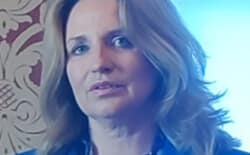
Vasiliki Liagkou

Your organization field and mission

The University of Ioannina is a prestigious Greek academic institution dedicated to excellence in higher education and cutting-edge scientific research across diverse disciplines. Meanwhile, the Industrial Systems Institute (ISI / INBIS) in Patras is a leading research center focused on technological innovation, industrial applications, and advanced engineering solutions. Together, both institutions foster a collaborative environment that drives impactful academic and technological advancements.

Please tell us briefly about your role in the company / at your organization

I am an Assistant Professor at the University of Ioannina and an Associate Faculty Member at ISI / INBIS in Patras. My academic and research focus lies in the fields of Cryptography and Cyber Security, subjects that I also teach through undergraduate and postgraduate courses at the university. In tandem with my teaching duties, I actively design and execute innovative research projects across both institutions.

Your interest in STEM

My interest in STEM was born during my school years, driven by a natural passion for mathematics. I always knew I wanted to study at a polytechnic university, and since computer science was highly recommended for its excellent career prospects, it felt like the perfect path for me. This combination of my love for math and the promising future of technology is what initially drew me into the field and shaped my academic journey.

My first role models were my mathematics teachers at school, who fueled my passion for problem-solving and inspired me to pursue a STEM path at a polytechnic university. Their encouragement was pivotal in turning my natural aptitude for math into a career.

Today, my current role models are the leading researchers and pioneers in the fields of Cryptography and Cyber Security, as well as my senior colleagues at the University of Ioannina and ISI/INBIS. I am deeply inspired by those who successfully bridge the gap between complex theoretical research and real-world industrial applications, constantly pushing the boundaries of digital security.

Your studies

During my studies at the polytechnic university, my biggest challenges within the SWOT framework were managing the high academic workload and navigating a heavily male-dominated field.
* **Weaknesses (Internal Challenge):** Initially, balancing the rigorous theoretical demands of advanced mathematics with the fast-paced, hands-on requirements of computer science was a major test of my time-management skills.
* **Threats (External Challenge):** Coming into a STEM field where women were significantly underrepresented felt intimidating at first. However, I chose to view this “threat” as an **Opportunity**. It motivated me to work harder, build resilience, and excel academically, which ultimately paved the way for my transition into the demanding fields of Cryptography and Cyber Security.

My advice to girls and women aspiring to enter the fields of Cryptography and Cyber Security is simple: “Go for it without hesitation.” This is a highly dynamic sector with incredible market demand and excellent career opportunities worldwide. Digital security is more critical than ever, and the industry is actively looking for skilled professionals. As women, your unique perspectives, analytical thinking, and problem-solving skills are not just welcome—they are necessary. Do not let stereotypes hold you back. You have the potential to truly stand out, innovate, and **make a real difference** in shaping the future of technology.

You at work

While institutions have established official committees and Gender Equality Plans, the actual job market often remains far more hostile, and the daily reality on the ground is starkly different from bureaucratic paperwork. Despite the presence of these committees on paper, their existence rarely reflects or mitigates the real-world biases, subtle exclusions, and systematic challenges that women still face every single day in the workforce.

As an academic and researcher, it is incredibly rewarding to see abstract concepts in **Cryptography and Cyber Security** transform into practical solutions that protect digital infrastructure. I am proud to actively contribute to this evolution through innovative research projects at both the University of Ioannina and ISI/INBIS in Patras.

Equally important to me is my work in the classroom. Training the next generation of engineers and scientists—and explicitly encouraging women to claim their space in a traditionally hostile and male-dominated market—feels like making a tangible, lasting difference in the STEM field.

What about you? What achievement in your own career or studies brings you the most pride?

Your point of view

Technology has the power to democratize opportunities, provide flexible career paths, and give women the tools to lead global innovations. However, a worrying trend has emerged in recent years: women are increasingly distancing themselves from Information Technology.

As we enter the era of Artificial Intelligence, AI literacy is fast becoming the new baseline for basic literacy; tomorrow, lacking AI skills will be the equivalent of being illiterate. For technology to truly empower women, we must urgently reverse this trend. By actively mastering AI and tech tools, women can ensure they are not left behind in a shifting job market, but are instead positioned to drive the technological revolution and close the gender gap from the inside out.

As we enter the era of Artificial Intelligence, lacking advanced digital skills will soon be the equivalent of being illiterate. While the daily reality of the job market can still be tough and hostile on paper, do not let that deter you. This sector offers incredible career prospects and immense market demand. By mastering tech, AI, and cybersecurity, you are not just securing a powerful future—you are bringing a vital perspective that will disrupt stereotypes and **make a real difference** in shaping the digital world.

By 2030, I want to see DEIS evolve from bureaucratic paperwork and formal committees into a tangible, daily reality.

Specifically, I hope to see:

* **Massive Tech Reclamation:** A definitive end to women distancing themselves from IT. As AI skills become the new baseline for basic literacy, women must actively master these tools to avoid being left behind.
* **A Fairer Job Market:** A shift away from the hostile biases that still exist on the ground, making women in highly demanding fields like Cryptography and Cyber Security the norm rather than the exception.

Ultimately, my vision for 2030 is an environment where women are not just included, but are actively leading the digital revolution.

To finish with

* **Real Impact over Bureaucracy:** I value tangible progress on the ground over formal paperwork. True inclusivity and practical research in Cyber Security matter far more than institutional checkboxes and committees.
* **Empowerment Through Tech Literacy:** In the era of AI, digital skills are the ultimate equalizer. I am committed to helping the next generation—especially women—master these tools so they are never left behind.
* **Resilience and Disruption:** I believe in facing a challenging market head-on, encouraging women to claim their space in STEM, and disrupting stereotypes by becoming leaders in technology.

The AI Evolution: Continuously adapting my research and teaching in Cryptography and Cyber Security to ensure students master fast-evolving AI skills before they become obsolete.

Balancing Dual Roles: Managing my teaching load at the University of Ioannina while consistently securing and executing high-impact research projects at ISI/INBIS in Patras.

By 2030, I hope to advance in my academic rank while expanding my research at the University of Ioannina and ISI/INBIS into large-scale, AI-driven cybersecurity projects. Ultimately, I aim to lead a thriving, diverse research team that bridges theoretical innovation with industrial applications, while establishing tangible, on-the-ground inclusivity for women in tech.

The current activity has been implemented in the framework of the Project: Code4Europe,
GA Number: 101158834. Official project website : 
https://codeweek.eu/ 

[ June 17, 2026 by ECWT 0 Comments ]

Viktoria Ryzhakova

Your organization field and mission

My organization works in the field of education. Its mission is to provide high-quality learning opportunities, support students’ intellectual and personal development, and help young people gain the knowledge, skills, and values they need for their future. We aim to create a safe, inclusive, and motivating learning environment where every student can grow and achieve their potential.

Please tell us briefly about your role in the company / at your organization

I work as a teacher, so my role is to educate, guide, and support students in their learning process. I prepare lessons, develop educational materials, encourage critical thinking, and help learners build both academic knowledge and practical skills. I also try to inspire students to be curious, confident, and open to lifelong learning.

Your interest in STEM

My interest in STEM was born during my school years, when I became especially interested in technology, logical problem-solving, and how different systems work. Later, this interest became stronger through my studies and professional experience. As a teacher and a postgraduate student, I am particularly interested in how science and technology can be applied to education, telecommunications, and modern digital systems. STEM attracts me because it combines creativity, analysis, innovation, and real-world problem solving.

My first role models were my teachers, because they showed me how knowledge can change people’s lives and open new opportunities. They inspired me through their dedication, professionalism, and ability to motivate students. My current role models are educators, researchers, and professionals who combine strong academic knowledge with practical impact. I especially admire people who contribute to science, technology, and education while continuing to learn and share their experience with others.

Your studies

One of the biggest challenges during my studies was balancing several responsibilities at the same time: academic work, teaching, research, and personal obligations. Sometimes time management was difficult, especially when deadlines overlapped. Another challenge was adapting to new technologies, research methods, and constantly changing educational and scientific requirements. At the same time, these challenges helped me become more organized, disciplined, and resilient. They also taught me how to work under pressure, solve problems effectively, and continue developing both professionally and academically.

My advice is to believe in your abilities and not be afraid of choosing a field that may seem difficult or traditionally male-dominated. Education, science, and technology need more women’s ideas, perspectives, and leadership. Be curious, keep learning, ask questions, and do not be discouraged by challenges. Every step in your studies helps you grow stronger, more confident, and more professional.

You at work

My organization supports the values of diversity, equity, inclusion, and sustainability by trying to create a respectful, supportive, and accessible learning environment for all students. We promote equal learning opportunities, encourage participation regardless of background, and support inclusive education. We also try to foster respect, cooperation, and personal development, while helping students become responsible and socially aware members of society.

What I am most proud of in my work is being able to make a real difference in students’ lives through education, support, and encouragement. As a teacher, I value the moments when students become more confident, motivated, and open to learning. I am also proud that I continue developing professionally through my postgraduate studies, combining teaching practice with academic growth, research, and a desire to contribute to positive changes in education.

Your point of view

Technology can empower women by giving them greater access to education, professional development, communication, and career opportunities. It helps women learn new skills, work remotely, build businesses, participate in research, and share their ideas more widely. Technology can also strengthen women’s independence, confidence, and visibility in society by opening doors to innovation, leadership, and lifelong learning.

Do not doubt that you belong in this field. If you are interested in education, science, or technology, follow that interest with confidence. Build your knowledge step by step, develop practical skills, and never stop learning. It is important to be persistent, open to new experiences, and willing to grow. Support from mentors and colleagues is helpful, but belief in yourself is the most important factor.

By 2030, I would like to see even stronger diversity, equity, inclusion, and sustainability in education and STEM-related sectors. I hope there will be more equal opportunities for women and underrepresented groups, more inclusive learning and working environments, and greater recognition of different talents and perspectives. I would also like to see sustainability become a natural part of institutional culture, decision-making, and long-term development.

To finish with

My main values are responsibility, respect, fairness, empathy, professionalism, and lifelong learning. I also value honesty, perseverance, and the ability to support others through knowledge and understanding. In both teaching and research, I believe it is important to combine competence with humanity, and ambition with integrity.

One of my main future challenges is to continue balancing my different professional roles as a teacher, researcher, and lifelong learner. I want to keep growing academically, deepen my expertise, and contribute more to both education and research. Another important challenge for me is to take part in changing the education system for the better by supporting innovation, improving teaching approaches, and helping education become more modern, inclusive, and connected with real-life needs. At the same time, I see these challenges as opportunities for growth, responsibility, and meaningful professional impact.

By 2030, I hope to have grown into a highly qualified educator and researcher who combines academic knowledge, practical teaching experience, and innovation. I would like to complete my postgraduate path, deepen my expertise in my field, and contribute not only to research, but also to positive changes in the education system. I hope my career will evolve in a way that allows me to support modern, inclusive, and forward-looking education, inspire students, and make a meaningful contribution to both science and society.

The current activity has been implemented in the framework of the Project: Code4Europe,
GA Number: 101158834. Official project website : 
https://codeweek.eu/ 
[ June 16, 2026 by ECWT 0 Comments ]

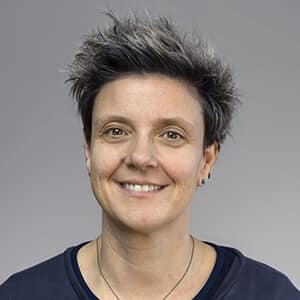
Marialena Vagia

Your organization field and mission

SINTEF’s field is applied research and technology development, and its mission is to create technology for a better society.  SINTEF researchers focus on combining research excellence with real‑world challenges, ensuring that our scientific work leads to practical, impactful solutions.

Please tell us briefly about your role in the company / at your organization

I work as a Senior Researcher at SINTEF, focusing on applied research that addresses real‑world industrial and societal challenges. My work combines scientific methods with practical problem‑solving, including developing and evaluating new technologies, collaborating with industry partners, and translating research results into solutions that can be implemented in practice.

Your interest in STEM

I’ve always loved mathematics. For as long as I can remember, I knew I wanted to work with numbers, logic, and problem‑solving. My interest in STEM didn’t have a specific starting point — it has simply always been there. I grew up wanting to become an engineer, driven by the excitement of understanding how things work and finding solutions to complex challenges. That early passion naturally led me into engineering and research, where I get to work with the things I’ve always enjoyed the most.

I never had one specific role model growing up, but I’ve always admired women who made a difference. I’m inspired by women who have fought for women’s rights, who have survived challenges, and who have thrived in male‑dominated fields. But it’s not only the well‑known figures who inspire me — I admire all women who push boundaries, create opportunities, and support each other. Their strength, resilience, and determination continue to shape my own path.

Your studies

I never had one single role model, but I’ve always been deeply inspired by women who make a difference. Growing up, I admired women who stood up for women’s rights, who refused to be limited by expectations, and who found the strength to thrive in male‑dominated fields.

But my role models aren’t only the famous ones. I’m equally inspired by everyday women — women who work hard, who support each other, who overcome challenges quietly, and who keep going even when things are difficult. Their resilience, courage, and determination have shaped how I see myself and the kind of person I want to be.

Just do it. There’s nothing to overthink, if you’re curious and motivated, go for it.

You at work

We are committed to diversity, equity, inclusion, and sustainability (DEIS) across our activities. This includes promoting gender balance and equal opportunities in hiring and project participation, encouraging diverse perspectives in research and innovation, and maintaining an inclusive and respectful workplace culture. Additionally, sustainability is embedded in our work, with a focus on responsible innovation and long-term environmental and societal impact.

I’m most proud of making things happen—bringing people together, navigating complexity, and turning ambitious ideas into real projects (even under tight deadlines!).

Your point of view

For me, technology has been a powerful enabler. It has opened opportunities to collaborate internationally, contribute to meaningful projects, and have a voice in shaping solutions. I believe real empowerment comes when women are not just users of technology, but also active creators of it.

We need you! Your ideas, perspectives, and skills are essential for shaping the future of this sector.

To finish with

I value being curious, working well with others, and actually getting things done.

Trying to do things well without overcomplicating them, and learning to say no when needed.

I just want to keep growing, doing interesting work, and being part of projects that matter.

The current activity has been implemented in the framework of the Project: Code4Europe,
GA Number: 101158834. Official project website : 
https://codeweek.eu/ 
[ April 28, 2026 by ECWT 0 Comments ]

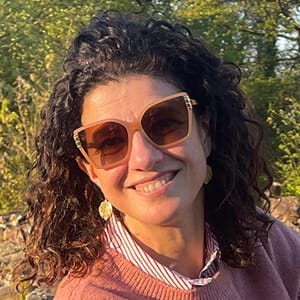
Sihem Amer-Yahia

Your organization field and mission:

Research and Education

Please tell us briefly about your role in the company / at your organization:

CNRS Research Director and Deputy Director of the lab.

You at work

I launched the DEI initiative foe the data management organization and the most impactful events are informal lunch, chatting events.

Your point of view

To finish with

Reliability.

Maintain high energy and excitement in my work.

Reach out to underrepresented communities in Africa.

The current activity has been implemented in the framework of the Project: Code4Europe,
GA Number: 101158834. Official project website : 
https://codeweek.eu/ 
[ April 28, 2026 by ECWT 0 Comments ]

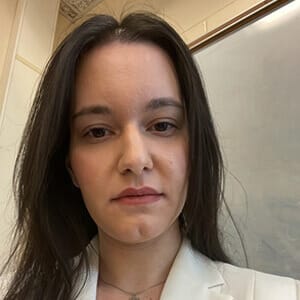
Efstathia Soufleri

Your organization field and mission:

Athena Research Center is one of Greece’s leading research institutions, advancing innovation in artificial intelligence, data science, language technologies, health informatics, and digital transformation. Its mission is to produce impactful research that benefits society, science, and industry.

Please tell us briefly about your role in the company / at your organization:

I work as a postdoctoral researcher focusing on trustworthy and efficient artificial intelligence. My research includes privacy-preserving machine learning, large language models, multimodal AI systems, and understanding how modern AI systems learn, generalize, and memorize information.

Your interest in STEM

My interest in STEM began early through mathematics. I was fascinated by how logic and equations could explain the world with clarity and elegance. Later, programming and artificial intelligence showed me how mathematics can be transformed into systems that solve real-world problems.

My first role models were teachers who believed in discipline, curiosity, and excellence. Today, I am inspired by scientists and innovators who combine technical brilliance with integrity and social impact, especially women who open paths for future generations.

Your studies

One of my biggest challenges was navigating highly competitive international academic environments while continuously adapting to new fields and expectations. At the same time, these experiences became strengths: resilience, independence, discipline, and confidence in solving difficult problems.

Believe that you belong in technical spaces. Do not underestimate your abilities, and do not let temporary setbacks define you. Build strong fundamentals, stay curious, ask questions, and keep going consistently.

You at work

Athena Research Center promotes equal opportunity, interdisciplinary collaboration, and inclusive participation in research and innovation. It supports merit-based excellence while encouraging diverse voices and international collaboration.

I am most proud of contributing original research in AI that combines scientific rigor with real societal value, especially in privacy-preserving machine learning and trustworthy AI systems.

Your point of view

Technology can empower women by expanding access to education, remote work, entrepreneurship, healthcare, financial independence, and global networks. It can also amplify women’s voices and leadership opportunities across every sector.

Develop confidence through competence. Learn deeply, stay persistent, and do not wait for permission to pursue ambitious goals. Your perspective is valuable, and the field needs more women leaders.

I would like to see equal representation in leadership, fair access to opportunities, transparent hiring and promotion systems, and AI technologies designed responsibly for all communities.

To finish with

Integrity, excellence, resilience, fairness, curiosity, discipline, and meaningful impact.

My future challenge is to continue growing as an independent researcher and leader while building impactful projects that bridge advanced AI research with real-world applications.

By 2030, I hope to be leading research initiatives in trustworthy artificial intelligence, mentoring younger scientists, collaborating internationally, and helping shape the future of ethical and high-impact AI.

The current activity has been implemented in the framework of the Project: Code4Europe,
GA Number: 101158834. Official project website : 
https://codeweek.eu/