
[ April 16, 2026 by ECWT 0 Comments ]

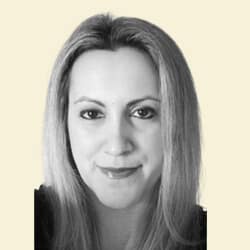
Anna Antonakopoulou

Your organization field and mission:

I-SENSE Group is a dynamic research unit of the Institute of Communication and Computer Systems (ICCS).Today, the Group brings together 10 cutting-edge research divisions and a global network of more than 300 partners, driving advancements in intelligent transport systems, smart and sustainable technologies, virtual and immersive environments, AI applications, robotics and industry 5.0 applications and beyond.

Please tell us briefly about your role in the company / at your organization:

Dr. Anna Antonakopoulou leads with a strong blend of strategic project management and team leadership. She is responsible for shaping and proposing project strategies, translating objectives into clear plans, and ensuring their effective execution through careful resource allocation, time scheduling, cost estimation, and continuous monitoring. Her role includes defining project activities, tasks, and deliverables, evaluating outcomes against expectations, and maintaining regular, accurate status reporting. With a close focus on follow-up and organisation, she ensures that projects progress efficiently, remain aligned with their goals, and deliver measurable results.

Alongside her project management responsibilities, Dr. Antonakopoulou provides leadership and supervision to the Smart Mobility team within the ISENSE Group of ICCS, a multidisciplinary group of 15 professionals including senior and junior researchers, project managers, and software and hardware developers. In this capacity, she coordinates and orchestrates the team’s activities and overall strategy, oversees project implementation, and ensures effective scheduling and monitoring across all workstreams. She also plays a key role in motivating team members and fostering the development of their skills and competences, creating an environment that supports both high performance and professional growth.

Your interest in STEM

My interest in STEM was born quite early, out of a natural curiosity about how things work and how ideas can be transformed into practical solutions. I was always drawn to subjects that combined logic, creativity, and problem-solving, and I found science and mathematics especially exciting because they offered a way to understand the world in a structured yet innovative way.

As I grew older, that curiosity developed into a deeper interest in engineering and technology. I became fascinated by the possibility of using scientific knowledge not only to explore complex challenges, but also to design systems and tools that can improve everyday life. This is what gradually led me toward STEM: the realization that it is a field where analytical thinking meets real-world impact.

Over time, this interest evolved into a professional commitment. Through my studies and career, I discovered that STEM gives me the opportunity to contribute to meaningful innovation, collaborate across disciplines, and help shape solutions for smarter, more sustainable societies. That combination of intellectual challenge and social value is what continues to motivate me today

My first role models were the people close to me who showed me the value of hard work, perseverance, and continuous learning. They inspired me to be curious, to aim high, and to believe that with dedication you can overcome challenges and achieve meaningful goals.

At present, I am inspired by people in science, technology, and leadership who combine knowledge with vision and use their work to create a positive impact on society. I especially admire those who support innovation, collaboration, and the development of younger generations, because they remind me that success is not only about personal achievement, but also about helping others grow.

Your studies

During my studies, one of my biggest challenges was managing the demanding workload and balancing different responsibilities at the same time. STEM studies often require strong commitment, continuous effort, and the ability to cope with pressure, so staying organised and consistent was very important.

Another challenge was building confidence in highly competitive and demanding academic environments. At times, this required perseverance and self-discipline, but it also helped me become more resilient and focused.

At the same time, these challenges became strengths, because they taught me how to work systematically, adapt to difficulties, and keep moving forward. They helped me develop both academically and personally, and they played an important role in shaping my professional path

My advice to girls and women who want to study in this sector is to believe in their abilities and not be discouraged by stereotypes or challenges. STEM needs diverse perspectives, creativity, and determination, and women have a very important role to play in shaping its future. It is important to stay curious, work hard, and not be afraid of difficult subjects, because confidence grows through effort and experience.

Most importantly, they should follow their interests with confidence and persistence. With dedication and passion, they can succeed, contribute meaningfully, and become role models for the next generation.

You at work

At ICCS and the I-SENSE Group, DEIS is not just a principle on paper; it is something we try to apply both in the way we work and in the kind of impact we want our research to have. ICCS has a formal Gender Equality Plan that focuses on areas such as governance, recruitment and career progression, flexible working, gender in research, participation in events and activities, and organisational culture. The plan states clearly that equality of opportunity is central to the Institute’s mission.

From my perspective within I-SENSE, this is reflected in a highly collaborative and multidisciplinary environment. I-SENSE is a research unit of ICCS within NTUA, with 10 research divisions, more than 100 researchers and engineers, and a strong network of partners, which naturally brings together people with different backgrounds, skills, and perspectives.

In my own area, as Division Leader of Smart Mobility Applied Systems, I see inclusion and sustainability as closely connected. Our work in smart mobility is driven by the goal of making mobility cleaner, safer, more efficient, and more inclusive, while supporting greener and more sustainable cities and communities.

So, if I had to describe our DEIS approach in a personal way, I would say that at ICCS/I-SENSE we aim to combine equal opportunities and an inclusive working culture with research and innovation that contribute to a more sustainable and people-centered future.

What I am most proud of in my work is being able to contribute to projects that have real impact on society, especially in the field of smart mobility and sustainable innovation. It is very rewarding to see ideas develop into practical solutions that can improve everyday life, support more efficient systems, and contribute to smarter and greener communities.

I am also proud of the teams I have led and supported throughout this journey. For me, success is not only about project results, but also about building strong collaboration, helping people grow, and creating an environment where innovation and teamwork can thrive. Seeing both projects and people develop successfully is one of the most meaningful achievements in my work

Your point of view

Technology can empower women by creating more opportunities for education, professional growth, entrepreneurship, and participation in decision-making. It gives women access to knowledge, digital skills, networks, and tools that can help them build confidence, develop their careers, and make their voices heard.

It can also reduce barriers by offering more flexible ways to work, learn, and collaborate, which is especially important in balancing different professional and personal responsibilities. At the same time, technology can support women in becoming innovators, leaders, and creators of solutions, not only users of them.

For me, the most important aspect is that technology can be a powerful enabler of inclusion and independence. When women have equal access to technology and digital opportunities, they are better positioned to contribute, lead, and shape the future in every sector.

My advice to girls and women who want to work in this sector is to trust their abilities, stay curious, and not be discouraged by challenges or stereotypes. Most importantly, they should believe that they belong in this field. With persistence, hard work, and passion, they can build a successful career, make a meaningful contribution, and inspire others to follow the same path.

By 2030, I would like to see DEIS become a natural and fully integrated part of the culture in our sector, not just a target or a policy discussion. I would like to see more women in leadership, more equal opportunities for career development, and more inclusive environments where different perspectives are truly valued.

I would also like to see technology and innovation developed with sustainability and social impact at their core, so that progress is not only measured by technical achievement, but also by the benefit it brings to people and society. For me, the goal is a sector where diversity is seen as a strength, inclusion is actively practiced, and sustainability guides the way we design and implement solutions.

To finish with

My core values are responsibility, integrity, collaboration, and continuous learning. I believe in working with professionalism and consistency, building trust through honesty and respect, and always aiming for quality and meaningful impact in what I do.

I also value teamwork and inclusion very strongly, because I believe that the best results come when people with different skills and perspectives work together toward a common goal. At the same time, I am deeply motivated by innovation and by the idea that our work should contribute positively to society and support a more sustainable future.

One of my future professional challenges is to keep growing as a leader in a fast-changing environment shaped by technology and innovation. This means continuing to learn, adapting to change, and guiding teams effectively.

At the same time, I want to balance strong project delivery with people-centered leadership, supporting collaboration, development, and meaningful impact

By 2030, I hope my career will have evolved through even greater contribution to impactful research and innovation, especially in areas that support smart, sustainable, and people-centered mobility solutions. I would like to continue growing as a leader, taking on broader strategic responsibilities while helping shape projects with strong scientific and societal value. At the same time, I hope to keep building and supporting strong teams, encouraging collaboration, innovation, and professional development.

The current activity has been implemented in the framework of the Project: Code4Europe,
GA Number: 101158834. Official project website : 
https://codeweek.eu/ 

[ April 16, 2026 by ECWT 0 Comments ]

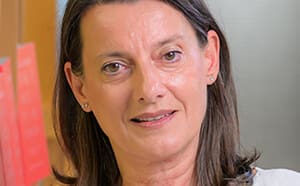
Eleni Christodoulou

Your organization field and mission:

Information Technology.

Please tell us briefly about your role in the company / at your organization:

Project manager in smartHEALTH EDIH Project, single cell genomics expert.

Your studies

Cultural differences, multi-ethnic environment, hard deadlines, loneliness sometimes.

Don’t hesitate. If you really want something you will make it at the end.

You at work

Inspiring my master thesis student (current role), bringing clients to smartHEALTH, big help to TF prioritization for a leukemia project in my postdoc

Your point of view

It can help them be more independent and much faster/productive. This helps especially mothers or women with “a lot of things on their plate” to juggle among tasks in time.

It is a very interesting field and many women thrive in it. It is not a “men’s world”

To finish with

Integrity, honesty, meritocracy.

The use of AI and its correct/careful incorporation in every day workn tasks.

More automation, faster and more accurate outcome.

The current activity has been implemented in the framework of the Project: Code4Europe,
GA Number: 101158834. Official project website : 
https://codeweek.eu/ 
[ April 16, 2026 by ECWT 0 Comments ]

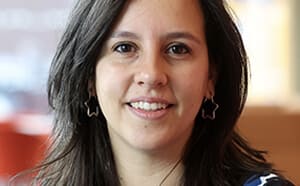
Vassiliki Kotroni

Your organization field and mission:

Key sector: Environmental research and sustainable development, with core activity spanning four thematic pillars: atmospheric environment, meteorology and hydrology, climate and climate change, and energy. Mission: To serve the research, scientific, technological and operational needs of its field through cutting-edge research, development of scientific instruments and software, provision of services to the scientific community, society and policy-makers, dissemination of scientific knowledge, and contribution to postgraduate and doctoral education.

Please tell us briefly about your role in the company / at your organization:

I am a Research Director at IERSD/NOA, holding a PhD in Meteorology. My role combines scientific research, project coordination, and applied support to society in the fields of weather, climate, and hydrometeorological hazards. I work on forecasting and modelling systems for extreme events, flood risk assessment, climate prediction, and climate services, while also contributing to national and European research projects, stakeholder engagement, and dissemination activities. Through this work, I support the development of science-based solutions for climate resilience, disaster risk reduction, and sustainable development.

Your interest in STEM

My interest in STEM began at an early age, when I developed a natural love for mathematics and science. I was especially drawn to problem-solving and to the challenge of understanding how things work.

My first role model was my mother, because she deeply believed in the value of education and passed this belief on to me. Later, my primary school teacher inspired me through his dedication and by cultivating in us a true love for learning. Τoday, I am mostly inspired by people who remain committed to justice, transparency, and integrity, and who achieve success without abandoning their principles.

Your studies

During my studies, one of my main challenges was to identify which direction within my education would best prepare me for the next stage of my career. At the same time, I had to develop my background in informatics and computational methods largely on my own, as my university studies did not provide relevant training, although these skills were crucial for the field I later followed, especially numerical weather prediction.

My advice is to study with dedication, work hard, and stay open to innovation. Equally important is to build a supportive environment by surrounding yourself with people who share your values and ideals, because this can make a real difference both in your professional path and in maintaining a healthy work–life balance.

You at work

A particularly important DEIS initiative in our organization is the establishment of a reintegration fellowship for women postdoctoral researchers who interrupted their research career because of maternity. This initiative helps address career discontinuities, supports equal opportunities in research, and reflects a meaningful commitment to inclusion, equity, and sustainability in the academic environment.

What I am most proud of in my work is having progressed in my career without losing my motivation, my sense of purpose, or my commitment to the values that guide me. I am proud that I continue to pursue each next step with consistency and determination, not only for my own development but also in a way that supports the people I work with and contributes to shared progress.

Your point of view

In our sector, technology has always progressed in parallel with research. For women, its empowering role lies not in a separate pathway, but in the way it broadens access to knowledge, strengthens participation in scientific work, enables collaboration, and supports a better balance between professional development and personal life.

My advice is to work hard, and stay open to innovation. In my field, research is not particularly male-dominated, so the main challenge is less about entering the sector and more about sustaining a healthy balance between personal life and professional growth.

By 2030, I would like to see more women holding positions of responsibility and leadership in my sector. Greater representation at this level would be an important step toward a more inclusive, fair, and forward-looking research environment.

To finish with

Integrity, honesty, meritocracy.

A key future challenge in my professional context is the need for new research positions in our sector. While the challenges facing society and science continue to grow, the permanent staff is ageing and decreasing, making renewal essential for the sustainability and future development of research.

A key future challenge in my professional context is the need for new research positions in our sector. While the challenges facing society and science continue to grow, the permanent staff is ageing and decreasing, making renewal essential for the sustainability and future development of research.

The current activity has been implemented in the framework of the Project: Code4Europe,
GA Number: 101158834. Official project website : 
https://codeweek.eu/ 
[ March 26, 2026 by ECWT 0 Comments ]

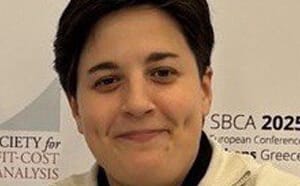
Maria Jose Galvez Trigo

Your organization field and mission:

Cardiff University’s key sectors are arts, humanities and social sciences, biomedical and life sciences, and physical sciences and engineering, and its mission is to create and share knowledge and educate for the benefit of all.

Please tell us briefly about your role in the company / at your organization:

At Cardiff University, I am a Lecturer (Assistant Professor) in Computer Science and Deputy Director for Equality, Diversity and Inclusion at the School of Computer Science and Informatics. I lead research projects on robotics and AI in health and social care, and I am Co‑Investigator and Executive Board member of the UK Robotics and Autonomous Systems (UK‑RAS) Network.

Your interest in STEM

My interest in STEM started at home, long before I knew what the acronym meant. My dad worked as a programmer and was passionate about informatics, so he was the first person to explain to me what a computer was and what it could do. As I grew older and started to show a genuine curiosity about technology and how things work, both my dad and my mum consistently encouraged me to follow that interest. Their support and enthusiasm for my curiosity were key in my decision to study Computer Science and Engineering, which became the foundation for my career in robotics and human-robot interaction.

My first role model was my dad. He showed me how exciting technology could be and encouraged me to believe that I could build a career in this field. As my career developed, I found new role models, including my late PhD supervisor, Professor Penelope Standen, whose dedication to improving the lives of people with learning disabilities through technology deeply influenced my work and values. Today, I am inspired by anyone who is bold enough to innovate, challenge the status quo, and follow their dreams, especially in ways that make STEM more inclusive and socially impactful.

Your studies

During my studies, one of my biggest challenges was dealing with self‑doubt and being made to feel I was not good enough, often linked to being a woman in STEM. Following a non‑traditional path (doing a part‑time PhD while working full‑time, after time in industry) and not fitting the ‘expected’ academic trajectory meant I was repeatedly required to prove my worth and fight stereotypes, while living in another country and away from my main support network. At the same time, I faced periods of job insecurity and delayed building a family until I felt more stable and established in my field. These challenges were difficult, but they also strengthened my resilience and now drive my commitment to making academic careers more inclusive and supportive for others.

My advice to girls and women who want to study in my sector is: your curiosity and motivation are enough reason to be here, even if you do not fit the stereotype. Seek out mentors, peers and communities that support you, and remember there is no single ‘right’ path into robotics, AI or computer science. Your perspective as a woman is not a weakness but a strength the field needs to create more inclusive technologies.

You at work

At Cardiff University there is a strong institutional focus on Equality, Diversity, Inclusion and Sustainability, with university‑wide EDI policies, awareness training and a clear sustainability strategy. In my School, I contribute as Deputy Director for EDI, and I am part of the management team for EMPOWER, a university-wide network supporting current and aspiring women Principal Investigators. My research on accessible, human‑centred robotics and AI also supports the University’s inclusive and sustainable innovation goals.

I am proud of every step I have taken in my career, and I am actively learning to recognise and celebrate each achievement instead of playing them down. I am especially proud of being a mum in a demanding field like robotics and AI, and of showing that it is possible to build a research career while caring deeply about family. I am also proud that my work and leadership roles focus on making robotics and AI more inclusive and accessible, and on helping create a more supportive environment for the next generation of diverse researchers.

Your point of view

Technology can empower women by giving them flexible access to education and skills, opening up new career and leadership opportunities, and connecting them with supportive networks and role models. When designed in a human‑centred and inclusive way, it also amplifies women’s voices and needs, enabling them to shape the technologies and decisions that affect their lives.

My advice to girls and women who want to work in this sector is to back your skills and keep learning, even when others underestimate you. Look for workplaces, teams and leaders whose values align with yours and where you feel respected, and do not be afraid to change environments that hold you back. Build and nurture your network (mentors, collaborators and peers) and remember that your lived experience and ideas are exactly what we need to create robotics and AI that work for everyone.

I would like DEIS in robotics and AI to move from isolated initiatives to being built into how we design technologies, build teams and measure success. By 2030, I want diverse voices, including women and other under‑represented groups, to be genuinely represented and empowered at every level of the sector, from students to leadership, so that our systems are fair, trustworthy and sustainable for the people and communities they serve.

To finish with

My core values are curiosity, empathy and integrity. I care about using robotics and AI in human‑centred, inclusive and accessible ways, and I value collaboration and community so others can thrive.

One of my main future challenges is growing my family while living in another country, away from my own support network, and at the same time continuing to establish myself as a leader in my field. Balancing these two ambitions in a demanding, fast‑moving sector will require setting clear boundaries, building strong local support systems and advocating for more family‑friendly, inclusive practices in academia and robotics.

I hope that by 2030 I will have consolidated my position as a recognised leader in human‑centred robotics and AI, ideally progressing towards (or into) a professorial role. I would like my work to have a clear impact on how accessible and inclusive technologies are designed and deployed, and to be in a position where I can use my experience to support and mentor the next generation of diverse researchers and practitioners in the field.

The current activity has been implemented in the framework of the Project: Code4Europe,
GA Number: 101158834. Official project website : 
https://codeweek.eu/ 
[ March 26, 2026 by ECWT 0 Comments ]

Georgia Papageorgiou

Your organization field and mission:

The Alliance of Excellence for Research and Innovation on Αephoria (AE4RIA) is an initiative for collaboration between research institutions, innovation accelerators, science-technology-policy interface networks, scientific associations, and academies focused on sustainable development. Our mission is to facilitate a science-driven and human-centric transformation towards the joint implementation of the Sustainable Development Goals of UN Agenda 2030, the Paris Agreement on Climate Change, and the European Green Deal.

Please tell us briefly about your role in the company / at your organization:

Economist with more than a decade of experience across academic research, European project development, and corporate leadership environments. Currently serving as Junior Researcher and Proposals Coordinator at AE4RIA, contributing to Horizon Europe proposal design, interdisciplinary research initiatives, and stakeholder engagement activities. Strong background in industrial organization, econometrics, and applied microeconomic analysis, combined with hands-on experience in project coordination, scientific writing, and dissemination strategy. Demonstrated ability to bridge rigorous economic analysis with real-world implementation, supporting evidence-based policy design, sustainability transitions, and strategic decision-making. Experienced educator and mentor at undergraduate and postgraduate levels, with additional leadership experience in corporate training, quality assurance, and service optimization. Recognized for analytical precision, organizational effectiveness, and the capacity to operate across research, policy, and operational contexts.

Your interest in STEM

My interest in STEM started with a strong inclination toward mathematics and analytical thinking. I was particularly interested in how structured, logical approaches could be used to understand complex problems. During my studies in economics, this interest deepened through econometrics and quantitative analysis, where I realized how powerful mathematical and statistical tools are in explaining real-world phenomena and supporting policy decisions. This experience led me to pursue a research-oriented path focused on data-driven and evidence-based approaches.

My first role models were my teachers, who demonstrated how knowledge, discipline, and curiosity can shape both personal and professional paths. Their ability to explain complex ideas and inspire critical thinking had a lasting impact on me. 

Today, I am inspired by researchers and leaders in the field of environmental and resource economics, particularly those who combine rigorous scientific work with real-world impact. Individuals who successfully bridge research, policy, and societal needs motivate me to continue developing my work in a way that contributes meaningfully to sustainable transitions.

Your studies

During my studies, one of my main strengths was my strong analytical thinking and ability to work with quantitative methods, which helped me perform well in demanding courses such as econometrics and advanced economics. I was also highly disciplined and committed to continuous learning.
A key weakness was balancing multiple responsibilities, especially as I was combining studies with teaching support and work experience. However, this gradually became a strength as I developed strong time management and organizational skills.
In terms of opportunities, my academic environment allowed me to engage with high-level research, develop technical skills, and gain teaching experience, which shaped my interest in pursuing a research-oriented career. 
One of the main challenges I faced was navigating the uncertainty of an academic path, particularly during my PhD candidacy years. This experience strengthened my resilience and adaptability, and helped me refine my professional direction toward applied research and project-based work.

My advice would be to trust your abilities and not be discouraged by stereotypes or self-doubt. Fields related to economics and STEM require persistence, curiosity, and analytical thinking, skills that are not defined by gender.
It is important to build a solid foundation in quantitative methods, seek supportive mentors, and actively engage in opportunities such as research projects or collaborations. At the same time, do not hesitate to step into leadership roles and make your voice heard.
Finally, remember that your perspective is valuable. Diverse viewpoints are essential for addressing complex challenges, especially in areas like sustainability and policy, where inclusive thinking leads to better solutions.

You at work

My organization promotes Diversity, Equity, Inclusion, and Sustainability through both research and community initiatives. A key example is the DEI Initiative of the European Association of Environmental and Resource Economists (EAERE), launched under the leadership of Professor Phoebe Koundouri. It focuses on fostering inclusivity in academia through dialogue, awareness, and actions addressing structural barriers.

In addition, DEIS principles are integrated into research and policy work, ensuring that sustainability transitions are not only environmentally effective but also socially inclusive and equitable

I am most proud of building a career that combines academic research, teaching, and real-world impact. From my early experience as a teaching assistant and lecturer to my current role in research and proposal coordination, I have consistently worked at the intersection of theory and application.
In particular, I take pride in leading and coordinating research proposals that translate complex ideas into funded projects. Over the past year, I contributed to the submission of more than 40 proposals and helped secure over €1.4 million in funding, supporting work on sustainability, climate, and socio-economic challenges.
At the same time, I value my experience in teaching, mentoring, and team leadership, as well as my background in corporate environments, which strengthened my ability to manage teams, improve processes, and deliver results. Overall, I am most proud of being able to connect analytical thinking, collaboration, and practical implementation in a meaningful way

Your point of view

Technology can empower women by increasing access to education, information, and professional opportunities, regardless of geographic or social barriers. Digital tools and online platforms allow women to develop skills, participate in research, and engage in global networks that were previously less accessible.
It also enables greater participation in decision-making processes, as data and digital solutions support evidence-based contributions in fields such as policy, business, and sustainability. At the same time, technology can foster entrepreneurship and financial independence, creating new pathways for women to lead and innovate.
Ultimately, when combined with inclusive policies and equal access, technology becomes a powerful enabler of both opportunity and representation.

My advice would be to build a strong foundation in analytical and quantitative skills, as these are essential in economics and research-related fields. At the same time, stay curious and open to interdisciplinary perspectives, as many of today’s challenges require combining knowledge from different domains.

Do not hesitate to take initiative, seek opportunities, and engage with research, projects, or networks early on. Having supportive mentors and collaborators can make a significant difference.

Most importantly, trust your abilities and be confident in your voice. Your perspective is valuable, especially in fields like sustainability and policy, where diverse insights are critical for developing effective and inclusive solutions

By 2030, I would like to see DEIS principles fully embedded in the economics and research sector, not as separate initiatives, but as a standard practice. This includes more balanced representation in leadership roles, research teams, and decision-making processes.

I would also like to see greater inclusivity in research itself, with more diverse perspectives shaping questions, methodologies, and policy recommendations, especially in areas like sustainability and climate transition.

Finally, I hope for more structured support systems, mentorship, funding opportunities, and institutional policies, that actively reduce barriers and create equal opportunities for women and underrepresented groups to thrive.

To finish with

My core values are integrity, curiosity, and responsibility. I value rigorous, evidence-based work and a commitment to producing knowledge that has real societal impact. I believe in collaboration, inclusivity, and respect for diverse perspectives, as these are essential for addressing complex challenges.

I am also guided by a strong sense of accountability and continuous learning, always aiming to improve both professionally and personally.

One of my main future challenges is to continue growing into a leadership role where I can guide complex, interdisciplinary projects while maintaining high scientific quality and real-world impact. This requires continuously strengthening both my technical expertise and my ability to coordinate diverse teams and stakeholders.

Another challenge is staying adaptable in a rapidly evolving field, particularly as sustainability, climate policy, and research funding landscapes become more complex and interconnected.

At the same time, I see it as a priority to contribute to more inclusive and collaborative working environments, ensuring that diverse perspectives are effectively integrated into research and decision-making processes.

By 2030, I hope to have further developed my career at the intersection of research, policy, and project coordination, contributing to impactful work in sustainability and socio-economic transitions. A key objective for me is to pursue and complete a PhD, strengthening my academic and research profile and deepening my expertise.

I also aim to take on more advanced leadership roles, managing complex interdisciplinary projects and contributing to high-level research and policy initiatives. Overall, I would like my work to have a clear and measurable impact, both scientifically and in real-world applications,

The current activity has been implemented in the framework of the Project: Code4Europe,
GA Number: 101158834. Official project website : 
https://codeweek.eu/ 

[ March 26, 2026 by ECWT 0 Comments ]

Evaggelia Pitoura

Your organization field and mission:

The University of Ioannina is a public university whose mission is to create and transfer knowledge, promote excellence in education and research, and foster diversity and inclusion.

Please tell us briefly about your role in the company / at your organization:

I am a Professor at the Computer Science and Engineering Department and my work involves teaching, advising students, and research.

Your interest in STEM

I liked both STEM and the humanities, but the clarity and structure of science, the ingenuity of engineering, and the novelty of the field at the time drew me to computer science.

I have never really believed in role models, as I think people should follow their own path in life. Still, seeing other women in the field matters, because it shows that choosing STEM is a real option.

Your studies

I think I faced the usual challenges and obstacles of any competitive environment. A more gender-specific challenge was that, as I was often in the minority, it was sometimes harder to connect socially.

My belief is that the most important thing is for people, regardless of gender, to choose a field of study that truly makes them happy. Then, they should study hard, build confidence, not be afraid to ask for advice, and learn to filter out comments that diminish them.

You at work

My organization is committed to diversity, equity, inclusion, and sustainability through its broader mission of promoting equal opportunities, respect for diversity, and responsible education and research.

I would not frame it as a single achievement, but I am proud of my students and of continuing to pursue research questions that I find meaningful.

Your point of view

Technology can empower women by removing practical barriers and by making knowledge, opportunities, and participation more accessible. But it is important for women to not only use technology, but also shape it.

Computer science is a rapidly evolving field, so it is important to keep studying and learning, follow new developments, and be ready to adapt.

I hope that by 2030 DEIS will no longer need to be singled out, because these principles will be naturally embedded in the field.

To finish with

I value integrity, curiosity, seriousness in work, respect for others, and independence of thought.

I believe AI is reshaping much of our field, as well as society more broadly, and adapting to this change, in both research and education, will be one of the main professional challenges ahead.

By 2030, I hope to continue contributing through research and teaching.

The current activity has been implemented in the framework of the Project: Code4Europe,
GA Number: 101158834. Official project website : 
https://codeweek.eu/ 

[ March 26, 2026 by ECWT 0 Comments ]

Angharad Watson

Your organization field and mission:

We focus on real-world, applicable solutions that are driven by collaboration and partnership, to ensure that we deliver research with impact so that new digital processes are designed, deployed, and adopted in ways that are transparent, inclusive and with security at their core.

Please tell us briefly about your role in the company / at your organization:

I bring together researchers, industry, charities, and the public sector to drive innovation and impact in the digital space.

Your interest in STEM

Probably when I was about 11 – I remember being totally amazed by the amount of information in the periodic table, and how Mendeleev had left gaps that predicted the properties of elements that weren’t yet discovered.


I remember admiring the acheivements of Dorothy Hodgkin, and being completely thrilled when I emailed an Oxford professor (Prof Lynne Cox) when I was 16, and she emailed me back. Eventually she taught me at undergraduate, which was brilliant. I am inspired by the ordinary women around me who are extraordinary in their own ways – the school friend who was written off by all our teachers as “trouble” and left school at 16, who has become an accountant. The friend who drove 200 miles for a job interview at 41 weeks pregnant, got the job, and then delivered her baby at home while her toddler napped. Friends who’ve overcome eating disorders, cancer, baby loss, and still show up every day, supporting other women and modelling leadership, resilience, and success.

Your studies

During my undergraduate degree I developed a chronic illness, which meant I needed to repeat a year, which was very challenging in a range of ways, including having to finish my degree in a different cohort to my friends. This taught me the power of commitment and resolve, as in the end, it was sheer effort of will to complete my studies. Completing my degree, however, was crucial for all the opportunities that followed.

Consider carefully what field you want to become an expert in, and follow that. Your expertise will always be valuable. However, there are many routes to success, and if you’re not thriving in a particular environment, consider changing that environment. Find a place where you are valued.

Your point of view

Technology can level the playing field in many ways – hybrid and home working, tech entreprenuership, automating many of the tasks that have traditionally fallen to women to manage, but for it to deliver for women, women must remain engaged at the design stage, to ensure that bias isn’t built in to new technologies.

Keep your skills up to date, and be flexible and responsive to the needs of the work market.

To finish with

Fairness, openness, transparency, loyalty, accuracy.

I am again moving into a slightly different field, so it will be the challenge of building my profile and competencies in that space. 

I hope to be looking at senior leadership/c-suite roles.

The current activity has been implemented in the framework of the Project: Code4Europe,
GA Number: 101158834. Official project website : 
https://codeweek.eu/ 

[ March 24, 2026 by ECWT 0 Comments ]

Aphrodite Tsalgatidou

Your organization field and mission:

University. 

Please tell us briefly about your role in the company / at your organization:

Professor.

To finish with

The current activity has been implemented in the framework of the Project: Code4Europe,
GA Number: 101158834. Official project website : 
https://codeweek.eu/ 
[ March 24, 2026 by ECWT 0 Comments ]

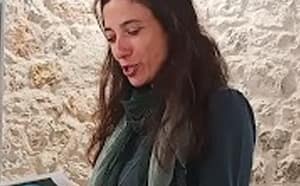
Eleni Athanasopoulou

Your organization field and mission:

Ensuring a healthy environment and well-being for current generations, while building a sustainable and resilient future for those to come, through innovative research and collaboration to address multiple forms of environmental degradation and the climate crisis. (Organization is IERSD/NOA, https://www.iersd.noa.gr/).

Please tell us briefly about your role in the company / at your organization:

I am a founding member of the Atmospheric Physics and Chemistry Group (APCG, http://apcg.meteo.noa.gr/) with an expertise in atmospheric numerical modeling. I have a research and co-ordination role in several European (and National) research projects of the National Observatory of Athens (NOA, Greece). I am the communication manager of the APCG research activities. I am a member of the Gender Equality and Anti-Discrimination Committee of NOA.

Your interest in STEM

My interest in STEM originated in high school. It was during my undergraduate studies in the Department of Geology that I developed a strong interest in environmental studies, while my interest in atmospheric science took shape during my postgraduate education.

I never had specific role models I wished to emulate. However, I have come to admire ordinary women who have managed to combine leadership and high-impact roles with a healthy and fulfilling quality of life. More broadly, I admire people who remain ethical and productive without being overwhelmed by work-related stress.

Your studies

My biggest challenge during my studies was the transition from the field of Geology to advanced studies in Atmospheric Physics and Chemistry. I had to remain competitive despite not having a strong background in Physics, while at the same time progressing in both the theoretical and practical aspects of numerical atmospheric modelling. Another major challenge was that I remained on project-based contracts throughout the duration of my postgraduate studies. In parallel, I had to balance my research role in projects not directly related to my PhD with the demands of my doctoral research. At the same time, I worked to build the foundations that would allow me to pursue a postdoctoral position abroad.

My advice to girls and women who wish to pursue studies in atmospheric science is to do so with confidence. In the context of the climate crisis, there is a strong need for fair and inclusive research, and therefore for greater female representation in our field. I would also encourage them to advocate for fair pay from the very beginning, so that they can fully dedicate themselves to their research without being distracted by the need to secure their livelihood.

You at work

In the framework of supporting new mothers, the National Observatory of Athens has established a research reintegration fellowship, as part of a broader institutional initiative. (https://www.astro.noa.gr/news/nea/ypotrofia-epanentaxis-stin-ereyna-gia-gynaikes-ereynitries-poy-echoyn-prosfata-teknopoiisei-i-teknothetisei/)

With regard to the social impact of my presence within my institution, I feel particularly proud of my effort to advocate for the inclusion of adoptive mothers among the eligible beneficiaries of the reintegration fellowship mentioned above. Adoption is an equally valid path to family formation, and this should be consistently reflected in every relevant initiative, provision, and institutional policy.

Your point of view

Technology strengthens women’s collaborative networks and supports the continuity of their professional work, especially as long as they continue to bear a disproportionate share of care responsibilities. At the same time, digital tools provide greater visibility to their work, creating more opportunities for recognition, participation, and leadership.

My advice is much the same as for pursuing studies: go for it, and do not hesitate to move forward in claiming positions of responsibility, coordination, and leadership. Break the glass ceiling.

Wishful thinking: a world where DEIS is so deeply embedded that it no longer needs defending, explaining, or discussing.

To finish with

The values that guide me are integrity over self-interest, support for what is fair and just — even when this may be uncomfortable, disadvantageous, or personally risky — authenticity and openness, a commitment to quality of life, and kindness.

The challenges I see ahead for myself include securing the professional stability that will allow me to focus on work with the highest possible impact for people and the planet. I also aspire to contribute to the wider dissemination of scientific knowledge in society, and to encourage girls and young women to engage with science through education.

By 2030, I hope to have meaningfully and impactfully brought together my two current professional commitments: environmental research and children’s literature.

The current activity has been implemented in the framework of the Project: Code4Europe,
GA Number: 101158834. Official project website : 
https://codeweek.eu/ 
[ March 24, 2026 by ECWT 0 Comments ]

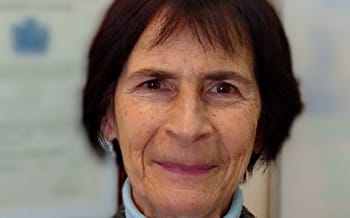
Athina Pakou

Your organization field and mission:

High level education and high accomplishments in Research including for his members key positions in Science all over the world.

Please tell us briefly about your role in the company / at your organization:

Till my retirement I was teaching in the physics Department and simultaneously I was conducting research, something that I continue to do  till today, in Greece but mainly in large Nuclear Physics facilities in Europe and USA.

Your interest in STEM

During my studies in the high school the professor in Physics inspired me.

In general a woman capable of progressing in science research but simultaneously sustaining a key role in her family.

Your studies

They should do it only if really they want it because the environment is tough.

Your point of view

Technology can empower both women and men, without it science can not be prsued.

To finish with

Respect: to respect and be respected, honesty, be supported only by our own capabilities.

Pursue the reach in my field to the highest possible level.

Till then scientific projects that I have opened I hope to be fully clarified.

The current activity has been implemented in the framework of the Project: Code4Europe,
GA Number: 101158834. Official project website : 
https://codeweek.eu/