
[ March 24, 2026 by ECWT 0 Comments ]

Zacharoula Smyrnaiou

Your organization field and mission:

The mission of NKUA is to advance knowledge through high-quality teaching, research, and innovation. The university aims to educate students across a wide range of disciplines, promote scientific excellence, and contribute to the cultural, social, and economic development of society. NKUA also supports international collaboration and the dissemination of research that benefits both Greece and the global community.
CTI develops and supports digital technologies, educational platforms, and research initiatives that improve learning and teaching in Greece. It focuses on advancing information and communication technologies (ICT) in education, producing educational materials, and supporting national systems such as digital learning platforms, school networks, and research infrastructures.

Please tell us briefly about your role in the company / at your organization:

At National and Kapodistrian University of Athens (NKUA), I work as a professor and researcher in STEM education and educational technology, focusing on developing innovative teaching methods, digital learning tools, and interdisciplinary programs that make science education more engaging and accessible. 

At Computer Technology Institute and Press “”Diophantus”” (CTI), as Vice-President, I contribute to designing and implementing digital learning platforms and innovation centers, supporting educators and students nationwide, and promoting inclusive and technology-enhanced STEM education.

Your interest in STEM

My interest in STEM (Science, Technology, Engineering, and Mathematics) emerged during my early academic studies in the physical sciences. My curiosity about how scientific concepts can be effectively taught and understood led me to focus on science education and the use of technology in learning environments. 

Over time, this interest developed into research on innovative teaching methods, digital learning tools, and interdisciplinary STEM education, with the goal of making science learning more engaging and accessible for students. My work combines scientific knowledge with educational technology, promoting inquiry-based learning, digital simulations, and collaborative learning environments to strengthen students’ understanding of STEM subjects.

My first role model was my science teacher in college, whose enthusiasm and clear explanations inspired my interest in STEM. Today, I am motivated by educators and researchers in STEM education who create innovative teaching methods and integrate technology into learning, encouraging me to make science education more engaging and accessible for students.

Your studies

During my studies, my biggest challenges were managing a heavy workload and adapting to new digital learning tools. Some STEM courses required deep problem-solving, which was initially overwhelming.

My advice to girls and women who want to pursue studies in STEM is to believe in their curiosity and capabilities. Don’t be intimidated by stereotypes or the challenges that may arise in traditionally male-dominated fields.

You at work

At NKUA, DEIS initiatives focus on promoting diversity, equity, and inclusion by supporting students from different backgrounds and providing scholarships, mentoring, and accessible academic resources. Sustainability is also emphasized through research and curricula that raise awareness of social and environmental responsibility. 

At CTI, DEIS principles are applied in digital learning tools and platforms, ensuring accessibility for all students while promoting inclusive education and environmentally sustainable technology practices.

I am most proud of leading the development of the 13 innovation centers in Greece, which aim to foster STEM education, research, and digital innovation across the country. These centers provide students and educators with access to modern learning technologies, collaborative environments, and innovative teaching methods, helping to make science and technology education more engaging and accessible. Seeing these centers actively support learning and inspire curiosity in students has been extremely rewarding.

Your point of view

Technology and Innovation centers can empower women by providing access to education, resources, and opportunities that might otherwise be limited. Digital tools and online platforms allow women to learn new skills, participate in STEM fields, and connect with mentors and professional networks globally. Technology also enables women to innovate, lead, and contribute to research and entrepreneurship, helping to reduce barriers, promote equality, and amplify their impact in society.

My advice to girls and women who want to work in STEM is to follow your curiosity and trust your abilities. Seek out mentors, embrace challenges, and don’t be afraid to explore new technologies and methods.

By 2030, I would like to see STEM education fully inclusive, equitable, and accessible to all students, regardless of gender, background, or ability. I hope that diversity and equity are embedded in every classroom, research project, and innovation center, and that technology is used to support sustainable practices and learning opportunities for everyone.

To finish with

My core values are curiosity, integrity, and inclusivity, guiding both my work and interactions. I strive to create collaborative, equitable, and sustainable learning and research environments where everyone can grow and succeed.

In the future, I expect challenges in keeping up with rapidly evolving technologies and educational methods while ensuring they are applied inclusively. I also aim to balance innovation with sustainability and equity, so that new tools benefit all students and educators.

By 2030, I hope my career will have grown to lead initiatives that transform STEM education, combining innovative technologies with inclusive teaching practices.

The current activity has been implemented in the framework of the Project: Code4Europe,
GA Number: 101158834. Official project website : 
https://codeweek.eu/ 

[ March 24, 2026 by ECWT 0 Comments ]

Angeliki Antoniou

Your organization field and mission:

Higher Education.

Please tell us briefly about your role in the company / at your organization:

I am an Associate Professor at the University of West Attica in the Department of Archival, Library, and Information Studies. My work focuses on teaching and research in cultural informatics, museum studies, and the integration of adaptive technologies in heritage settings. I lead innovative research projects that bridge the gap between technology and culture, aiming to enhance how we experience and preserve heritage.

Your interest in STEM

My interest in STEM was born during my Master’s studies in Human-Computer Interaction, where I first explored the synergy between humans and machines. It was then that I discovered the potential of bridging my background in social sciences with advanced technological applications. By integrating these two worlds, I found my passion for creating user-centered technology that is grounded in deep social and behavioral understanding.

My first and most enduring role model since I entered academia in 2004 is Emeritus Professor Christina Agriantoni. I have always deeply admired her not only for her extensive knowledge and academic excellence but also for her exceptional character and unique ethos. She is an amazing woman who has selflessly supported my career every step of the way, proving that true leadership is rooted in generosity and integrity.

Your studies

My biggest challenge was transitioning from a Social Science background to the technical demands of HCI, which required mastering new methodologies and “”thinking”” in STEM. I initially struggled to reconcile qualitative human behavior with rigid technical constraints, but this challenge eventually became my greatest strength in user-centered design.

My advice to girls and women is to embrace your unique background and never feel limited by a non-technical start, as the most innovative solutions in STEM emerge at the intersection of social sciences and technology. Seek out mentors and role models who lead with integrity and selfless ethos, as their guidance will be your most valuable asset during challenging transitions.

You at work

At the University of West Attica, we address Diversity and Equity through the operation of the Gender Equality and Anti-Discrimination Committee, which works to establish basic frameworks for equal treatment and mediation within the academic community. Regarding Inclusion, while we face the common resource challenges of public institutions, we strive to maintain accessible infrastructure and provide support to students with disabilities through departmental initiatives and digital accessibility guidelines. In terms of Sustainability, the university has taken its first steps by participating in international “Green” rankings and implementing basic energy-saving and recycling programs across our campuses to align with broader environmental goals.

Beyond my research in bridging social sciences with technology, I am most proud of the meaningful connections I’ve built with my students and the support I provide for their professional growth. Drawing inspiration from my own mentor’s selfless ethos, I strive to create an inclusive environment where students feel empowered to explore interdisciplinary paths.

Your point of view

Technology empowers women by providing flexible access to specialized knowledge and global networks, breaking down the traditional geographical and social barriers that often limit professional growth. In my field of Human-Computer Interaction, it specifically offers the tools to design inclusive systems that amplify diverse voices and ensure that digital spaces reflect human values rather than just technical constraints.

My advice to girls and women is to recognize that our greatest power lies in unity and collective support rather than individual competition. To truly thrive in this sector, we must first do the internal work of identifying and shedding our own internalized gender biases, as recognizing these hidden patterns is the only way to effectively spot and challenge them in the workplace. By combining this self-awareness with a commitment to lifting each other up, we can transform the technical landscape into a more equitable space for everyone.

By 2030, I would like to see DEIS evolve from a set of formal policies into a natural, internalized culture where diversity is recognized as a fundamental driver of technical innovation rather than a secondary goal.

To finish with

My core values are rooted in deep mutual respect and the belief that the strongest professional foundations are built on a human level first. I strive to cultivate long-lasting collaborations and teams where the focus is on collective support rather than rigid power structures or competitive games. By fostering an environment of transparency and genuine care, we can move away from traditional hierarchies and create a workspace where everyone feels empowered to contribute their best work through unity and shared purpose.

My greatest future challenge is maintaining a dynamic relevance as I grow older, ensuring that I continue to adapt to shifting societal needs so that my teaching remains resonant and impactful for future generations of students. Professionally, I am driven to find innovative ways to bridge the arts with science, moving beyond traditional boundaries to create a holistic academic space where creativity and technical rigor coexist.

By 2030, I hope to have solidified a seamless bridge between the arts and sciences, moving beyond theoretical boundaries to create practical, interdisciplinary frameworks that enrich both culture and technology.

The current activity has been implemented in the framework of the Project: Code4Europe,
GA Number: 101158834. Official project website : 
https://codeweek.eu/ 

[ March 24, 2026 by ECWT 0 Comments ]

Maria Lambrou

Your organization field and mission:

Education – Shipping Industry: serve current and future needs for highly educated people, to work in an array of maritime organizations, globally.

Please tell us briefly about your role in the company / at your organization:

I teach courses and conduct research on digital technology and innovation management specializing in the particular characteristics of shipping markets and organisations.

Your interest in STEM

Early in my school years, I discovered both the beauty of mathematics and my natural inclination toward mathematical thinking. Over time, this appreciation expanded beyond theory and into engineering, where I became fascinated by its power to influence society and drive meaningful change.

Marie Curie and all female colleagues who never abandoned their efforts and right to manage personal, family and professional life with dignity and distinction.

Your point of view

Supporting and enabling a life of principles and noble values.

Participate and contribute in a modernized and lucrative sector, serving the common good.

To finish with

humanity, empowerment

Keep being interested and creative in my profession. 

Experience and successfully manage professional challenges that I have not imagined. 

The current activity has been implemented in the framework of the Project: Code4Europe,
GA Number: 101158834. Official project website : 
https://codeweek.eu/ 

[ March 24, 2026 by ECWT 0 Comments ]

Dimitra Papadimitriou

Your organization field and mission:

IT Services.

Please tell us briefly about your role in the company / at your organization:

Design & lead AI solution system implementation.

Your interest in STEM

I was more interested in Science when I was in high school. My true interest in Technology occurred when I started studying Computer Science.

My sister was my first role model and still is. Later on struggling into the research world, it was really encouraging when I found a female mentor. Nowadays, at work I am still looking into a few female colleagues for inspiration.

Your studies

Strength:  Strong  Logical Thinking.
Weakness: Identify area of research.
Opportunity: Internships and meeting researchers and professionals around the world.
Threats: Imposter syndrome risk

You at work

Your point of view

Remote work enables women to join the workforce without geographic or time constraints.

Remember that you  do not have to prove more than your male counterparts.

Ensure fair access to promotions, leadership roles, and pay for historically underrepresented groups.

To finish with

Integrity, Respect and Accountability.

Staying true to myself and my values and at the same time remain in the current competitive and focused on achievements only academic environment.

The current activity has been implemented in the framework of the Project: Code4Europe,
GA Number: 101158834. Official project website : 
https://codeweek.eu/ 

[ March 24, 2026 by ECWT 0 Comments ]

Tamara Mchedlidze

Your organization field and mission:

Education.

Please tell us briefly about your role in the company / at your organization:

Teaching; Research; Coordination of Master’s program Applied Data Science; Board member of Women in Computer Sciences.

Your interest in STEM

I liked math back in elementary school. Was charmed by programming in the first year of my studies at the Faculty of Applied Mathematics. Then later fell in love with Logic and Graph Theory. However now, my interests shift more and more towards societal aspects. I apply data science, visualization methods, to analyze societal problems, like misperceptions and polarization.

I had hard times finding a role model and struggled because of this. I wanted a balanced life for myself, including passionate life of a researcher but also a family, and a peaceful life. I did not see any woman that would encompass all these qualities  around me. So, I was inspired by a collective role model. One of my inspirations was Prof. Dorothea Wagner, who is an amazing leader and inspiring personality.

Your studies

I studied at the faculty of Applied Mathematics and Physics at NTUA. Subject including Mechanics and Physics were a big challenge for me.

Spend time understanding what is your mission, what makes you happy and content. Try to incorporate these aspects into your work. Don’t listen to people who say it is hard to find an academic position. If you are passionate about what you do, the position will come. 

You at work

Women in Computer Science (WICS), Diversity and inclusion organization (EDI).

I am glad that I am able to shift my research interests accordingly to the change in my personal values and focus in life. It is not easy, because it requires shifting research methodologies, publication fields, research co.

Your point of view

More women and general diversity in the promotion committees, invited talk speakers. Overall more visibility for women, non-binary and people of color, because they are lucking as role models. At the same time, more possibility for diverse careers and career breaks.

To finish with

Peace, honestly with self and others, being authentic, deep knowledge, curiosity, fairness.

Staying true to myself and my values and at the same time remain in the current competitive and focused on achievements only academic environment.

I would like to be at least associate prof by then. Ideally I want to be a full professor and lead a group.

The current activity has been implemented in the framework of the Project: Code4Europe,
GA Number: 101158834. Official project website : 
https://codeweek.eu/ 
[ March 24, 2026 by ECWT 0 Comments ]

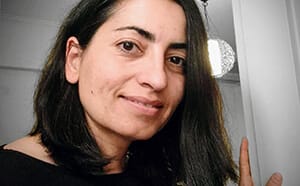
Dimitra Zarbouti

Your organization field and mission:

Higher Education, Research, and Innovation in ICT. The mission is to educate future engineers, conduct impactful research in wireless and mobile communications, and contribute to technological advancement and society.

Please tell us briefly about your role in the company / at your organization:

I work as Laboratory Teaching Staff, combining teaching, research, and educational innovation in wireless communications. I design and deliver hands-on laboratory experiences that support students’ practical understanding of telecommunications systems, while also exploring the use of AI to enhance learning and student support. In parallel, I contribute to European research projects through technical work and dissemination activities.

Your interest in STEM

My interest in STEM started at school, especially through my love for geometry. I was fascinated by how it combined imagination with visual outcomes, allowing me to “see” ideas take shape. It also gave me a strong sense of confidence, as I felt capable of understanding and creating something precise and meaningful. This early experience gradually led me toward engineering and a career in technology.

My first role model was a physics teacher who made us feel special by helping us understand how everyday phenomena work. There was a sense of magic in being able to explain things that are usually invisible, and that feeling stayed with me. Today, I am inspired by people who combine strong technical knowledge with the ability to make complex ideas accessible.

Your studies

During my studies, one of my biggest challenges was feeling that I truly belonged in a male-dominated environment. I was one of only a small number of women among hundreds of students, with very few female role models. As a first-generation student, I also lacked guidance and academic “know-how”. I had to overcome the feeling that I was there by “luck” and not by merit. Over time, I built confidence in my abilities and learned to trust that I deserved to be there.

Do not underestimate your abilities, even if you feel uncertain or out of place at the beginning. You belong in this field as much as anyone else. Stay curious, ask questions, and allow yourself time to grow — confidence comes with practice, experience, and many failures along the way.

You at work

While formal DEIS initiatives are still evolving, principles of inclusion and equal access are reflected in our teaching and academic environment. We aim to provide equal opportunities to all students, support diverse learning needs, and encourage participation from underrepresented groups in STEM.

I am most proud of contributing to students’ learning and confidence. Through hands-on laboratory teaching, I help students understand complex concepts and see how theory connects to real-world systems. Making technology accessible and meaningful to them is what I value most in my work.

Your point of view

Technology can act as a powerful “voice” for many women — a way to express themselves, be heard, and connect with others. It is deeply integrated into all aspects of life, and by engaging with it, women can actively shape conversations, opportunities, and the future.

By 2030, I would like to see more women represented across all levels of STEM, especially in academic and leadership roles. Beyond numbers, I hope for inclusive environments where everyone feels they belong, and where access to opportunities is not limited by gender or background.

To finish with

I value curiosity, integrity, and resilience. I believe in continuous learning, in making knowledge accessible to others, and in creating environments where people feel supported, respected, and able to grow.

One of my key future challenges is staying relevant in a rapidly evolving technological landscape. This requires continuous learning, adapting to new developments such as AI, and rethinking how I teach and support students. I see this not as a risk, but as a motivation to keep growing.

By 2030, I hope to still be keeping up with technology — and not the other way around — while maintaining a childlike mindset. I want to stay curious about the world and about what motivates new generations of students, and continue evolving as an educator.

The current activity has been implemented in the framework of the Project: Code4Europe,
GA Number: 101158834. Official project website : 
https://codeweek.eu/ 
[ March 24, 2026 by ECWT 0 Comments ]

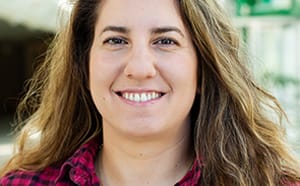
Aikaterini Vriza

Your organization field and mission:

Drug discovery and healthcare.

Please tell us briefly about your role in the company / at your organization:

I am a Principal Scientist working at the intersection of AI and chemistry, where I design and build autonomous, data-driven workflows to accelerate drug discovery and experimental research.

Your interest in STEM

My interest started early through curiosity about how materials and chemistry shape the world around us, and it grew stronger during my studies when I realized I could use science to solve real-world problems.

Early on, I was inspired by scientists who combined curiosity with impact. Today, I am inspired by interdisciplinary leaders who bridge AI and science to create transformative technologies.

Your studies

A key challenge was navigating interdisciplinary work—learning to combine chemistry, data science, and engineering. Over time, this became my greatest strength.

Be curious, don’t be afraid of technical fields, and embrace interdisciplinary learning—your unique perspective is a strength.

You at work

My organization actively promotes inclusive hiring, supports diverse talent development, and invests in sustainable scientific innovation and responsible AI practices.

I am most proud of building AI-driven systems that can autonomously design and execute experiments, bridging the gap between digital models and physical laboratories.

Your point of view

Technology democratizes access to knowledge, tools, and opportunities, enabling women to lead, innovate, and shape the future across industries.

Own your expertise, seek mentorship, and don’t wait to feel “ready”—growth comes from taking opportunities early.

I hope to see truly diverse leadership, equal access to opportunities, and inclusive environments where different perspectives are actively valued.

To finish with

Curiosity, integrity, impact, and collaboration.

Scaling impactful ideas into real-world systems while balancing technical depth with leadership and vision.

I aim to lead an autonomous research lab that integrates AI and experimentation to solve major scientific challenges and train the next generation of scientists.

The current activity has been implemented in the framework of the Project: Code4Europe,
GA Number: 101158834. Official project website : 
https://codeweek.eu/ 

[ March 24, 2026 by ECWT 0 Comments ]

Evanthia Bellou

Your organization field and mission:

IMBRIW is the leading public research institution in Greece, with a key role in the Mediterranean region and the EU, spearheading fisheries and inland water research.
IMBRIW is Greece’s largest public research institute focusing on marine and inland water ecosystems

Please tell us briefly about your role in the company / at your organization:

  • Pursue science-based conservation and management of aquatic ecosystems
  • Provide scientific guidance to decision makers
  • Supports public awareness and education for conserving marine and inland water environments

Your interest in STEM

During my studiesMy interest in STEM was born during my studies as an ichthyologist. Through studying fish biology and aquatic ecosystems, I developed a deep appreciation for environmental science and the complexity of natural systems. Working closely with ecological research helped me understand how scientific methods can be applied to real-world environmental challenges. This experience sparked my curiosity not only about biological systems but also about the broader scientific principles that shape our natural world. 

My first role models were the scientists I watched in documentaries while growing up. I was inspired by the way they traveled the world, explored new environments, and shared their discoveries with the public. What impressed me most was not only their knowledge, but their passion for educating others and contributing to a better understanding of our planet. 

At present, I am deeply inspired by my supervisor, Helen (Eleni) Kalogianni. She is an exceptional scientist who generously shares her knowledge and actively supports my professional development. Through her guidance, she has helped me grow scientifically and has given me valuable opportunities that contribute to my future career evolution.

Your studies

During my studies in ichthyology, my biggest challenge was strengthening my quantitative and statistical skills, as environmental research often requires handling complex datasets. At first, this was demanding, but I worked on improving through extra practice and guidance, which significantly increased my confidence in data analysis.

One of my main strengths was my passion for environmental science and field research, which kept me motivated even during demanding periods. The competitive nature of research opportunities was sometimes challenging, but it pushed me to become more disciplined, adaptable, and resilient.

You at work

At HCMR and within IMBRIW, DEIS principles are reflected both in our research mission and institutional culture.
In terms of Sustainability, our core work focuses on the conservation and sustainable management of marine and inland water ecosystems, directly contributing to environmental protection and responsible resource use. Regarding Diversity and Inclusion, HCMR promotes interdisciplinary and international collaboration, bringing together scientists from different backgrounds and expertise. The institute also engages actively with local communities, stakeholders, and schools, ensuring that scientific knowledge is accessible and inclusive. In terms of Equity, early-career researchers are supported through participation in international projects, mobility opportunities, and mentorship within research teams, fostering professional growth and equal development opportunities.

What I am most proud of in my work is the professional respect I have earned from my colleagues and supervisors. As a female scientist working extensively in demanding field conditions in rivers and remote environments, gaining recognition for my competence, resilience, and scientific contribution has been particularly meaningful to me. I am also very proud of receiving a scholarship from WWF Hellas to work on the conservation of a critically endangered endemic freshwater species in Greece. This opportunity marked the beginning of my PhD journey, which I have just started, and represents both recognition of my work and a significant milestone in my academic development.

Your point of view

Technology can empower women by increasing access to education, information, and professional opportunities. Digital platforms make it easier for women to gain skills, participate in global networks, and access scientific knowledge regardless of geographical or social barriers. It also enables flexibility in work environments, which can help balance professional and personal responsibilities. In STEM fields especially, technology creates new career pathways and gives women the tools to lead research, innovation, and entrepreneurship. Importantly, technology can amplify women’s voices — through communication platforms, data transparency, and visibility in professional spaces — helping to challenge stereotypes and promote equality. However, true empowerment requires inclusive design and equal access, ensuring that women are not only users of technology but also creators and decision-makers in shaping it.

By 2030, I would like to see DEIS principles fully integrated into environmental research and field-based science — not as policies on paper, but as everyday practice.
I would like to see more women in leadership roles within research institutes, especially in field-intensive disciplines. Fieldwork should no longer be perceived as gender-biased, but as an inclusive space where competence and collaboration matter most. I also hope to see stronger support systems for early-career researchers — transparent funding opportunities, fair evaluation processes, and mentorship structures that ensure equal professional growth. In terms of inclusion, I would like science to become more connected with society, involving local communities more actively in conservation and decision-making processes.

And finally, sustainability should go beyond research topics and be reflected in how institutions operate — from responsible resource use to long-term environmental accountability. By 2030, I would like DEIS to be embedded in the culture of our sector, shaping not only who participates in science, but how science is conducted and shared.

To finish with

My core values are integrity, resilience, curiosity, and responsibility.

  • Integrity is fundamental to me, both scientifically and personally. I believe in honest research, transparency, and taking responsibility for the impact of our work on society and the environment.
  • Resilience has shaped my journey, especially through demanding fieldwork and competitive academic environments. I believe challenges are opportunities for growth.
  • Curiosity drives my scientific path. The desire to understand natural systems and protect biodiversity is at the heart of my work.
  • And finally, responsibility, toward ecosystems, future generations, and the communities affected by environmental decisions. Science, for me, is not only about discovery but about contributing meaningfully to sustainability and conservation

One of my future challenges will be maintaining a healthy balance between personal life and professional growth. As I advance in my career, especially within research and field-based science, the demands can be intense and time-consuming.
I want to continue evolving academically and professionally, while also preserving space for personal well-being and meaningful relationships. I believe long-term success in science requires sustainability not only in ecosystems, but also in our own lives.
For me, the challenge is not choosing between career and personal life, but learning how to build both in a balanced and intentional way.

The current activity has been implemented in the framework of the Project: Code4Europe,
GA Number: 101158834. Official project website : 
https://codeweek.eu/ 

[ March 24, 2026 by ECWT 0 Comments ]

Vassiliki Markogianni

Your organization field and mission:

IMBRIW’s mission is to support the conservation and management of aquatic biological resources, habitats and ecosystems, provide scientific guidance and services to national, Mediterranean, EU and other International bodies on environmental conservation and management and sensitize the public at large on issues related to the conservation of aquatic biological resources, habitats and ecosystems.

Please tell us briefly about your role in the company / at your organization:

My research interests are focused on Environmental Monitoring and Management, Environmental Water Resources management, Integrated River/Lake basin management, GIS applications, Aerial/Satellite Remote Sensing.

Your interest in STEM

At the end of my postgraduate studies and during the preparation of my postgraduate thesis. My involvement with satellite remote sensing, a subject that in 2010 was still nascent, won me over and gave me the motivation to benefit more from the unlimited potential of this valuable tool with the aim of monitoring the quality of inland waters.

The professor that supervised my PhD along with the researcher whose scientific projects I am involved.

Your studies

To not give up and to truly love what they do. Science doesn’t pay a lot of money but it gives joy, pride and makes you feel useful to society. This is my big motivation to continue.

You at work

Regarding equality, I only know that male and female employees are about 50-50.

For the completion of my PhD. The topic was an idea I came up with on my own, I was working during the coronavirus pandemic and had a child at a very young age. I am very happy that I finally succeeded.

Your point of view

In the same way that it empowers men, I don’t detect any difference.

Go for it, just love it. Be patient and reading-lovers.

To finish with

Meritocracy, Scientificity, Ethics.

The biggest problem is the bureaucracy in terms of attracting funding and managing research programs. There is also uncertainty about the continuity of work based on the existence or absence of funding.

I would like to become a researcher or my work become more of a consulting nature.

The current activity has been implemented in the framework of the Project: Code4Europe,
GA Number: 101158834. Official project website : 
https://codeweek.eu/ 
[ March 20, 2026 by ECWT 0 Comments ]

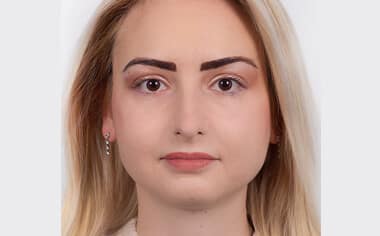
Aikaterini Tatsaki

Your organization field and mission:

The Biomedical Sciences Research Center (BSRC) “Alexander Fleming,” located in Vari, Greece, is a non-profit organization focused on advancing biomedical research, innovation, and education to combat human diseases. Its core mission is to understand the molecular mechanisms of diseases like cancer, immunity, and neurodegeneration, while developing novel diagnostic and therapeutic strategies.

Please tell us briefly about your role in the company / at your organization:

I am a postdoctoral researcher at the organization, where I conduct independent research, supervise Master’s and PhD students, write research grants, publish scientific papers, and teach in an international Master’s course.

Your interest in STEM

My interest in STEM developed during my school years, when I realized how much I enjoyed analytical thinking and problem-solving. I was particularly fascinated by how scientific research can generate new knowledge and have real-world impact. This motivation eventually led me to pursue advanced studies and a research career.

One of my early role models was Marie Curie, whose perseverance and groundbreaking work demonstrated that women belong in science at the highest level. Today, I am inspired by scientists and leaders such as Jennifer Doudna, whose contributions to CRISPR technology show how fundamental research can transform society.

Your studies

Funding uncertainties;
Balancing research, teaching responsibilities, and personal life.

Take opportunities to gain hands-on experience, through research projects, internships, or collaborations. Ask for guidance. It is also important to build a strong professional network. and surround themselves  with people who support and inspire them.

You at work

Our organization promotes Diversity, Equity, Inclusion, and Sustainability by ensuring equal opportunities in recruitment and career development, supporting mentorship programs, and fostering an inclusive and collaborative work environment. Sustainability is integrated into both our research activities and daily operations through responsible resource use and projects addressing societal challenges.

I am very  proud of my research contributions and of mentoring students, supporting them to reach their potential. On a personal level, I am deeply proud to be  the first member of my family to earn a PhD.

Your point of view

Technology can empower women by increasing access to education, professional opportunities, and global networks. Enable skill development and creating platforms for visibility and leadership.

When I started in STEM, I sometimes doubted whether I could succeed in such a challenging field. My advice to girls and women is to trust your curiosity, embrace challenges, and never be afraid to ask for guidance. Seek mentors, support each other, and remember that persistence and passion are very important.

By 2030, I hope STEM will be fully inclusive, with equal opportunities for women and underrepresented groups, widespread mentorship, and collaboration across cultures.

To finish with

I value collaboration, mentorship, and inclusivity, and I want  to contribute to research that positively impacts society.

My future challenges include balancing research, teaching, and mentorship while aiming for a permanent research position.

By 2030, I hope to have established myself in a permanent research position at a university or institute, leading impactful projects, mentoring the next generation of scientists, and contributing to a more inclusive and collaborative STEM community.

The current activity has been implemented in the framework of the Project: Code4Europe,
GA Number: 101158834. Official project website : 
https://codeweek.eu/