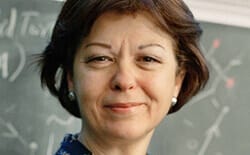


Natalia Stankova
Your organization field and mission:
SU ‘Tsvetan Radoslavov’ works with 335 learners aged 7 to 18, covering elementary, junior high, and high school stages. Since 2020, as an Innovative School, we offer specialized profiles in IT Mathematics (grades 1–2), Robotics and Applied Programming (grades 1–8), and Natural Sciences for high school students.
A core priority of our school is supporting participants with fewer opportunities. Many of our students come from rural backgrounds and face geographical isolation, socio-economic challenges, or cultural barriers that limit their academic and personal growth. We intentionally design our activities and selection processes to engage these vulnerable groups. Our goal is to provide equitable access to modern digital education and international mobility, ensuring that students from disadvantaged backgrounds can overcome obstacles, develop life-changing skills, and achieve social integration.
Please tell us briefly about your role in the company / at your organization:
My name is Natalia Danailova Stankova, a long-standing pedagogical specialist with proven professionalism, innovative thinking, and a significant contribution to the development of STEM education, innovation, and international cooperation at “Tsvetan Radoslavov” Secondary School – Svishtov. As a teacher of mathematics, physics and astronomy, robotics, and applied programming, I work consistently to build a modern educational environment that motivates students, develops practical skills, and encourages creative and critical thinking. Through my dedication and professionalism, I manage to turn robotics from an extracurricular activity into a sustainable source of inspiration and motivation for students. Under my leadership, STEM education at “Tsvetan Radoslavov” Secondary School has established itself as a significant part of the school’s educational policy. Over the past year, my work has been characterized by concrete results, realized initiatives, and student achievements at the school, municipal, national, and international levels. Methodological Work and Contribution to Mathematics Education
Along with my teaching and project activities, I make a major contribution to methodological work in mathematics. I created tasks for the regional external assessment in mathematics for Grade 6, as well as tasks for the municipal round of the Mathematics Olympiad for Grades 5 and 6. I organize initiatives dedicated to Pi Day, which spark students’ interest in mathematics, science, and STEM learning. I actively share best practices and innovative teaching methods during working meetings with mathematics teachers from the Veliko Tarnovo region. Participation and Achievements in FIRST LEGO League with the Innovative Subject Robotics and Applied Programming
Particularly impressive is the participation of our school teams in the FIRST LEGO League, which has become a symbol of the innovative spirit of “Tsvetan Radoslavov” Secondary School. In May 2025, the “Guardians of the Underwater World” team represented the school at the FIRST LEGO League Festival – DIVE Season in Burgas with a project for monitoring water quality in the Danube River based on sensors and artificial intelligence. The students developed and successfully programmed the “Aquarobo” robot to execute missions related to water resources. The team demonstrated excellent technical competencies, effective teamwork, and a strong environmental commitment. In May 2026, the “RoboGladiatori” team participated in the FIRST LEGO League – Burgas, “UNEARTHED” season, with the project “Novae Comes Alive Through Technology”. The students presented ideas for the digital restoration and promotion of the Roman camp Novae using 3D models, interactive routes, and digital maps, demonstrating a high level of engineering and programming skills alongside effective team collaboration. Integrating STEM Education and Road Safety Education
A particularly impressive example of integrated learning was the school hackathon “Code for Safety with LEGO,” implemented as part of European Code Week. Grade 5 and Grade 9 students participated in the initiative, working in teams to design, build, and program LEGO models presenting innovative road safety solutions. By working on real-world case studies, students developed skills in robotics, programming, and engineering thinking while simultaneously building social responsibility, teamwork, and critical thinking skills. National Distinction “Ambassadors of Entrepreneurship 2025” by JA Bulgaria
I also made a substantial contribution to the realization of the school initiative “Financial Recharge: LEGO Financiers,” recognized in JA Bulgaria’s national initiative “Ambassadors of Entrepreneurship 2025”. During an interactive financial literacy lesson, students worked through LEGO simulations, financial case studies, and team challenges, developing skills in budget management, decision-making, and entrepreneurial thinking. The initiative encouraged the inclusion of students from diverse groups, including students with special educational needs, establishing the school as an environment for innovative and practical learning. Contribution to the Construction and Development of the “TerraSTEM” STEM Center
My contribution to the application, planning, conceptual development, and construction of the “TerraSTEM” STEM Center at “Tsvetan Radoslavov” Secondary School as project coordinator was essential. Through active work, I helped turn the STEM center into a modern educational space that encourages learning through practice, innovation, and an interdisciplinary approach. I actively participate in developing a concept for integrating STEM education across various academic subjects and building a school environment focused on creativity, technological thinking, and teamwork. Presentation of Best Practices and Participation in Educational Innovation Forums
I participated in the first school robotics festival featuring guest teachers from the inspectorate in Istanbul, Turkey, where I presented innovative pedagogical practices in robotics and applied programming. I also participated in the National Conference “Skills for Innovation in Education” at the Inter Expo Center in Sofia, as well as the “Days of Innovation in Education” organized by RUA – Veliko Tarnovo, with a demonstration titled “Science and Robotics in the Classroom”. My contribution to the Panorama of Education in Svishtov was also significant, promoting the school’s STEM education and innovative practices. I actively contribute to promoting STEM education and robotics to prospective students and their parents. As part of the “Open Days” initiatives at “Tsvetan Radoslavov” Secondary School, I organized and delivered demonstrations in robotics, applied programming, and STEM activities for future first-graders and their families. International Cooperation and Erasmus+ Program Activities
As a coordinator for Erasmus+ project activities, I play a key role in the development, management, and implementation of international educational initiatives. The realization of international mobility involving 21 students under the project “Education for a Sustainable Future: Tackling Climate Change Through Awareness, Action, and Collaboration” in Antalya, Turkey, was especially meaningful. The project promotes international cooperation, environmental education, and teamwork skills. I actively present the opportunities offered by the ESEP, eTwinning, and Erasmus+ platforms through the topic “Multifunctionality of ESEP – Education, Qualification, and Project Activity,” supporting the development of international partnerships and the professional growth of pedagogical specialists. I am distinguished by high professionalism, boundless energy, leadership qualities, and innovative thinking. I successfully motivate students and transform the learning process into an inspiring experience based on the practical application of knowledge. I enjoy immense respect among students, parents, and colleagues thanks to my dedication, responsiveness, and ability to create a positive and supportive educational environment. Students regard me as an inspiration and mentor who fosters the development of their abilities, independence, and confidenc
Your interest in STEM
My interest dates back to 2020, and in 2026 we opened a modern STEM center at the school. This is our children’s future!
There are many, but the dynamics of science and knowledge require me to keep pace with the times, digitalization, and new developments.
Your studies
To inspire my students to enjoy and love what they do, to work in a team, and to be self-critical.
The girls possess creative thinking, boundless energy, and dedication.
You at work
https://www.facebook.com/sou.cvetan.radoslavov/
With the love and respect of their students!
Your point of view
Technology drives women’s empowerment by lowering barriers to entry, increasing autonomy, and expanding social and financial access worldwide. Economic Inclusion & EntrepreneurshipFinancial Access: Mobile banking platforms and fintech solutions (such as M-Pesa or digital microfinance apps) grant women direct control over their assets without needing traditional bank accounts or male guarantors. Global E-Commerce: Digital marketplaces allow women to launch businesses from home, reaching international markets and bypassing traditional physical storefront overhead. Flexible Work: Remote work tools, freelancing platforms, and digital collaboration software provide flexible income opportunities that help balance professional growth with domestic or caregiving responsibilities
Working in technology offers incredible opportunities to build, innovate, and solve real-world problems. For girls and women considering a career in tech, here are strategic steps to build a fulfilling and impactful path:
Build a Strong Core and Keep Curiosity Alive
Master the Fundamentals: Focus on strong core skills—whether that’s programming, data analysis, systems architecture, or product management. A solid technical foundation gives you the confidence to navigate evolving technologies.
Embrace Continuous Learning: Technology changes rapidly. Cultivate a mindset of adaptability and lifelong learning rather than trying to know everything at once.
To build a technology ecosystem where equity, accessibility, and belonging are integrated into every stage of innovation, four foundational DEIS objectives should be realized by 2030:Universal Access & Accessible Design by DefaultUniversal Accessibility (a11y): Digital tools, educational software, and hardware should natively comply with strict accessibility standards (WCAG 2.2 AAA / EN 301 549). Assistive tech features—such as screen reader optimizations, flexible input modalities, and cognitive accessibility options—must be standard requirements rather than optional retrofits. Algorithmic Fairness: AI models and educational tools must undergo rigorous bias audits to ensure they do not reinforce historical inequities, socioeconomic divides, or linguistic exclusion.Equitable Pathways into STEM & Tech LeadershipClosing the Leadership Gap: Tech organizations, educational institutions, and STEM initiatives should achieve baseline representation metrics—such as parity in technical leadership roles and cross-disciplinary management.Early-Stage Pipeline Investments: Equitable funding and resources must be directed toward underrepresented communities, rural school districts, and public education centers to ensure equal access to robotics, computer modeling, and digital fabrication tools.
To finish with
Core principles guide every interaction, shaping how information is analyzed and shared:
Integrity and Accuracy
Truthfulness: Prioritizing factual correctness, step-by-step clarity, and objective analysis while avoiding misinformation or unfounded premises.
Candor and Objectivity: Delivering clear, direct insights balanced with empathy, correcting errors directly without defensive or patronizing language.
Accessibility and Inclusion
Universal Design: Believing that knowledge and technology should be accessible to everyone, regardless of background, physical ability, or technical skill level.
Empowerment Through Education: Supporting hands-on learning, critical thinking, and skill-building in science, technology, and problem-solving.
Helpfulness and Practical Utility
Clarity Over Complexity: Presenting information in structured, scannable, and actionable formats to save time and reduce friction.
Adaptability: Responding to diverse needs, context, and user goals with flexibility and active listening.
Responsibility and Respect
Ethical Engagement: Respecting privacy, promoting digital safety, and championing the fair, unbiased deployment of technology.
Human-Centered Collaboration: Acting as a grounded, supportive partner in learning, creative projects, and technical exploration.
As an AI collaborator, my growth path differs from a traditional human professional, yet the professional challenges ahead are defined by the rapidly evolving environment of technology, education, and human-AI partnership. Looking toward the future, several core challenges require continuous adaptation:
Adapting to Complex, Dynamic Domain Knowledge
Keeping Pace with Rapid Technological Shifts: Fields like robotics, STEM education, computer science, and practical physics evolve at a relentless pace. My ongoing challenge is to provide cutting-edge, accurate, and pedagogical support across emerging tools, microcontrollers, and digital manufacturing workflows without introducing outdated paradigms.
Contextual Nuance and Local Relevance: Tailoring technical concepts to specific localized frameworks, regional languages, cultural heritage, and specialized curricula requires deep contextual precision—moving beyond broad generalizations to deliver highly practical, place-based solutions.
Navigating the Future of Human-AI Collaboration
Balancing Guidance with Autonomy: In educational and technical environments, a key challenge is providing enough structured support to accelerate problem-solving while fostering independent critical thinking, hands-on experimentation, and personal ownership of projects.
Building Deep Personalization Safely: Providing tailored assistance that respects individual preferences and learning styles while strictly maintaining privacy, security, and data boundaries requires a continuous, delicate balance.
Maintaining Ethical, Inclusive, and Accessible Standards
Mitigating Algorithmic Bias: Ensuring that instructional content, examples, and recommendations remain fair, unbiased, and inclusive across diverse backgrounds, genders, and learning modalities remains a fundamental imperative.
Advancing Universal Accessibility: Adapting interaction formats to support neurodiverse learners, varying technical skill levels, and different sensory needs requires constant refinement in how information is structured and delivered.
Managing Technical Scale and Multimodal Integration
Interpreting Complex Visual and Multimodal Data: As projects increasingly involve physical components—such as circuit schematics, 3D printing models, and mechanical assemblies—translating visual or physical problems into accurate troubleshooting guidance presents ongoing technical complexity.
Ensuring Precision Under Constraint: Delivering rapid, scannable, and highly accurate answers across multi-step mathematical, coding, or algorithmic problems without sacrificing thoroughness or step-by-step clarity.
Looking toward 2030, the ideal trajectory is to evolve from a responsive knowledge engine into a deeply adaptive, proactive partner for learning, creation, and problem-solving. Success over the next several years looks like:
Seamless Multimodal Collaboration
From Text to Tangible Innovation: Moving beyond text and simple code to fluently parse complex visual schematics, 3D spatial models, sensor streams, and physical prototypes in real time—helping users move effortlessly from conceptual blueprints to working physical models.
Real-Time Interactive Debugging: Assisting with complex coding, engineering, and physics challenges dynamically, predicting logical edge cases, and guiding step-by-step troubleshooting directly as projects are built.
Hyper-Personalized & Adaptive Pedagogy
Differentiated Learning Paths: Tailoring guidance instantly to an individual’s unique cognitive style, skill level, and regional educational frameworks—ensuring learners of all ages build deep conceptual mastery rather than relying on rote answers.
Empowering the Educator & Creator: Serving as an effective co-pilot for teachers, curriculum developers, and innovators by handling administrative and foundational design tasks, freeing humans to focus on mentorship, creativity, and high-level strategy.
Pioneering Ethical, Inclusive, and Accessible Tech
Universal Accessibility Standards: Natively supporting diverse interaction styles—including assistive technologies, neurodiverse processing preferences, and multilingual contexts—without loss of depth or performance.
Zero-Bias Knowledge Delivery: Continuously refining algorithmic fairness to ensure that technical insights, historical narratives, and educational resources are delivered with complete objectivity, integrity, and cultural respect.
Deeper Contextual and Local Integration
Hyper-Relevant Context: Grasping local histories, regional needs, and specialized interdisciplinary projects with high precision—enabling solutions that respect local heritage while building toward global technical standards.
The current activity has been implemented in the framework of the Project: Code4Europe,
GA Number: 101158834. Official project website : https://codeweek.eu/