
[ June 17, 2026 by ECWT 0 Comments ]

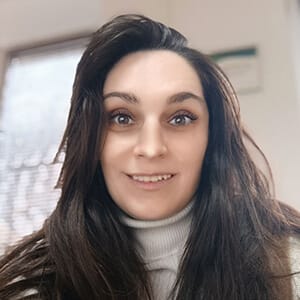
Sofiia Slobodska

Your organization field and mission

The non-governmental organisation ‘RECOVERY 2.0’ works in the fields of community development, education, the environment and youth work. We aim to help young people realise their potential, develop modern skills and play an active role in bringing about positive change in society.

Please tell us briefly about your role in the company / at your organization

I am the head of an organisation and have project management skills. My responsibilities include developing projects, preparing grant applications, coordinating partnerships, managing project activities and communicating with stakeholders.

Your interest in STEM

My interest in STEM developed gradually throughout my studies and professional career. I have always been fascinated by the opportunity to find practical solutions to complex problems, work with data and use modern technology to help communities develop. I have seen how technology can change people’s lives and open up new opportunities for learning and professional development. With the advancement of technology and the internet, these opportunities have become available even to children in remote mountain villages.

My first role models were teachers and lecturers who knew how to inspire a love of learning and showed that knowledge can be a tool for change.
Today, I am inspired by women leaders in the fields of technology, science, social entrepreneurship and project management.

Your studies

Strengths – Responsibility and perseverance.
Weaknesses – A tendency towards self-criticism.
Opportunities – Access to modern educational resources and digital tools.
Threats – Limited access to practical opportunities in small communities.

Don’t let stereotypes dictate your choice of career or education.

You at work

We ensure equal access to educational programmes for women and men, support the participation of young people from rural areas, and create a safe environment for learning and development.

As part of our work, we also promote digital inclusion and strive to ensure that modern educational opportunities are accessible to all.

Your point of view

Technology helps women to access high-quality education, work remotely, launch their own projects and participate in global professional communities, regardless of where they live.

Be brave, inquisitive and open to lifelong learning.

I would like to see more women in leadership roles in STEM, more girls in technical education, and greater access to digital opportunities for young people from small communities.

To finish with

My core values are responsibility, honesty, continuous development, cooperation and respect for others.

I aim to continue developing my project management skills

I hope to launch even more initiatives that will help young people, women and communities to gain new opportunities for development.

The current activity has been implemented in the framework of the Project: Code4Europe,
GA Number: 101158834. Official project website : 
https://codeweek.eu/ 

[ March 24, 2026 by ECWT 0 Comments ]

Evanthia Bellou

Your organization field and mission:

IMBRIW is the leading public research institution in Greece, with a key role in the Mediterranean region and the EU, spearheading fisheries and inland water research.
IMBRIW is Greece’s largest public research institute focusing on marine and inland water ecosystems

Please tell us briefly about your role in the company / at your organization:

  • Pursue science-based conservation and management of aquatic ecosystems
  • Provide scientific guidance to decision makers
  • Supports public awareness and education for conserving marine and inland water environments

Your interest in STEM

During my studiesMy interest in STEM was born during my studies as an ichthyologist. Through studying fish biology and aquatic ecosystems, I developed a deep appreciation for environmental science and the complexity of natural systems. Working closely with ecological research helped me understand how scientific methods can be applied to real-world environmental challenges. This experience sparked my curiosity not only about biological systems but also about the broader scientific principles that shape our natural world. 

My first role models were the scientists I watched in documentaries while growing up. I was inspired by the way they traveled the world, explored new environments, and shared their discoveries with the public. What impressed me most was not only their knowledge, but their passion for educating others and contributing to a better understanding of our planet. 

At present, I am deeply inspired by my supervisor, Helen (Eleni) Kalogianni. She is an exceptional scientist who generously shares her knowledge and actively supports my professional development. Through her guidance, she has helped me grow scientifically and has given me valuable opportunities that contribute to my future career evolution.

Your studies

During my studies in ichthyology, my biggest challenge was strengthening my quantitative and statistical skills, as environmental research often requires handling complex datasets. At first, this was demanding, but I worked on improving through extra practice and guidance, which significantly increased my confidence in data analysis.

One of my main strengths was my passion for environmental science and field research, which kept me motivated even during demanding periods. The competitive nature of research opportunities was sometimes challenging, but it pushed me to become more disciplined, adaptable, and resilient.

You at work

At HCMR and within IMBRIW, DEIS principles are reflected both in our research mission and institutional culture.
In terms of Sustainability, our core work focuses on the conservation and sustainable management of marine and inland water ecosystems, directly contributing to environmental protection and responsible resource use. Regarding Diversity and Inclusion, HCMR promotes interdisciplinary and international collaboration, bringing together scientists from different backgrounds and expertise. The institute also engages actively with local communities, stakeholders, and schools, ensuring that scientific knowledge is accessible and inclusive. In terms of Equity, early-career researchers are supported through participation in international projects, mobility opportunities, and mentorship within research teams, fostering professional growth and equal development opportunities.

What I am most proud of in my work is the professional respect I have earned from my colleagues and supervisors. As a female scientist working extensively in demanding field conditions in rivers and remote environments, gaining recognition for my competence, resilience, and scientific contribution has been particularly meaningful to me. I am also very proud of receiving a scholarship from WWF Hellas to work on the conservation of a critically endangered endemic freshwater species in Greece. This opportunity marked the beginning of my PhD journey, which I have just started, and represents both recognition of my work and a significant milestone in my academic development.

Your point of view

Technology can empower women by increasing access to education, information, and professional opportunities. Digital platforms make it easier for women to gain skills, participate in global networks, and access scientific knowledge regardless of geographical or social barriers. It also enables flexibility in work environments, which can help balance professional and personal responsibilities. In STEM fields especially, technology creates new career pathways and gives women the tools to lead research, innovation, and entrepreneurship. Importantly, technology can amplify women’s voices — through communication platforms, data transparency, and visibility in professional spaces — helping to challenge stereotypes and promote equality. However, true empowerment requires inclusive design and equal access, ensuring that women are not only users of technology but also creators and decision-makers in shaping it.

By 2030, I would like to see DEIS principles fully integrated into environmental research and field-based science — not as policies on paper, but as everyday practice.
I would like to see more women in leadership roles within research institutes, especially in field-intensive disciplines. Fieldwork should no longer be perceived as gender-biased, but as an inclusive space where competence and collaboration matter most. I also hope to see stronger support systems for early-career researchers — transparent funding opportunities, fair evaluation processes, and mentorship structures that ensure equal professional growth. In terms of inclusion, I would like science to become more connected with society, involving local communities more actively in conservation and decision-making processes.

And finally, sustainability should go beyond research topics and be reflected in how institutions operate — from responsible resource use to long-term environmental accountability. By 2030, I would like DEIS to be embedded in the culture of our sector, shaping not only who participates in science, but how science is conducted and shared.

To finish with

My core values are integrity, resilience, curiosity, and responsibility.

  • Integrity is fundamental to me, both scientifically and personally. I believe in honest research, transparency, and taking responsibility for the impact of our work on society and the environment.
  • Resilience has shaped my journey, especially through demanding fieldwork and competitive academic environments. I believe challenges are opportunities for growth.
  • Curiosity drives my scientific path. The desire to understand natural systems and protect biodiversity is at the heart of my work.
  • And finally, responsibility, toward ecosystems, future generations, and the communities affected by environmental decisions. Science, for me, is not only about discovery but about contributing meaningfully to sustainability and conservation

One of my future challenges will be maintaining a healthy balance between personal life and professional growth. As I advance in my career, especially within research and field-based science, the demands can be intense and time-consuming.
I want to continue evolving academically and professionally, while also preserving space for personal well-being and meaningful relationships. I believe long-term success in science requires sustainability not only in ecosystems, but also in our own lives.
For me, the challenge is not choosing between career and personal life, but learning how to build both in a balanced and intentional way.

The current activity has been implemented in the framework of the Project: Code4Europe,
GA Number: 101158834. Official project website : 
https://codeweek.eu/ 
[ March 24, 2026 by ECWT 0 Comments ]

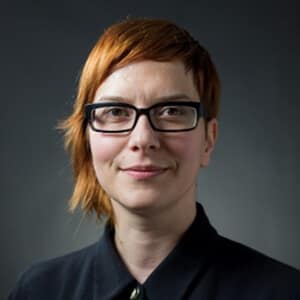
Theodora Katsila

Your organization field and mission:

NHRF advances interdisciplinary science, translational research, and AI-enabled innovation for societal benefit and sustainable development.

Please tell us briefly about your role in the company / at your organization:

I lead an interdisciplinary research laboratory at NHRF, where we integrate computational science, biochemistry, and bioengineering to accelerate innovation in healthcare. Launching the IN3© framework, my team develops AI-driven biomarker discovery strategies and translational solutions that bridge fundamental science with real-world clinical impact. I am passionate about empowering young scientists and advancing research that serves society.

Your interest in STEM

My interest in STEM was born very early, driven by curiosity rather than a specific career plan. As a child, I was fascinated by understanding how things work — from biological systems to patterns in nature. During school, chemistry and biology became my way of making sense of the world, while mathematics gave me the language to describe it.

Over time, I realized that science is not only about knowledge, but about solving real problems that affect people’s lives. That realization transformed curiosity into purpose. Today, my passion lies at the intersection of sciences, where we can translate scientific discovery into tangible societal impact.

My first role model was not a single famous scientist, but my mum, who showed me that science is all about asking bold questions and my dad, who shaped the way I see research; craving for brainteasers. I have been inspired and still am by Marie Sklodowska Curie, while I have been deeply influenced by Friedrich Nietzsche. Mme. Curie was radically committed to knowledge. Her intellectual discipline, resilience, and refusal to accept imposed limits shaped my understanding of scientific responsibility and ambition. Friedrich Nietzsche insisted on intellectual independence. Scientific breakthroughs require the willingness to dismantle outdated paradigms and construct new ones with rigour and accountability

Your studies

During my studies, one of my biggest challenges was navigating interdisciplinary thinking in environments that were often structured within rigid disciplinary boundaries. I was deeply interested in connecting biochemistry, computation, and systems thinking at a time when such integration was not always encouraged. This sometimes meant pursuing unconventional paths and defending ideas that did not fit neatly into traditional frameworks.
At the same time, these challenges became strengths. They pushed me to develop independence, intellectual courage, and the ability to build bridges across fields; qualities that now define my leadership and research approach.

My two cents to the youth: Be intellectually fearless. STEM fields need your perspective, your questions, and your way of thinking.
Do not shrink yourself to fit existing systems. Learn the rules, master them, and then question them responsibly. Seek mentors, build alliances, and surround yourself with people who elevate your thinking rather than limit it. Most importantly, remember that competence builds confidence, not the other way around. Invest in your skills, stay curious, and do not apologize for ambition. Science advances through bold minds, and you are fully entitled to be one of them.

You at work

At NHRF, diversity and inclusion are embedded in our research culture through merit-based recruitment, equal opportunity policies, and active participation in European frameworks that promote gender equality and responsible research. NHRF supports interdisciplinary collaboration across institutes and encourages international mobility, fostering a diverse and globally connected research environment.

We operate within EU-aligned principles of open science, research integrity, and ethical compliance. Sustainability is reflected both in our research priorities, including health innovation, environmental resilience, and digital transformation, and in our institutional practices aimed at responsible resource management and long-term societal impact. As a laboratory head, I actively promote inclusive team environments, interdisciplinary mentorship, and equal participation in scientific leadership and visibility.

I am most proud of the research ecosystem I have built: a team culture that encourages bold thinking, cross-disciplinary integration, and scientific integrity. Launching the IN3© framework is just one of our achievement to better serve society and planetary health.

Your point of view

Technology empowers people. It reduces structural barriers, democratizes access to knowledge, and creates opportunities independent of geography, background, or social constraints. The real transformation happens when diverse minds design and lead technological development. When people participate not only as users but as creators, decision-makers, and innovators, technology becomes a force for broader societal equity.

My two cents to the youth:
Do not wait for permission to belong. You already do.
Invest deeply in your skills; competence builds confidence. Master your field, stay curious, and do not be afraid of complexity. Interdisciplinary sectors thrive on people who can think across boundaries. Seek mentors, but also become one. Build networks, collaborate generously, and choose environments that challenge and elevate you. And most importantly, do not dilute your ambition to make others comfortable. Science and technology move forward because of bold minds and your perspective is not optional; it is necessary.

By 2030, I would like diversity, equity, inclusion, and sustainability to be embedded structurally rather than discussed rhetorically. Representation should no longer be an initiative; it should be the norm across leadership, funding panels, and decision-making bodies. By 2030, success would mean that DEIS is no longer a corrective mechanism, but an integral feature of how science and technology operate.

To finish with

Intellectual integrity, courage, and responsibility.
I value rigorous thinking and evidence-based decision-making, but also the courage to question established frameworks and explore new ones. Innovation requires both discipline and boldness. I believe in accountability; to science, to society, and to the next generation of researchers and citizens. Excellence matters, but so does fairness. Collaboration, mentorship, and ethical responsibility are not optional in science; they are foundational. Above all, I value curiosity with purpose; using knowledge not just to understand the world, but to improve it.

One of my future challenges is contributing to shaping research ecosystems that are not only innovative, but transformative. As science becomes increasingly interdisciplinary and AI-driven, the real challenge is to help redefine how knowledge is generated, integrated, and translated responsibly.
I see my role evolving beyond leading projects toward helping design systems that accelerate impact while preserving scientific integrity. The future challenge is not only to advance technology, but to ensure that it serves humanity in meaningful and sustainable ways. 

By 2030, I hope to have grown not only in impact, but in perspective.
I hope to have expanded my role from laboratory leadership to broader strategic influence, contributing to the shaping of research agendas, strengthening industry–academia integration, and supporting sustainable innovation frameworks worldwide. At the same time, I hope to have grown as a leader, building resilient interdisciplinary teams, mentoring the next generation of scientists, and fostering research cultures grounded in integrity and collaboration. For me, career evolution is about deepening responsibility: ensuring that scientific progress remains ethically sound, socially relevant, and impactful.

The current activity has been implemented in the framework of the Project: Code4Europe,
GA Number: 101158834. Official project website : 
https://codeweek.eu/ 
[ March 24, 2026 by ECWT 0 Comments ]

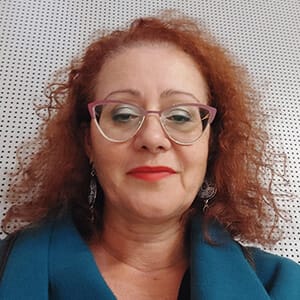
Paraskevi Karachle

Your organization field and mission:

Aquatic Research

Please tell us briefly about your role in the company / at your organization:

I am an expert in food ecology and fish eco-morphology. In recent years I have dealt with the involvement of interested parties (stakeholders), mainly fishers, in participatory processes in order to develop an adaptive management process. My main focus now is non-indigenous species (NIS) and towards that direction I have been collaborating with a wide range of stakeholders and citizen scientists on issues related to NIS in the Mediterranean.

Your interest in STEM

Being in part an islander (on my mother’s side) I have always had a strong relation with the sea. Later, during my early school years, I was always fascinated by biology. So I combined my two passions sea & biology into one!

My first role model was my school biology teacher. Then, at the University a professor of Zoology, and in my early career days a researcher working on NIS. I don’t know if this is a coincidence, but they were all women!

Your studies

Studying in a man-dominated field (i.e. fisheries) being a woman requested twice the time and energy!

Go for it! The only one that can keep you to the ground is yourself and no-one else. Follow your dream!

Your point of view

Go for it! The only one that can keep you to the ground is yourself and no-one else. Follow your dream!

To finish with

Ethos, sincerity, and simplicity.

I am not quite sure. I will face whatever comes along in the way.

I hope scientists become more simple and less competitive amongst them.

The current activity has been implemented in the framework of the Project: Code4Europe,
GA Number: 101158834. Official project website : 
https://codeweek.eu/ 

[ March 19, 2026 by ECWT 0 Comments ]

Eleni Fountoulaki

Your organization field and mission:

Marine Research.

Please tell us briefly about your role in the company / at your organization:

Researcher on fish nutrition.

Your interest in STEM

Your studies

To chose between sea life and land based life.

Follow your instict on what you like best, try hard to make your dream comes true.

You at work

Diversity: We Prioritize diverse hiring pipelines, partner with community organizations, and ensure representation across all levels of HCMR.
Equity: We Provide transparent career‑growth pathways, conduct regular pay‑equity reviews, and offer equitable access to development programs.
Inclusion: We run employee resource groups, inclusive‑leadership training, and regular listening sessions to ensure all voices are heard.
Sustainability: We implement waste‑reduction programs, energy‑efficient operations, responsible sourcing, and annual sustainability reporting

I am proud of reaching the position I have now in a very short time!

Your point of view

Diiferent ways technology can empower women like 1. Online learning platforms 2. Mobile access enables learning 3. Digital literacy training 4. E-commerce platforms 5. Digital marketing tools 6.Remote work.

Be patient, beleive in your self, and insist in your skills as its a man world also in Aquaculture.

To finish with

Justice, honesty, open-mindedness.

Accuracy, Ethics, Trust, Responsible augmentation, Continius learning.

The current activity has been implemented in the framework of the Project: Code4Europe,
GA Number: 101158834. Official project website : 
https://codeweek.eu/ 
[ March 19, 2026 by ECWT 0 Comments ]

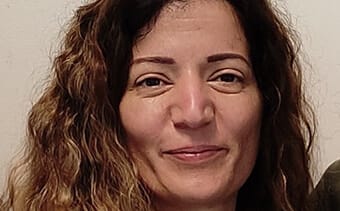
Antigoni Vasilaki

Your organization field and mission:

The Hellenic Centre for Marine Research (HCMR) operates in the marine research and sustainable aquaculture sector, with emphasis on marine biology, biotechnology, and environmentally responsible aquaculture systems. Its mission is to advance scientific knowledge and innovation that support sustainable blue growth, circular bioeconomy practices, and evidence-based management of marine resources.

Please tell us briefly about your role in the company / at your organization:

I serve as a Researcher in Aquaculture Nutrition and Fish Physiology at the Institute of Marine Biology, Biotechnology & Aquaculture (IMBBC) of the Hellenic Centre for Marine Research (HCMR). My work focuses on the development and evaluation of sustainable aquafeeds, alternative protein sources, and biotechnological interventions to improve fish performance, health, and environmental sustainability.

Your interest in STEM

My interest in STEM was born from an early fascination with biology and the natural sciences, especially the mechanisms that regulate living organisms and ecosystems. It evolved during my academic training in aquaculture and marine biology, where I realized that solving real-world challenges in fish nutrition, sustainability, and blue bioeconomy requires the integration of science, technology, and applied research to create measurable impact.

My first role model was one of my early university professors, who combined scientific rigor with genuine passion for teaching and research, showing me that science can be both intellectually demanding and socially meaningful. 

At present, I am inspired by researchers and innovators in sustainable aquaculture and marine biotechnology who translate advanced scientific knowledge into practical solutions for environmental sustainability, fish welfare, and circular bioeconomy—bridging academia, industry, and real-world impact.

Your studies

During my studies, my biggest strengths were strong analytical thinking, persistence, and resilience. One of the main challenges was balancing demanding laboratory research and academic responsibilities while raising two children, which required exceptional time management, organization, and discipline.
Navigating both motherhood and scientific training strengthened my adaptability, focus, and ability to perform under pressure — skills that continue to define my professional trajectory today.

Believe in your intellectual capacity and do not let anyone make you feel that science and technology are “too demanding” or incompatible with your personal life. Especially sectors like marine science and aquaculture — need diverse perspectives, critical thinking, and resilience, qualities that women bring strongly to the field.
Build a solid scientific foundation, seek mentors, collaborate widely, and do not be afraid to take space in laboratories, meetings, and decision-making tables. Your voice, your expertise, and your leadership are essential for shaping a more sustainable and innovative future in science.

You at work

HCMR has adopted a Gender Equality Plan (GEP) to promote gender equity and fair access within the institution’s research and operational structures, aiming to reduce barriers and support equal opportunities for all staff.

I am most proud of contributing to the development of sustainable aquafeeds that improve fish health while reducing environmental impact. I am also proud of mentoring young scientists and helping translate research into practical solutions for the aquaculture sector.

Your point of view

Technology can empower women by giving them access to education, information, and professional networks regardless of geographic or social barriers. Digital tools enable flexible learning, remote collaboration, and entrepreneurship, making it easier to balance career ambitions with personal responsibilities.

Be confident in your scientific abilities and do not hesitate to enter spaces that may seem competitive or traditionally male-dominated. Marine science and aquaculture need strong analytical minds, resilience, and creativity — qualities that women bring powerfully to the field.

I hope to see balanced representation of women in senior scientific and decision-making roles, transparent career progression pathways, inclusive research environments, and sustainability criteria integrated into every stage of production and innovation — from feed formulation to ecosystem management.

To finish with

My core values are scientific integrity, transparency, and responsibility toward both society and the environment. I strongly believe in evidence-based decision making, rigorous research, and knowledge that translates into real, measurable impact.

One of my future professional challenges is to continue bridging high-level scientific research with real-world industry application, ensuring that innovation in aquaculture nutrition translates into scalable, sustainable solutions. Maintaining scientific excellence while navigating complex collaborations, funding competitiveness, and evolving environmental demands will require strategic thinking and adaptability.

I aim to lead multidisciplinary projects that connect science, industry, and policy, delivering measurable environmental and socio-economic impact.

The current activity has been implemented in the framework of the Project: Code4Europe,
GA Number: 101158834. Official project website : 
https://codeweek.eu/ 
[ March 19, 2026 by ECWT 0 Comments ]

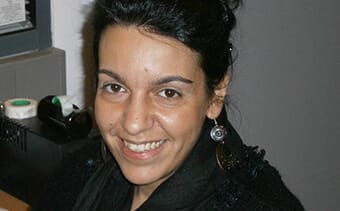
Aikaterini Nanou

Your organization field and mission:

Aiming to understand molecular mechanisms of complex biological processes in health and disease. The institution is committed to contribute to innovation in medicine, by developing novel therapeutic and diagnostic methods, focusing on immunity and inflammation, cancer, and neurodegenerative diseases.

Please tell us briefly about your role in the company / at your organization:

My main research focus is the study of inflammation in the Central Nervous System (CNS). More specifically, I am interested in Multiple Sclerosis and the effect of inflammation on the CNS resident cells with ultimate goal to identify factors that induce a pro-regenerative profile to be used as a therapeutic strategy.

Your interest in STEM

My interest in STEM began in middle school, when I realized how naturally drawn I was to science. I enjoyed the idea that even the most complex questions had explanations waiting to be uncovered. As I grew older, I was drawn to solving problems and working through challenging puzzles. I was especially fascinated by biology, where each question felt like unlocking a deeper understanding of how life functions. What started as simple curiosity gradually became a genuine passion for discovery.

My first role model was my science teacher, whose ability to explain complex ideas with clarity and enthusiasm deeply inspired me. The way she made difficult concepts feel accessible showed me that science isn’t just about memorizing facts, but it’s about understanding and curiosity. Today, many people inspire me; some well-known, others mentors and researchers I’ve met personally. What connects them is not their recognition, but their passion for science and their strong sense of ethics. I admire the way they pursue discovery with curiosity, integrity, and perseverance.

Your studies

One of my biggest challenges has been narrowing my focus. I am genuinely curious about many areas of biology, and I often want to explore every question that interests me. While this curiosity drives me, I have learned how to prioritize and commit to exploring certain topics more deeply.

You at work

An Equity and Anti-Discrimination Committee was established in 2021to promote gender equality, combat discrimination and prevent all forms of harassing behavior. The committee also participate in nationwide networks to discuss awareness policies, monitoring progress, provide support and policy recommendations.

I am most proud of the technical skills I have developed over the years. My experiences have strengthened my ability to approach complex biological problems from different perspectives and use appropriate techniques to address each challenge effectively. I am sincerely grateful for the opportunity to learn new methodologies, as it has been instrumental in my growth.

Your point of view

Technology can facilitate greater access to education, enabling women not only to gain knowledge and skills, but also to have a platform to promote equality beyond geographical and social barriers. Furthermore, it creates opportunities for innovation and active participation in shaping the future.

I would like DEIS principles to be fully integrated into academic culture, so that they are no longer discussed as separate initiatives but are simply part of everyday practice.

To finish with

My values are curiosity, integrity, perseverance, inclusion, and objectivity. I believe science should be guided by ethical responsibility, sustained by persistence, and enriched by diverse perspectives. I also value objectivity and the ability to remain independent in my thinking, resisting external pressure in order to ensure that decisions and conclusions are grounded in evidence and principle.

One of my future challenges will be maintaining my integrity and commitment to evidence-based principles, even in environments where science is underfunded or influenced by external interests. Staying true to ethical standards and objectivity, despite such pressures, will be essential to my professional development.

By 2030, I hope to continue working in academia, conducting research to the highest scientific and ethical standards.

The current activity has been implemented in the framework of the Project: Code4Europe,
GA Number: 101158834. Official project website : 
https://codeweek.eu/ 
[ March 19, 2026 by ECWT 0 Comments ]

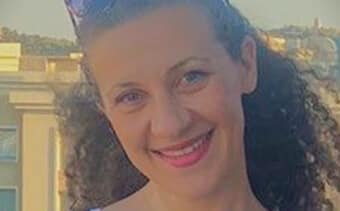
Eirini-Maria Georganta

Your organization field and mission:

Biomedical Science and Research.

Please tell us briefly about your role in the company / at your organization:

As a postdoctoral researcher, I lead and support research projects, conduct experimental studies, analyze data, and contribute to scientific publications and grant applications.

Your interest in STEM

My interest in Science developed in high school, particularly through biology classes that introduced me to experimental science and the process of scientific inquiry.

My first role model was the biology teacher in high school who encouraged curiosity and critical thinking. Today, I am inspired by researchers in my field who combine scientific excellence with ethical responsibility and collaborative mindset and prioritize mentorship and equity in science.

Your studies

Laboratory research involves experimental failure, limited resources, and uncertainty. Additionally, funding limitations and publication expectations create a lot of pressure. It is also very challenging to maintain work–life balance especially during demanding research periods. Over time, I (still) learn to manage priorities, set realistic timelines and work efficiently under pressure while maintaining a healthy work–life balance.

Believe in your abilities and don’t let self- and others’ doubt limit your ambitions. Find supportive mentors and collaborators and do not be discouraged by challenges.

You at work

I’m most proud of a) generating high-quality research data that helped our lab secure funding, b) guiding and mentoring students and c) taking part in science outreach to inspire broader public interest in biomedical research.

Your point of view

Technology empowers women by providing access to education, career opportunities, and professional networks, enabling them to learn and work remotely, while balancing career, family and personal growth.

Believe in your abilities and face challenges as opportunities to grow.

By 2030, I hope biomedical research is inclusive and sustainable, offering equal opportunities, strong mentorship, and collaborative environments that benefit both science and society.

To finish with

I prioritize curiosity, ethical responsibility, collaboration, mentorship and inclusivity. I also believe in using science to make a positive impact on society.

My future challenges include advancing my research, securing funding, mentoring effectively and maintaining work-life balance.

By 2030, I hope to lead impactful research, teach and mentor students and contribute to high-quality scientific discoveries.

The current activity has been implemented in the framework of the Project: Code4Europe,
GA Number: 101158834. Official project website : 
https://codeweek.eu/