

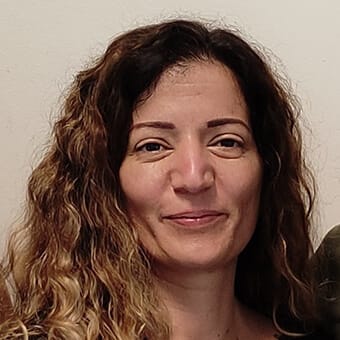
My interest in STEM was born from an early fascination with biology and the natural sciences, especially the mechanisms that regulate living organisms and ecosystems. It evolved during my academic training in aquaculture and marine biology, where I realized that solving real-world challenges in fish nutrition, sustainability, and blue bioeconomy requires the integration of science, technology, and applied research to create measurable impact.
Your organization field and mission:
The Hellenic Centre for Marine Research (HCMR) operates in the marine research and sustainable aquaculture sector, with emphasis on marine biology, biotechnology, and environmentally responsible aquaculture systems. Its mission is to advance scientific knowledge and innovation that support sustainable blue growth, circular bioeconomy practices, and evidence-based management of marine resources.
Please tell us briefly about your role in the company / at your organization:
I serve as a Researcher in Aquaculture Nutrition and Fish Physiology at the Institute of Marine Biology, Biotechnology & Aquaculture (IMBBC) of the Hellenic Centre for Marine Research (HCMR). My work focuses on the development and evaluation of sustainable aquafeeds, alternative protein sources, and biotechnological interventions to improve fish performance, health, and environmental sustainability.
Your interest in STEM
My first role model was one of my early university professors, who combined scientific rigor with genuine passion for teaching and research, showing me that science can be both intellectually demanding and socially meaningful.
At present, I am inspired by researchers and innovators in sustainable aquaculture and marine biotechnology who translate advanced scientific knowledge into practical solutions for environmental sustainability, fish welfare, and circular bioeconomy—bridging academia, industry, and real-world impact.
Your studies
During my studies, my biggest strengths were strong analytical thinking, persistence, and resilience. One of the main challenges was balancing demanding laboratory research and academic responsibilities while raising two children, which required exceptional time management, organization, and discipline.
Navigating both motherhood and scientific training strengthened my adaptability, focus, and ability to perform under pressure — skills that continue to define my professional trajectory today.
Believe in your intellectual capacity and do not let anyone make you feel that science and technology are “too demanding” or incompatible with your personal life. Especially sectors like marine science and aquaculture — need diverse perspectives, critical thinking, and resilience, qualities that women bring strongly to the field.
Build a solid scientific foundation, seek mentors, collaborate widely, and do not be afraid to take space in laboratories, meetings, and decision-making tables. Your voice, your expertise, and your leadership are essential for shaping a more sustainable and innovative future in science.
You at work
HCMR has adopted a Gender Equality Plan (GEP) to promote gender equity and fair access within the institution’s research and operational structures, aiming to reduce barriers and support equal opportunities for all staff.
I am most proud of contributing to the development of sustainable aquafeeds that improve fish health while reducing environmental impact. I am also proud of mentoring young scientists and helping translate research into practical solutions for the aquaculture sector.
Your point of view
Technology can empower women by giving them access to education, information, and professional networks regardless of geographic or social barriers. Digital tools enable flexible learning, remote collaboration, and entrepreneurship, making it easier to balance career ambitions with personal responsibilities.
Be confident in your scientific abilities and do not hesitate to enter spaces that may seem competitive or traditionally male-dominated. Marine science and aquaculture need strong analytical minds, resilience, and creativity — qualities that women bring powerfully to the field.
I hope to see balanced representation of women in senior scientific and decision-making roles, transparent career progression pathways, inclusive research environments, and sustainability criteria integrated into every stage of production and innovation — from feed formulation to ecosystem management.
To finish with
My core values are scientific integrity, transparency, and responsibility toward both society and the environment. I strongly believe in evidence-based decision making, rigorous research, and knowledge that translates into real, measurable impact.
One of my future professional challenges is to continue bridging high-level scientific research with real-world industry application, ensuring that innovation in aquaculture nutrition translates into scalable, sustainable solutions. Maintaining scientific excellence while navigating complex collaborations, funding competitiveness, and evolving environmental demands will require strategic thinking and adaptability.
I aim to lead multidisciplinary projects that connect science, industry, and policy, delivering measurable environmental and socio-economic impact.
The current activity has been implemented in the framework of the Project: Code4Europe,
GA Number: 101158834. Official project website : https://codeweek.eu/