
[ September 9, 2026 by ECWT 0 Comments ]

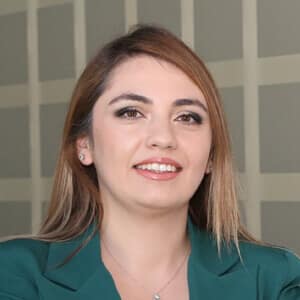
Sultan Nilay Sengol

Your organization field and mission:

Süleyman Demirel University is a research-oriented higher education institution committed to creating scientific, technological, and societal value through education, research, innovation, and collaboration.

Within this ecosystem, the Technology Transfer Office bridges academia, industry, entrepreneurs, and public institutions. Its mission is to transform knowledge and research into impact by supporting entrepreneurship, technology commercialization, university industry collaboration, intellectual property, and national and international innovation projects.

Please tell us briefly about your role in the company / at your organization:

As Technology Transfer Office Coordinator, I work at the intersection of academia, entrepreneurship, innovation, and industry. I coordinate programs that help researchers, students, entrepreneurs, and companies transform ideas and research outcomes into projects, collaborations, and scalable solutions.

My work includes entrepreneurship and technology commercialization programs, university-industry collaboration, national and EU-funded initiatives, mentoring, and capacity-building activities. I am particularly interested in how digital transformation, sustainability, and emerging technologies can create more inclusive innovation ecosystems and new opportunities for women and young people.

Your interest in STEM

My interest in STEM grew from a fascination with what happens when technology meets entrepreneurship and real-world problems. I was not originally trained as an engineer or computer scientist; my academic background is in entrepreneurship and business. This became an advantage because it taught me to approach technology through its human, economic, and societal impact.

Working within technology ecosystems showed me that STEM is not only about developing technology, it is also about asking the right questions, connecting disciplines, and turning knowledge into solutions. Today, my interest focuses particularly on artificial intelligence, digital transformation, sustainability, and technology-driven entrepreneurship.

My first role models were the educators who made me believe that curiosity and continuous learning could open doors beyond one’s original field of study.

Today, rather than having a single role model, I am inspired by women who move between disciplines and turn knowledge into impact researchers, entrepreneurs, educators, and leaders who make technology more accessible and inclusive. I particularly admire women who succeed professionally without feeling that they have to imitate traditional models of leadership and who create space for other women to succeed with them.

Your studies

My greatest strength has always been curiosity and the ability to connect different disciplines. Entrepreneurship taught me to see opportunities, while my academic journey taught me to question assumptions and build evidence.

My main weakness was initially believing that I needed to know everything before I could contribute confidently, particularly when entering technology-oriented environments without a traditional STEM degree.

The greatest opportunity has been interdisciplinarity. Moving between entrepreneurship, European studies, digital transformation, sustainability, and emerging technologies has allowed me to develop a perspective that would not have emerged from a single discipline.
The main challenge has been keeping pace with rapidly changing technologies while balancing academic development with an active professional career. Over time, I learned that continuous learning is not a temporary stage—it is part of working in innovation.

Do not wait until you feel completely ready. Technology changes too quickly for anyone to know everything, and confidence often comes after taking the first step, not before it.

Build strong foundations, but remain curious beyond your own discipline. Learn how technology works, how people use it, and what problems it can solve. Seek mentors, participate in international networks, develop your digital skills, and create projects rather than only collecting certificates.

Most importantly, do not eliminate yourself from an opportunity before anyone else has even evaluated you. Apply, speak, experiment, and allow yourself to grow into ambitious roles.

You at work

At Süleyman Demirel University, we contribute to DEIS through initiatives that broaden access to entrepreneurship, innovation, digital technologies, and international opportunities for students, researchers, entrepreneurs, and different stakeholder groups.

Through the Technology Transfer Office and our national and European collaborations, we support capacity-building activities in areas such as digital entrepreneurship, green transformation, emerging technologies, and innovation. We also work to connect academia with industry and entrepreneurship ecosystems, creating pathways for individuals from different disciplines and backgrounds to participate in innovation.

For me, inclusion means more than inviting people into existing systems; it also means designing innovation ecosystems in which different people have a genuine opportunity to contribute, lead, and create value.

I am most proud of creating bridges—between universities and industry, researchers and entrepreneurs, ideas and implementation, and local potential and international opportunities.

Throughout my career, I have contributed to entrepreneurship and innovation programs, technology transfer activities, national initiatives, and European projects that bring together academia, business, public institutions, and young innovators. Seeing an idea evolve into a project, a collaboration, or an entrepreneurial opportunity is still one of the most rewarding parts of my work.

What matters most to me is not a single project or title, but creating multiplier effects: helping people gain the confidence, networks, and opportunities that enable them to create further impact themselves.

Your point of view

Technology can reduce some of the traditional barriers that have limited women’s access to knowledge, networks, markets, finance, and professional opportunities. A woman can learn globally, build a company, access customers, collaborate internationally, and make her expertise visible without being limited entirely by geography or traditional institutional structures.

But access alone is not empowerment. Women must also participate in designing, developing, governing, and investing in technology. Especially in the age of artificial intelligence, women should not only be users of the future; they should be among its architects.

Learn the language of technology, but never underestimate the value of your own discipline. The future belongs increasingly to people who can connect different worlds: technology and society, research and business, sustainability and growth.

Build your network before you need it. Find mentors, but also become a mentor as you progress. Volunteer for projects that initially feel slightly beyond your experience. Learn to communicate your ideas clearly and make your work visible.

And remember: you do not need permission to become more ambitious.

By 2030, I hope we will have moved beyond discussing women’s participation simply in terms of numbers. Representation matters, but real inclusion means women having equal opportunities to lead research, build technology companies, attract investment, shape innovation policy, and participate in decisions about emerging technologies.

I would particularly like to see more women represented at the intersection of artificial intelligence, entrepreneurship, investment, and technology leadership. My goal is not only to see more women entering innovation ecosystems, but more women shaping how those ecosystems work.

To finish with

Curiosity, integrity, courage, continuous learning, collaboration, and impact.

I believe knowledge becomes more valuable when it is shared, leadership becomes stronger when it creates opportunities for others, and innovation becomes meaningful when it improves people’s lives. I also value the courage to remain a learner to question what we know, enter unfamiliar fields, and continually reinvent ourselves.

My next challenge is to deepen the connection between my academic research and my professional work, particularly in artificial intelligence, entrepreneurship, digital transformation, and sustainability.

I want to move from managing and supporting innovation to contributing more strongly to how innovation ecosystems are designed and shaped. This requires continuously developing my research capabilities, international networks, technological literacy, and leadership skills while remaining open to disciplines and perspectives beyond my own.

By 2030, I hope to have evolved into an internationally connected academic and innovation leader working at the intersection of artificial intelligence, entrepreneurship, sustainability, and European innovation ecosystems.

I aim to combine academic research with real-world impact: contributing to international projects, developing evidence-based approaches to entrepreneurship and innovation, mentoring the next generation of entrepreneurs and researchers, and building stronger bridges between Türkiye and European innovation networks.

Most importantly, I hope that some young women will be able to look at my journey and think, “There is a place for me there too.” For me, that would be one of the most meaningful measures of professional success.

The current activity has been implemented in the framework of the Project: Code4Europe,
GA Number: 101158834. Official project website : 
https://codeweek.eu/ 
[ July 15, 2026 by ECWT 0 Comments ]

Dimitra Anastasiou

Your organization field and mission

At LIST, we connect fundamental and applied research across natural, built, and industrial environments, while tackling global challenges like AI, space, and defence and security to turn science into tangible results.

Please tell us briefly about your role in the company / at your organization

I am a Lead Research and Technology Associate at the Luxembourg Institute of Science and Technology (LIST). I am currently coordinating the Erasmus project Chat4EFL: https://www.chat4efl.eu/. Chat4EFL aims to improve the quality and effectiveness of EFL instruction in secondary schools by using AI technologies to create personalized learning experiences that address diverse student needs (giftedness, bilingualism, special needs).

Your interest in STEM

I followed the literature path (ancient Greek, Latin, History). My STEM curiosity began later towards the end of my BA Translators Degree.

Your studies

S: Organisation, Professionalism
W: Stress, Anxiety of Failure
O: Going abroad, doing a PhD and postdocs afterwards
T: not good financing

To try it out! To get informed about various possibilities, make internships, follow webinars, courses, talk to people!

You at work

LIST is extremely active in DEIS. It has a gender policy, it participates in equality marches, in diversity breakfasts, special events on International Diversity Day, among others..There was also a leadership training program only for females, for which I was selected and learned a lot about mentorship, leadership models, efficient project and people management, etc.

To put my innovative ideas in practice. To make AI research as science engagement project. To inspire young generation.

Your point of view

I turn it around: Women can inspire technology. We need female voices to train AI models, to make tools more inclusive and diverse.

To dare! Not be afraid of other voices and believe in you! Build your expertise and network and you will reach your goal!

To finish with

Professionalism, integrity, transparency, loyalty

Continue to be a scientific leader, supervise and motivate the younger generation and particularly young females to STEM

The current activity has been implemented in the framework of the Project: Code4Europe,
GA Number: 101158834. Official project website : 
https://codeweek.eu/ 
[ June 17, 2026 by ECWT 0 Comments ]

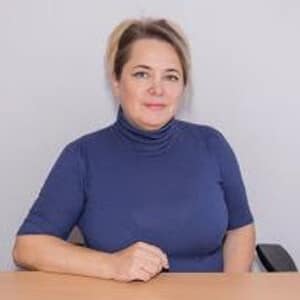
Oksana Onyshchenko

Your organization field and mission

Education

Please tell us briefly about your role in the company / at your organization

Psychologist

Your interest in STEM

My interest was born during my university years when I realized that psychology is deeply connected to scientific research, data analysis, and understanding human behavior through empirical evidence and cognitive science.

My first role models were university professors who introduced me to experimental psychology. Currently, I am inspired by international experts in social-emotional learning and innovative educational models who bridge human psychology with modern technology.

Your studies

My biggest challenge weakness was mastering advanced statistical data analysis and adapting to rapidly changing digital tools. However, this became an Opportunity to build strong analytical skills and integrate digital design into my psychological practice.

Never doubt your intellectual capabilities. Believe in your unique vision, stay curious, actively master digital and analytical tools, and treat every academic challenge as a stepping stone to your expertise.

You at work

In our educational environment, we actively implement social-emotional learning (SEE Learning), promote gender equality, ensure an inclusive space for all children, and support the professional growth of female educators.

I am most proud of successfully integrating innovative psychological tools into our educational processes, leading charity and community-building initiatives, and helping educators and families build emotional resilience during challenging times.

Your point of view

Technology provides women with flexible learning opportunities, access to global research, and powerful tools for digital design and leadership. It amplifies our voices and allows us to lead impactful projects from anywhere in the world.

Combine deep empathy with tech-savviness. Continuous professional development, international networking, and confidence in your management skills will make you an irreplaceable specialist.

By 2030, I hope to see equal representation of women in top leadership roles, fully inclusive and tech-driven educational standards, and systemic support for mental health and diversity in every institution.

To finish with

Professionalism, continuous self-improvement, empathy, innovation, and authenticity rooted in national traditions.

Balancing high-level management responsibilities with practical psychological work, while continuously adapting to new AI tools and international educational grants.

By 2030, I hope to evolve as an international expert and educational leader, successfully implementing advanced European models of psychology and management on a broader scale.

The current activity has been implemented in the framework of the Project: Code4Europe,
GA Number: 101158834. Official project website : 
https://codeweek.eu/ 

[ June 1, 2026 by ECWT 0 Comments ]

Christelle Souaileh

Your organization field and mission

Microsoft operates across the entire tech ecosystem (cloud, AI, software, hardware, cybersecurity) with the mission of empowering people and organizations worldwide to achieve more.

Please tell us briefly about your role in the company / at your organization

I am a solution specialist focusing and helping customers adopting Microsoft technologies.

Your interest in STEM

It was recently born when one of my colleagues started the AI for women initiative in Luxembourg.

Serena Williams was my first role model. Nowadays it is Nawal Al Saadawi.

Your studies

I must admit my biggest challenge during studies was the uncertainty of the field and how what we are studying translates in the real world.

On a personal level, I run away from routine, and technology is one of the specialties where routine has no place. It is a field full of new techniques where skills, improvements and solutions appear on a daily basis.

You at work

We do have a lot but amongst them I can share the women in AI initiative in Luxembourg.

Your point of view

It’s women who will empower technology. Women contributed to many changes since the beginning of time and now, it is our responsibility again to make AI and technology real.

It’s hard to project oneself but I do would like to see more women in the field.

To finish with

Honesty, Integrity.

The current activity has been implemented in the framework of the Project: Code4Europe,
GA Number: 101158834. Official project website : 
https://codeweek.eu/ 

[ May 10, 2026 by ECWT 0 Comments ]

Ella Cullen

Your organization field and mission

I work at the intersection of technology, sustainability, and global supply chains — which sounds serious, but at its heart it’s about one simple idea: products should be honest about where they come from. At Minespider, we build Digital Product Passports and Digital Battery Passports that allow companies to trace the origin, carbon footprint, and lifecycle of the materials inside their products — from tin and gold to EV batteries and solar panels. Companies like Google, Renault, Ford Otosan, Microvast, Minsur, ABB, Tata Elxsi, PTL, and TEMSA use our technology to bring transparency into industries that historically operated behind spreadsheets and closed doors. Our mission is big: every product in the world should be traceable. Because when you can see where something comes from, you can improve it.

Please tell us briefly about your role in the company / at your organization

I now lead sales, marketing, and design, which means I sit right at the crossroads of vision and execution. I love that space. I get to tell our story to the world, work directly with global partners, and help shape how our technology evolves. I live in Lisbon now, and our team is fully remote — something I advocated for early on. Remote work has brought so much flexibility and richness to my life. We hire talent wherever it exists, and we’ve built a culture that’s diverse, international, and genuinely supportive. I feel incredibly lucky to work with a team that cares deeply about both technology and impact.

Your interest in STEM

I didn’t grow up dreaming of working in blockchain or mining. I grew up on a farm in rural New Zealand. What I did learn there was how to solve problems and how to build things from scratch.

When I moved to Europe and discovered blockchain technology, something clicked. I realised this wasn’t just about cryptocurrency — it could be used to make global supply chains transparent and accountable. That idea fascinated me. Suddenly STEM wasn’t abstract — it was a powerful tool to reshape entire industries.

And honestly? It’s been so much fun. This space moves quickly. You’re constantly learning. You’re surrounded by builders.

I didn’t have visible role models in tech growing up, which is probably why I care so much about being one now.

My early role models were my parents — practical, entrepreneurial, resilient. Today, I’m inspired by women who combine technical confidence with empathy. I’m especially inspired by the women on my own team who have grown into leadership roles and found their voices in a space that isn’t always welcoming at first.

Your studies

Studying across Italy, Portugal, and Denmark meant constantly adapting — new cultures, new expectations, new systems. The biggest challenge was building confidence in rooms where I often felt young or out of place.

That experience turned out to be the best preparation possible for working in male-dominated industries like mining and blockchain.

You don’t need to fit a stereotype to belong in STEM.

Curiosity is more important than perfection. The ability to learn quickly is more important than knowing everything already. And most people you admire are figuring things out as they go. Also, find your community. It makes the journey so much more worthwhile!

You at work

Inclusion at Minespider is practical, not performative.
We’re fully remote, which opens doors for women in regions where tech opportunities are limited.
We doubled the number of women on our team over the years.
We actively support flexible schedules, especially for parents.
In projects like Raw Material Radar in West Africa, we help train women to become mineral traders, opening access to responsible global markets. And honestly, one of the best parts of working in this industry is seeing women step into technical and commercial roles where they were previously underrepresented.

I’m proud that we’ve helped track roughly 10% of the world’s tin.
I’m proud that responsible operators in Rwanda and Uganda gained access to European markets through Digital Product Passports.
But most of all, I’m proud of my team. The women who now speak on panels, lead major projects, and confidently navigate regulatory conversations that once felt intimidating.

Your point of view

Technology empowers women when it increases access — to markets, to information, to networks, to flexible work.

Remote work has transformed my own life. It allows me to live in Lisbon, collaborate globally, and design a career that fits my life rather than the other way around.

When technology is designed inclusively, it becomes a tool for freedom.

Don’t let traditional industries scare you. Mining, supply chains, manufacturing — they’re some of the most exciting spaces right now because they’re undergoing massive transformation.

There’s so much opportunity to shape the future, and you absolutely belong there.

By 2030, I’d love to see gender balance become normal — not something we celebrate as exceptional.

I’d love to see more women in technical leadership roles in mining and supply chain tech. And I’d love for young girls to see blockchain and industrial innovation as creative, impactful, and open to them.

To finish with

Curiosity. Integrity. Courage.
And a strong belief that transparency improves everything — products, companies, and communities.

Scaling responsibly as Digital Product Passports become mandatory across Europe. Growth is exciting — but maintaining culture, inclusion, and impact as we grow will be the real leadership challenge.

By 2030, I hope Minespider is one of the global standards for Digital Product and Digital Battery Passports.

And I hope that a girl growing up somewhere remote, like I did, can look at industries like mining and deep tech and think: “That looks exciting. I could do that.

The current activity has been implemented in the framework of the Project: Code4Europe,
GA Number: 101158834. Official project website : 
https://codeweek.eu/ 
[ April 30, 2026 by ECWT 0 Comments ]

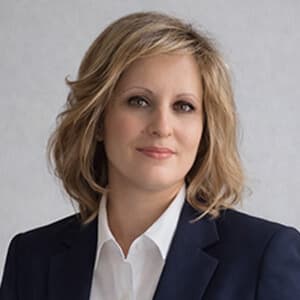
Elena Ziky

Your organization field and mission

Digital and business coaching in the education sector, with the mission of developing entrepreneurial skills, a digital mindset, and practical abilities in children and young people, helping them face the future with awareness through the project “Piccoli Imprenditori Academy”.

Please tell us briefly about your role in the company / at your organization

Founder and Digital & Business Coach: I design and lead educational programs for children and young people, develop content and training programs, and coordinate the activities of “Piccoli Imprenditori Academy.” I also work on digital learning pathways for schools, training students and teachers in coding, robotics, and artificial intelligence.

Your interest in STEM

My interest in STEM began about nine years ago, initially as a hobby. Through exploring new trends and innovations, it evolved into a passion and a professional commitment to digital education for children, young people, and teachers.

My first role model emerged from exploring the world of innovation and entrepreneurship rather than from a single person: individuals capable of transforming ideas into concrete projects and anticipating the future. Today, I continue to be inspired by innovators, educators, and entrepreneurs who work to make digital and STEAM skills accessible to new generations, with a positive impact on society.

Your studies

During my studies, one of the main challenges was navigating a context in which digital and STEM skills were not yet widespread or integrated into educational pathways.

  • Strengths: curiosity, initiative, and the ability to learn independently.
  • Weaknesses: an initial lack of clear references and structured pathways in the digital field.
  • Opportunities: the opportunity to explore new trends and build innovative skills before they became mainstream.
  • Threats: the rapid pace of technological change and difficulty in finding up-to-date educational environments.

My advice is to cultivate curiosity and confidence in your abilities, without being held back by stereotypes or the fear of not being “prepared enough.” The STEAM sector is constantly evolving and rewards those who experiment, make mistakes, and learn quickly.
Seek practical opportunities, explore coding, robotics, and artificial intelligence creatively, and build a network with other women and professionals in the field. Don’t wait until you feel ready—start, because skills and confidence develop through action.

You at work

In my organization, we promote DEIS initiatives by making digital education accessible to everyone, with particular attention to girls, young people, and communities with less exposure to technological opportunities.
We design inclusive coding, robotics, and artificial intelligence programs for schools and educational communities, adapted to different levels and learning styles, and actively work to reduce the gender gap in STEM. Additionally, we integrate sustainability and social impact themes into our programs, encouraging young people to develop innovative and responsible solutions for the future.

I am most proud of transforming OpenAIRE from a 3 year European project in 2008 into a sustainable organisation with a strong network of over 60 member universities. Equally important to me is having chosen a career that contributes to the public good (open science, science-technology-innovation) while working with diverse communities and partners across the world.

Your point of view

Through digital skills, women can create new career opportunities, start entrepreneurial projects, work more flexibly, and actively participate in innovation processes. Additionally, technology provides spaces to showcase skills and ideas, promoting greater female representation in STEM sectors and decision-making roles.

It is important not to be limited by stereotypes and to actively seek learning opportunities: courses, projects, school-based experiences, or educational innovation initiatives. Surrounding yourself with people who inspire you and share the same vision greatly supports both personal and professional growth.

I would like to see greater female participation in technological and entrepreneurial pathways starting from primary school, with programs accessible to all socio-economic contexts. I also hope that schools will increasingly become spaces of open innovation, where coding, robotics, and artificial intelligence are everyday tools for developing skills and reducing educational inequalities.

To finish with

The values that guide my work are curiosity, as a driver of continuous learning, and innovation, understood as the ability to transform ideas into concrete solutions. Another fundamental value is educational responsibility: using technology not only effectively but also consciously, with a focus on positive social impact.

My future professional challenges will mainly be linked to keeping pace with the rapid evolution of technology, particularly in the field of artificial intelligence, and integrating it effectively into educational pathways for children, young people, and teachers. Another challenge will be expanding the impact of my educational projects, making them increasingly scalable and accessible to different school and regional contexts, without losing quality or the personalized dimension of learning.

I hope to have expanded the reach of “Piccoli Imprenditori Academy” and training programs for schools and teachers at an international level, contributing to making coding, robotics, and artificial intelligence accessible as everyday tools for learning.

The current activity has been implemented in the framework of the Project: Code4Europe,
GA Number: 101158834. Official project website : 
https://codeweek.eu/ 
[ April 28, 2026 by ECWT 0 Comments ]

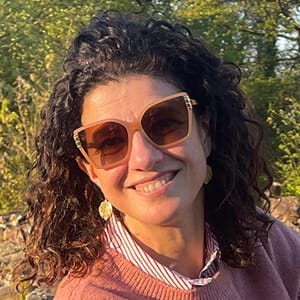
Sihem Amer-Yahia

Your organization field and mission:

Research and Education

Please tell us briefly about your role in the company / at your organization:

CNRS Research Director and Deputy Director of the lab.

You at work

I launched the DEI initiative foe the data management organization and the most impactful events are informal lunch, chatting events.

Your point of view

To finish with

Reliability.

Maintain high energy and excitement in my work.

Reach out to underrepresented communities in Africa.

The current activity has been implemented in the framework of the Project: Code4Europe,
GA Number: 101158834. Official project website : 
https://codeweek.eu/ 
[ April 28, 2026 by ECWT 0 Comments ]

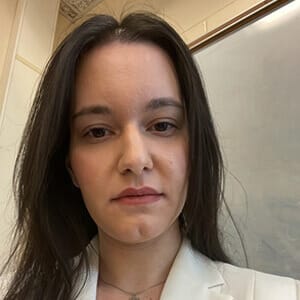
Efstathia Soufleri

Your organization field and mission:

Athena Research Center is one of Greece’s leading research institutions, advancing innovation in artificial intelligence, data science, language technologies, health informatics, and digital transformation. Its mission is to produce impactful research that benefits society, science, and industry.

Please tell us briefly about your role in the company / at your organization:

I work as a postdoctoral researcher focusing on trustworthy and efficient artificial intelligence. My research includes privacy-preserving machine learning, large language models, multimodal AI systems, and understanding how modern AI systems learn, generalize, and memorize information.

Your interest in STEM

My interest in STEM began early through mathematics. I was fascinated by how logic and equations could explain the world with clarity and elegance. Later, programming and artificial intelligence showed me how mathematics can be transformed into systems that solve real-world problems.

My first role models were teachers who believed in discipline, curiosity, and excellence. Today, I am inspired by scientists and innovators who combine technical brilliance with integrity and social impact, especially women who open paths for future generations.

Your studies

One of my biggest challenges was navigating highly competitive international academic environments while continuously adapting to new fields and expectations. At the same time, these experiences became strengths: resilience, independence, discipline, and confidence in solving difficult problems.

Believe that you belong in technical spaces. Do not underestimate your abilities, and do not let temporary setbacks define you. Build strong fundamentals, stay curious, ask questions, and keep going consistently.

You at work

Athena Research Center promotes equal opportunity, interdisciplinary collaboration, and inclusive participation in research and innovation. It supports merit-based excellence while encouraging diverse voices and international collaboration.

I am most proud of contributing original research in AI that combines scientific rigor with real societal value, especially in privacy-preserving machine learning and trustworthy AI systems.

Your point of view

Technology can empower women by expanding access to education, remote work, entrepreneurship, healthcare, financial independence, and global networks. It can also amplify women’s voices and leadership opportunities across every sector.

Develop confidence through competence. Learn deeply, stay persistent, and do not wait for permission to pursue ambitious goals. Your perspective is valuable, and the field needs more women leaders.

I would like to see equal representation in leadership, fair access to opportunities, transparent hiring and promotion systems, and AI technologies designed responsibly for all communities.

To finish with

Integrity, excellence, resilience, fairness, curiosity, discipline, and meaningful impact.

My future challenge is to continue growing as an independent researcher and leader while building impactful projects that bridge advanced AI research with real-world applications.

By 2030, I hope to be leading research initiatives in trustworthy artificial intelligence, mentoring younger scientists, collaborating internationally, and helping shape the future of ethical and high-impact AI.

The current activity has been implemented in the framework of the Project: Code4Europe,
GA Number: 101158834. Official project website : 
https://codeweek.eu/ 
[ April 16, 2026 by ECWT 0 Comments ]

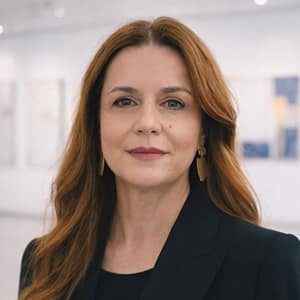
Elena Chasalevri

Your organization field and mission:

Our organization is a Vocational High School operating in the education sector, offering specialized training across five key fields: Information Technology, Applied Arts, Electrical Engineering, Mechanical Engineering, and Administration & Economics. Our mission is to equip students with practical skills, technical knowledge, and professional competencies that prepare them for both the labor market and further education, while fostering innovation, digital literacy, and lifelong learning.

Please tell us briefly about your role in the company / at your organization:

As the Principal, I am responsible for the overall leadership, strategic planning, and daily management of the school. My role includes overseeing educational programs across all sectors, supporting teachers and staff, ensuring a high quality of vocational training, and fostering partnerships with external stakeholders. I also promote innovation, digital skills development, and an inclusive learning environment for all students.

Your interest in STEM

My interest in STEM emerged through my work as a visual artist and graphic designer. While engaging with digital tools, design software, and creative technologies, I became increasingly interested in the intersection between art and technology. This led me to explore areas such as digital design, computational creativity, and the role of technology in modern education. Over time, I developed a strong appreciation for how STEM skills can enhance creativity, problem-solving, and innovation.

My first role models were my teachers and my family. There has always been a strong technical orientation in my family, and since I had a great interest in mathematics, I was inspired by relatives and teachers who encouraged me to engage with STEM subjects. Their support played a key role in motivating me to follow this direction during my high school education. Today, I continue to be inspired by educators and professionals who combine creativity, technology, and innovation in meaningful ways.

Your studies

Strengths: Strong interest in creativity, along with the ability to combine artistic thinking with analytical skills.
Weaknesses: At times, balancing creative interests with more structured subjects was demanding.
Opportunities: My work as an educator with a technical orientation encouraged me to pursue STEM-related paths and develop my skills further.
Threats: Limited access at times to advanced resources and the challenge of choosing between different career paths that interested me equally.
Overall, these challenges helped me build resilience, adaptability, and a multidisciplinary perspective that continues to influence my professional role today.

Believe in yourself and don’t let stereotypes limit your choices. STEM and vocational fields offer exciting opportunities for creativity and innovation. Stay curious, keep learning, and don’t be afraid to take on challenges. With confidence and persistence, you can succeed and make a real impact

You at work

Our organization promotes Diversity, Equity, Inclusion, and Sustainability by ensuring equal access to education for all students and encouraging participation in all sectors, including STEM. We foster an inclusive environment based on respect and collaboration, while integrating sustainability awareness and responsible practices into our educational activities.

I am most proud of the positive changes I have achieved in our school over the past three years, including strengthening extroversion and active citizenship, improving the quality of education, and creating a more inclusive and dynamic learning environment for our students.

Your point of view

Technology empowers women by opening doors to knowledge, creativity, and opportunity. It gives them the tools to learn, innovate, and shape their own futures, breaking barriers and challenging stereotypes. Through technology, women can amplify their voices, lead change, and contribute to a more inclusive and forward-thinking society.

Keep learning, stay curious, and embrace challenges as opportunities to grow. With determination and passion, you can build a meaningful career and inspire others along the way.

By 2030, I envision a fully inclusive vocational education sector where diversity thrives, women lead in STEM, and sustainability is embedded in every aspect of learning, empowering all students to shape a better future.

To finish with

I value respect, empathy, and fairness in everything I do. Lifelong learning guide both my personal and professional life.

One of my main future challenges is to balance my role as a school leader with my identity as an educator, while also maintaining my creativity as an artist.

By 2030, I hope my career will have evolved in ways I cannot yet fully imagine.

The current activity has been implemented in the framework of the Project: Code4Europe,
GA Number: 101158834. Official project website : 
https://codeweek.eu/ 
[ April 16, 2026 by ECWT 0 Comments ]

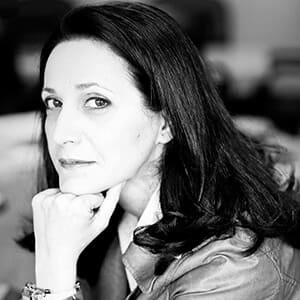
Marica Labrou

Your organization field and mission:

Business & Leadership Consulting – offer top-level leadership services to organizations and individuals eager to apply agile transformational strategies in a dramatically changing world.

Please tell us briefly about your role in the company / at your organization:

I founded CEL consulting company to offer top-level leadership services to organizations and individuals eager to apply agile transformational strategies in a dramatically changing world. My professionalism, passion, commitment to results, and forward-looking approach are a natural result of my authentic stance in life: fighting spirit, structured (engineering) approach, compassion, assertive resilience, and continuous learning alignment.

I have written the book “”Secrets of Success for Family Businesses in the New Era“” (2020), and have contributed to the book “”60 Leaders on Innovation“” (2021). I currently offer consulting services to medium and large family enterprises, also regarding AI strategy.

Your interest in STEM

I studied a STEM discipline — I am a Chemical Engineer. My first real professional exposure to the technology sector came when I joined HP in 1996 to take on the Product Management role for PCs and laptops. At the time, I was already a proven professional in product management, but relatively unfamiliar with the IT sector.

However, I quickly grew to love the industry — and it seemed to love me back. I went on to serve in several IT companies, both local and international, for more than 20 years, eventually moving up to the role of CEO of one of the largest IT groups in Greece.

I greatly admired Carly Fiorina, who served as Chief Executive Officer of Hewlett-Packard from 1999 to 2005 with the mission of transforming the company. She was also the first woman to lead a Fortune Top-20 company. I found her particularly inspiring for her dynamic spirit and her anti-stereotypical profile — a woman leading a global technology giant while having studied History and Philosophy.

Later on, I came across the remarkable story of Ping Fu, the Chinese-American entrepreneur who moved from China to the United States and founded Geomagic, an exceptional 3D printing company. She has also served on the U.S. National Advisory Council on Innovation and Entrepreneurship since 2010. In my view, Ping Fu is a powerful example of resilience.

Your studies

Being one of the few women studying Chemical Engineering at the time was not a problem to overcome; on the contrary, it was a source of pride and confidence. I truly enjoyed that experience.

STEM studies were still relatively uncommon for women, but those who chose that path and succeeded were widely admired. I carried that sense of confidence with me throughout my life.

The real challenges began after I graduated, when it was time to find a job as a woman engineer.

Some years ago, while speaking with young women who were considering pursuing studies in the IT sector, I shared with them what I called a “sailing decalogue” — a set of simple principles to help them navigate their journey. I believe these ideas remain just as relevant today.

The Sailing Decalogue
1. Be yourself
2. Aim high
3. Include effort in your dreams
4. Build resilience
5. Dare to fail
6. Never give up
7. Always look for the next great opportunity
8. Stay optimistic
9. Remember: we receive back what we send out
10. Enjoy life — (YOLO)

You at work

I can share some DEIS (Diversity, Equity, Inclusion, Sustainability) initiatives from previous organizations where I served as Managing Director or CEO:

1. Promoting equal opportunities in recruitment and career development, ensuring that talent and performance were the primary criteria for advancement.
2. Actively supporting women in leadership roles and encouraging more balanced representation in management teams.
3. Establishing internal mentorship programs, pairing senior women leaders with junior female employees to support their professional growth and confidence.
4. Organizing speaking events and discussions with inspiring external women leaders, who shared their experiences, challenges and lessons learned with our teams.
5. Holding monthly meetings for all women managers in the company, creating a space to discuss challenges, exchange perspectives and agree on initiatives that could further strengthen inclusion and development.
6. Creating a work environment based on respect, openness and meritocracy, where different perspectives were valued and encouraged.
7. Supporting flexible working arrangements and policies that helped employees better balance their professional and personal lives.
8. Encouraging a culture of learning, inclusion and collaboration, where people felt empowered to contribute their ideas.
9. Integrating responsible and sustainable practices into the organization’s operations and strategic priorities.
10. Last but not least, establishing a Women Managers Team to objectively oversee and support the company’s Diversity & Inclusion practices.

A few years after I had completed my studies, when I joined a global IT company as a Product Manager, I found myself in a professional environment that was overwhelmingly male-dominated. As I progressed in my career and assumed roles of greater responsibility and authority, this imbalance became even more evident — the higher I moved, the fewer women I saw in those positions.

At times, it could feel quite lonely: as a woman participating in Boards, and later as a Managing Director and CEO of large organizations. That said, I was fortunate that in business interactions I was always treated with respect and professionalism.

What I am most proud of, however, is leaving a positive “stamp” on the people I have worked with. I feel truly happy when I meet former colleagues, and they tell me that, in some way, I influenced them to make a positive change in their professional or personal lives. For me, that is the most rewarding achievement of all, especially if the recognition comes from women ex-colleagues

Your point of view

Technology — and especially Artificial Intelligence (AI) — can empower women in several powerful ways, both professionally and socially:
– Access to education and skills: AI-powered learning platforms enable continuous upskilling and easier access to STEM and leadership knowledge.
– Greater work flexibility: Digital tools and remote work allow better balance between professional and personal responsibilities.
– Entrepreneurship opportunities: Technology and AI tools help women start and scale businesses by automating tasks, and reaching global customers.
– Reducing bias: Well-designed AI systems can support more objective decisions in hiring, promotions, and evaluations.
– Amplifying women’s voices: Digital platforms allow women to share ideas and build networks, strengthening their professional influence.
– Better decision-making: AI tools help women leaders process complex information and make more informed strategic decisions.
– Mentorship and communities: Technology enables global networks for mentorship, collaboration, and support among women professionals

Follow the studies “decalogue” above plus: Never give up and never question your ability achieve even trh emore challenginf tasks. You can! Just dream and work!

Never give up and never doubt your ability to achieve even the most challenging goals. You can do it — just dream and work for it!

To finish with

Four years ago, while delivering a TEDx talk, I realized that my life and professional journey had been shaped by two seemingly opposite forces: ambition and humility. Ambition pushes me to aim high and pursue meaningful goals, while humility reminds me to keep learning, stay grounded, and respect the people around me. I try to practice both — and I draw inspiration from each of them.

Getting older usually means becoming wiser — and I hope this proves true for me as well. Of course, it can also mean becoming weaker, but I hope that moment will be delayed for as long as possible.

My challenge is to continue learning, staying curious, and remaining relevant so that I can keep contributing meaningfully to people around me.

I hope to continue being helpful to both individuals and organizations for many years to come. I would like to keep developing new and creative ideas that support my clients — especially family businesses — as they navigate the challenges of the future.

I also hope that I will finally find the time to write the book I dream about on leadership.

The current activity has been implemented in the framework of the Project: Code4Europe,
GA Number: 101158834. Official project website : 
https://codeweek.eu/