
[ March 24, 2026 by ECWT 0 Comments ]

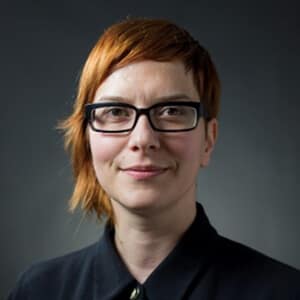
Theodora Katsila

Your organization field and mission:

NHRF advances interdisciplinary science, translational research, and AI-enabled innovation for societal benefit and sustainable development.

Please tell us briefly about your role in the company / at your organization:

I lead an interdisciplinary research laboratory at NHRF, where we integrate computational science, biochemistry, and bioengineering to accelerate innovation in healthcare. Launching the IN3© framework, my team develops AI-driven biomarker discovery strategies and translational solutions that bridge fundamental science with real-world clinical impact. I am passionate about empowering young scientists and advancing research that serves society.

Your interest in STEM

My interest in STEM was born very early, driven by curiosity rather than a specific career plan. As a child, I was fascinated by understanding how things work — from biological systems to patterns in nature. During school, chemistry and biology became my way of making sense of the world, while mathematics gave me the language to describe it.

Over time, I realized that science is not only about knowledge, but about solving real problems that affect people’s lives. That realization transformed curiosity into purpose. Today, my passion lies at the intersection of sciences, where we can translate scientific discovery into tangible societal impact.

My first role model was not a single famous scientist, but my mum, who showed me that science is all about asking bold questions and my dad, who shaped the way I see research; craving for brainteasers. I have been inspired and still am by Marie Sklodowska Curie, while I have been deeply influenced by Friedrich Nietzsche. Mme. Curie was radically committed to knowledge. Her intellectual discipline, resilience, and refusal to accept imposed limits shaped my understanding of scientific responsibility and ambition. Friedrich Nietzsche insisted on intellectual independence. Scientific breakthroughs require the willingness to dismantle outdated paradigms and construct new ones with rigour and accountability

Your studies

During my studies, one of my biggest challenges was navigating interdisciplinary thinking in environments that were often structured within rigid disciplinary boundaries. I was deeply interested in connecting biochemistry, computation, and systems thinking at a time when such integration was not always encouraged. This sometimes meant pursuing unconventional paths and defending ideas that did not fit neatly into traditional frameworks.
At the same time, these challenges became strengths. They pushed me to develop independence, intellectual courage, and the ability to build bridges across fields; qualities that now define my leadership and research approach.

My two cents to the youth: Be intellectually fearless. STEM fields need your perspective, your questions, and your way of thinking.
Do not shrink yourself to fit existing systems. Learn the rules, master them, and then question them responsibly. Seek mentors, build alliances, and surround yourself with people who elevate your thinking rather than limit it. Most importantly, remember that competence builds confidence, not the other way around. Invest in your skills, stay curious, and do not apologize for ambition. Science advances through bold minds, and you are fully entitled to be one of them.

You at work

At NHRF, diversity and inclusion are embedded in our research culture through merit-based recruitment, equal opportunity policies, and active participation in European frameworks that promote gender equality and responsible research. NHRF supports interdisciplinary collaboration across institutes and encourages international mobility, fostering a diverse and globally connected research environment.

We operate within EU-aligned principles of open science, research integrity, and ethical compliance. Sustainability is reflected both in our research priorities, including health innovation, environmental resilience, and digital transformation, and in our institutional practices aimed at responsible resource management and long-term societal impact. As a laboratory head, I actively promote inclusive team environments, interdisciplinary mentorship, and equal participation in scientific leadership and visibility.

I am most proud of the research ecosystem I have built: a team culture that encourages bold thinking, cross-disciplinary integration, and scientific integrity. Launching the IN3© framework is just one of our achievement to better serve society and planetary health.

Your point of view

Technology empowers people. It reduces structural barriers, democratizes access to knowledge, and creates opportunities independent of geography, background, or social constraints. The real transformation happens when diverse minds design and lead technological development. When people participate not only as users but as creators, decision-makers, and innovators, technology becomes a force for broader societal equity.

My two cents to the youth:
Do not wait for permission to belong. You already do.
Invest deeply in your skills; competence builds confidence. Master your field, stay curious, and do not be afraid of complexity. Interdisciplinary sectors thrive on people who can think across boundaries. Seek mentors, but also become one. Build networks, collaborate generously, and choose environments that challenge and elevate you. And most importantly, do not dilute your ambition to make others comfortable. Science and technology move forward because of bold minds and your perspective is not optional; it is necessary.

By 2030, I would like diversity, equity, inclusion, and sustainability to be embedded structurally rather than discussed rhetorically. Representation should no longer be an initiative; it should be the norm across leadership, funding panels, and decision-making bodies. By 2030, success would mean that DEIS is no longer a corrective mechanism, but an integral feature of how science and technology operate.

To finish with

Intellectual integrity, courage, and responsibility.
I value rigorous thinking and evidence-based decision-making, but also the courage to question established frameworks and explore new ones. Innovation requires both discipline and boldness. I believe in accountability; to science, to society, and to the next generation of researchers and citizens. Excellence matters, but so does fairness. Collaboration, mentorship, and ethical responsibility are not optional in science; they are foundational. Above all, I value curiosity with purpose; using knowledge not just to understand the world, but to improve it.

One of my future challenges is contributing to shaping research ecosystems that are not only innovative, but transformative. As science becomes increasingly interdisciplinary and AI-driven, the real challenge is to help redefine how knowledge is generated, integrated, and translated responsibly.
I see my role evolving beyond leading projects toward helping design systems that accelerate impact while preserving scientific integrity. The future challenge is not only to advance technology, but to ensure that it serves humanity in meaningful and sustainable ways. 

By 2030, I hope to have grown not only in impact, but in perspective.
I hope to have expanded my role from laboratory leadership to broader strategic influence, contributing to the shaping of research agendas, strengthening industry–academia integration, and supporting sustainable innovation frameworks worldwide. At the same time, I hope to have grown as a leader, building resilient interdisciplinary teams, mentoring the next generation of scientists, and fostering research cultures grounded in integrity and collaboration. For me, career evolution is about deepening responsibility: ensuring that scientific progress remains ethically sound, socially relevant, and impactful.

The current activity has been implemented in the framework of the Project: Code4Europe,
GA Number: 101158834. Official project website : 
https://codeweek.eu/ 
[ March 20, 2026 by ECWT 0 Comments ]

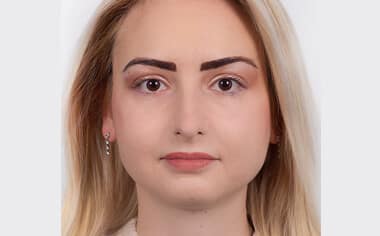
Aikaterini Tatsaki

Your organization field and mission:

The Biomedical Sciences Research Center (BSRC) “Alexander Fleming,” located in Vari, Greece, is a non-profit organization focused on advancing biomedical research, innovation, and education to combat human diseases. Its core mission is to understand the molecular mechanisms of diseases like cancer, immunity, and neurodegeneration, while developing novel diagnostic and therapeutic strategies.

Please tell us briefly about your role in the company / at your organization:

I am a postdoctoral researcher at the organization, where I conduct independent research, supervise Master’s and PhD students, write research grants, publish scientific papers, and teach in an international Master’s course.

Your interest in STEM

My interest in STEM developed during my school years, when I realized how much I enjoyed analytical thinking and problem-solving. I was particularly fascinated by how scientific research can generate new knowledge and have real-world impact. This motivation eventually led me to pursue advanced studies and a research career.

One of my early role models was Marie Curie, whose perseverance and groundbreaking work demonstrated that women belong in science at the highest level. Today, I am inspired by scientists and leaders such as Jennifer Doudna, whose contributions to CRISPR technology show how fundamental research can transform society.

Your studies

Funding uncertainties;
Balancing research, teaching responsibilities, and personal life.

Take opportunities to gain hands-on experience, through research projects, internships, or collaborations. Ask for guidance. It is also important to build a strong professional network. and surround themselves  with people who support and inspire them.

You at work

Our organization promotes Diversity, Equity, Inclusion, and Sustainability by ensuring equal opportunities in recruitment and career development, supporting mentorship programs, and fostering an inclusive and collaborative work environment. Sustainability is integrated into both our research activities and daily operations through responsible resource use and projects addressing societal challenges.

I am very  proud of my research contributions and of mentoring students, supporting them to reach their potential. On a personal level, I am deeply proud to be  the first member of my family to earn a PhD.

Your point of view

Technology can empower women by increasing access to education, professional opportunities, and global networks. Enable skill development and creating platforms for visibility and leadership.

When I started in STEM, I sometimes doubted whether I could succeed in such a challenging field. My advice to girls and women is to trust your curiosity, embrace challenges, and never be afraid to ask for guidance. Seek mentors, support each other, and remember that persistence and passion are very important.

By 2030, I hope STEM will be fully inclusive, with equal opportunities for women and underrepresented groups, widespread mentorship, and collaboration across cultures.

To finish with

I value collaboration, mentorship, and inclusivity, and I want  to contribute to research that positively impacts society.

My future challenges include balancing research, teaching, and mentorship while aiming for a permanent research position.

By 2030, I hope to have established myself in a permanent research position at a university or institute, leading impactful projects, mentoring the next generation of scientists, and contributing to a more inclusive and collaborative STEM community.

The current activity has been implemented in the framework of the Project: Code4Europe,
GA Number: 101158834. Official project website : 
https://codeweek.eu/ 

[ March 19, 2026 by ECWT 0 Comments ]

Eirini Liotou

Your organization field and mission:

Informatics and Telematics.

Please tell us briefly about your role in the company / at your organization:

I am an Assistant Professor at the Department of Informatics and Telematics, Harokopio University. My research field is “Design and Management of Software-Defined Networks.

You at work

We have a Committee for Gender Equality and Combating Discrimination.

Students feel comfortable discussing with me their concerns and dreams.

Your point of view

To finish with

Integrity, Honesty, Consistency of words and actions.

Become recognized among my fellow colleagues for my research profile and achievements.

I hope I will become Associate Professor having an impact on the research of computer networks.

The current activity has been implemented in the framework of the Project: Code4Europe,
GA Number: 101158834. Official project website : 
https://codeweek.eu/ 
[ October 22, 2025 by ECWT 0 Comments ]

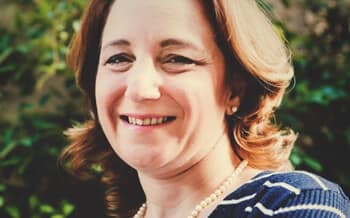
Roberta Trapani Maggi

Your organization field and mission:

The Curriculum Entitlement section, part of the Secretariat for Catholic Education, mission is to provide curricular guidance and support to school leadership teams and teachers in curricular and methodological matters. It strives towards helping teachers provide learning experiences which enhance the learning and progress of each and every child according to his or her potential in Catholic Schools in the Maltese Islands.

Please tell us briefly about your role in the company / at your organization:

As a Head of Department for Digital Literacy and Transversal Skills, with a focus on supporting educators in integrating STEM, AI, and computational thinking across the curriculum. My work centres on designing and promoting innovative learning experiences that help students develop digital competence, creativity, and critical thinking. As an EU Code Week Leading Teacher, and Scientix and eTwinning Ambassador, I coordinate activities that encourage inclusive participation in coding and emerging technologies, guiding both teachers and students to use digital tools responsibly and meaningfully in addressing real-world challenges.

Your interest in STEM

My interest in technology began in childhood, watching my father tinker with mechanical and electrical projects. I was fascinated by how things worked and spent hours exploring and learning beside him. That early curiosity grew into a lasting passion for engineering and STEM education.

My first role model was my dad, and a family friend who was an electrical engineer, now a University professor – a field that was largely male-dominated at the time. Today, I continue to draw inspiration from women who challenge expectations and shape the future with courage and determination. Even when working against the current, seeing small but visible changes reminds me that persistence matters. Their example motivates me to keep pushing boundaries in my own field and to create spaces where every learner feels confident to explore, innovate, and believe that their ideas can make a difference.

Your studies

One of my biggest challenges during my initial university studies was persisting and proving my value in a male-dominated course. Later, during further studies, the greatest challenge was balancing multiple responsibilities at once — managing my studies, work, and a young family, while striving to maintain a healthy work-life balance.

Have confidence in yourself and keep moving forward. The road can be tough, but persistence pays off. Let curiosity lead your mind, kindness guide your heart, and effort guide your hands. Remember, failure is part of learning — pause, reflect, and try again.

You at work

A few initiations from the Secretariat for Catholic Education (SfCE) Malta include:

Dialogic Literary Gatherings (DLG): Inclusive classroom discussions fostering critical thinking, More info: https://www.csm.edu.mt/implementing-successful-educational-actions-for-enhanced-inclusion-in-school-communities/

Interactive Groups (IG): Community volunteers supporting student learning More info: https://www.csm.edu.mt/implementing-successful-educational-actions-for-enhanced-inclusion-in-school-communities/

Dialogic Pedagogical Gatherings (DPG): Teacher professional development on social justice and inclusion More info: https://www.csm.edu.mt/implementing-successful-educational-actions-for-enhanced-inclusion-in-school-communities/

Environmental Policy: Climate change and ecological responsibility aligned with Catholic teachings More info: https://church.mt/climate-change-tops-priorities-in-catholic-educations-secretariat-new-environmental-policy/

STEMMERSION Project: STEM resources using virtual tours, robotics, AR, and podcasts for skills development More info: https://www.csm.edu.mt/stemmersion-dissemination/

Code4Earth: Digital skills for tech solutions to environmental challenges More info: https://www.csm.edu.mt/stem-project-code4earth/

Inclusive Education Support: Policies and plans for diverse educational needs and transitions More info: https://www.csm.edu.mt/departments/student-services/inclusive-education/

Through projects like Code4Earth and STEMMERSION, I support educators and students in developing creativity, critical thinking, coding, computational thinking, and essential transversal skills to share best practices and create new opportunities.

Your point of view

Technology empowers women by providing access, skills, and opportunities that were once limited. It opens doors to STEM and digital careers, supports flexible learning and work, amplifies their voices, and allows them to create, innovate, and lead.

Have confidence in yourself and keep moving forward. The road can be tough, but persistence pays off. Let curiosity lead your mind, kindness guide your heart, and effort guide your hands. Remember, failure is part of learning — pause, reflect, and try again.

By 2030, I hope digital education empowers every student — especially girls and those with learning difficulties — to overcome barriers through technology, guided by an open-minded, growth-focused approach from educators and learners alike.

To finish with

I value curiosity, inclusivity, and resilience, driving innovation while supporting others to thrive. Empathy, integrity, and perseverance guide how I learn, teach, and lead in an evolving digital world.

Looking ahead, one of my key challenges is continuing to balance the demands of family life with a rapidly evolving professional role, particularly as digital technology and AI continue to transform education. I see this as an opportunity to develop resilience, adaptability, and sustainable strategies that allow me to lead effectively, support others, and maintain a healthy work-life balance while continuing to grow personally and professionally.

By 2030, I hope to to drive inclusive digital learning, blending research, teaching, and innovation to empower the next generation — especially girls and underrepresented groups in tech.

The current activity has been implemented in the framework of the Project: Code4Europe,
GA Number: 101158834. Official project website : 
https://codeweek.eu/ 
[ October 16, 2025 by ECWT 0 Comments ]

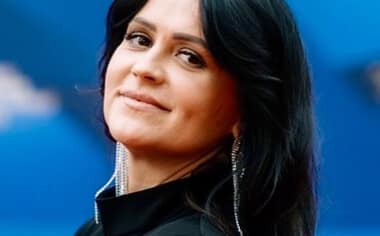
Nataliia Perekhryst

Your organization field and mission:

My mission is to develop high-quality, inclusive, and modern education that combines creativity, digital literacy, and the values of global citizenship. I integrate innovative technologies, including artificial intelligence and STEM education, into the learning process to inspire students to think critically, act responsibly, and shape a future built on knowledge and kindness.

Please tell us briefly about your role in the company / at your organization:

I work as a teacher of Computer Science and English, focusing on integrating innovative technologies and artificial intelligence into the learning process. I design and implement interdisciplinary STEM projects, organize workshops, and promote digital literacy among students. As an ambassador of EU Code Week and the Universal Youth Alliance, I represent and share best educational practices at national and international levels, fostering creativity, sustainability, and a culture of lifelong learning.
I am the winner of the “Computer Science Teacher of the Year 2025” nomination of the Global Teacher Prize Ukraine, which recognizes my professional excellence, leadership, and dedication to advancing modern Ukrainian education.

Your interest in STEM

My interest in STEM was born during my early teaching years, when I realized how powerfully science and technology could spark curiosity and creativity in children. With a background in Physics, Computer Science, and English, I began integrating interdisciplinary projects that connected coding, robotics, and environmental studies. Seeing how students’ eyes lit up when they could create and solve real problems inspired me to focus on STEM education as a way to prepare them for the future. Over time, this passion grew into larger initiatives — including AI-based environmental projects like “SmartSort: AI for a Clean Future” — aimed at developing critical thinking, innovation, and sustainability in the classroom.

My first role model was my grandmother, a teacher with encyclopedic knowledge and an incredible ability to love everyone equally. She taught me that true strength lies in kindness, responsibility, and lifelong learning. Growing up, I was inspired by her wisdom, honesty, and unwavering faith in education as a force for good.
Today, I continue to be inspired by innovative educators and leaders who use technology and creativity to transform learning — people who show that education is not just about knowledge, but about shaping values, empathy, and a better future for all.

Your studies

During my studies, my biggest challenges included:
Strengths: I have strong curiosity, discipline, and a love for learning, which helped me engage deeply with complex subjects like physics, computer science, and pedagogy.
Weaknesses: Balancing multiple disciplines at the same time and applying theoretical knowledge in practical classroom settings was sometimes difficult.
Opportunities: Access to modern educational resources, mentorship from experienced teachers, and participation in innovative projects allowed me to explore interdisciplinary approaches and STEM integration.
Threats/Challenges: Limited practical experience with emerging technologies initially, and the need to adapt quickly to rapid changes in educational tools and methodologies, especially in digital and AI-driven learning.

My advice to girls and women who want to pursue studies in STEM and education:
Believe in your curiosity and creativity, and never let stereotypes or self-doubt limit you. STEM fields thrive on curiosity, problem-solving, and innovation — qualities that everyone can develop. Seek mentors, embrace challenges as opportunities for growth, and don’t be afraid to take risks or try new technologies. Remember that your perspective, empathy, and unique ideas are as valuable as technical skills. By following your passion and staying persistent, you can not only succeed in your studies but also inspire future generations

You at work

At my school, we actively promote diversity, equity, inclusion, and sustainability through both curriculum and extracurricular projects. We design lessons and STEM projects that are accessible to all students, including those with special educational needs, ensuring everyone can participate and thrive. I lead initiatives such as “SmartSort: AI for a Clean Future”, which teach environmental sustainability through AI-driven waste sorting, combining technology with social responsibility.

We also foster cultural awareness and collaboration, encouraging students to work in diverse teams and respect different perspectives. Through partnerships with international programs such as EU Code Week, Universal Youth Alliance, Global Teacher Prize, Global Money Week, and participation in the Science on Stage AI Challenge platform, students engage in global projects that emphasize ethical, sustainable, and inclusive approaches to learning and problem-solving. These initiatives aim to create a learning environment where every student feels valued, included, and empowered to make a positive impact on their community and the world.

I am proud that in just one year I have achieved a series of significant accomplishments: winner of Coding Week 2024, winner of the “Modern Educational Institutions 2025” competition, ambassador of Global Money Week, winner of Code Week grant projects, and winner of the “Computer Science Teacher of the Year 2025” nomination of the Global Teacher Prize Ukraine. These achievements reflect my dedication to innovation, STEM education, and inspiring students to be creative, responsible, and proactive in shaping their future.

Your point of view

Technology can empower women by providing access to knowledge, skills, and opportunities that were previously limited. Digital tools, online learning platforms, and STEM education enable women to build careers in science, technology, engineering, and mathematics, pursue entrepreneurship, and engage in global networks. Technology also helps women amplify their voices, connect with mentors, and advocate for equality and social change.

By embracing innovation and digital literacy, women can overcome barriers, unlock their potential, and create impact in their communities and beyond, shaping a more inclusive and equitable future.

Believe in yourself and your curiosity, and don’t let stereotypes or self-doubt limit your potential. STEM fields thrive on creativity, problem-solving, and persistence — qualities that everyone can develop. Seek mentors, embrace challenges as opportunities to grow, and don’t be afraid to explore new technologies or innovative approaches. 

Remember that your unique perspective, empathy, and ideas are just as valuable as technical skills. Follow your passion, stay persistent, and know that by doing so, you can not only succeed in your career but also inspire future generations.

By 2030, I would like to see DEIS (Diversity, Equity, Inclusion, and Sustainability) fully integrated into STEM education and schools globally.

I envision a world where every student, regardless of gender, background, or ability, has equal access to high-quality STEM learning and opportunities to innovate. I hope schools become inclusive spaces where diversity is celebrated, collaboration across cultures and perspectives is the norm, and sustainability is embedded in every project and curriculum.

I also hope that by 2030, technology and AI will be used ethically and responsibly to support inclusive education, ensuring that no one is left behind. Ultimately, I want education to empower students to be problem-solvers, innovators, and responsible global citizens who contribute to a fairer, greener, and more equitable world.

To finish with

My values are integrity, empathy, curiosity, and lifelong learning. I believe in acting with honesty and responsibility, treating everyone with respect and care, and continuously seeking knowledge to grow personally and professionally. I value creativity, collaboration, and inclusivity, striving to inspire others and create learning environments where everyone feels empowered and supported.

My future challenges as a professional include continuously adapting to the rapid changes in educational technologies, particularly in the fields of AI, digital tools, and emerging STEM disciplines. I strive to balance innovation with inclusivity, ensuring that new methods and technologies are accessible to all students, including those with special educational needs.

Another challenge is scaling impactful projects, such as “SmartSort: AI for a Clean Future,” to reach more schools and communities while maintaining quality and sustainability. Additionally, I aim to mentor and inspire other educators, helping them implement innovative approaches and DEIS principles in their own classrooms. I am also a winner of the “Educational Dream” nomination, which has given me the opportunity to pursue my main goal — creating my own digital school, combining innovative technologies, STEM education, and inclusive approaches to make learning accessible, modern, and inspiring for every student.

Ultimately, my goal is to continue growing as a leader and lifelong learner, while ensuring that my work positively impacts students, colleagues, and the broader educational community.

By 2030, I hope my career will have evolved to a level where I can lead large-scale educational innovations that combine STEM, AI, and inclusive learning approaches. I envision expanding my digital school, creating a platform where students from diverse backgrounds can access high-quality, personalized education and develop critical thinking, creativity, and problem-solving skills.

I also hope to mentor and inspire a new generation of educators, helping them implement innovations, DEIS principles, and technology to make learning more engaging and equitable. In addition, I aim to become a school principal or lead an educational administration, allowing me to influence education at the institutional or regional level.
Ultimately, I want my work to have a meaningful global impact, fostering inclusive, sustainable, and forward-thinking education that prepares students to contribute positively to their communities and the world.

The current activity has been implemented in the framework of the Project: Code4Europe,
GA Number: 101158834. Official project website : 
https://codeweek.eu/ 
[ October 15, 2025 by ECWT 0 Comments ]

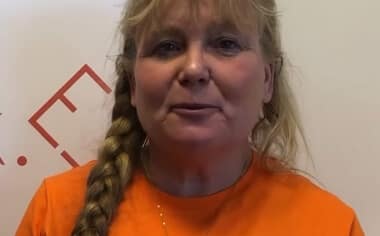
Annie Bergh

Your organization field and mission:

I work at the Department of development in the city of Malmö. The Development Department of the City of Malmö works to ensure “Varje elevs bästa skola” – Every Student’s Best Possible School.
Our mission is to support schools in providing high-quality, equitable, and future-oriented education for all learners. We strengthen schools through innovation, inclusion, digitalisation, and international collaboration — always with the student’s learning, wellbeing, and participation at the centre. By building bridges between research, practice, and policy, we help teachers and leaders develop sustainable practices that prepare students for an increasingly digital, interconnected, and rapidly changing world.

Please tell us briefly about your role in the company / at your organization:

As an International Coordinator at the Development Department of the City of Malmö, my mission is to connect innovation, inclusion, and international collaboration in education — turning global opportunities into local impact and vice versa.
I coordinate several Erasmus+ KA2 partnerships and lead Malmö’s Erasmus+ KA1 Accreditation consortium for schools with students age 6 – 16, enabling around 100–150 teacher and student mobilities each year. These projects strengthen our schools’ work with digital transformation, sustainability, and equity in education.
I currently serve as President of the EU Code Week Council, as well as an EU Code Week Ambassador and eTwinning Ambassador, promoting creativity, coding, and collaboration across Europe. For seven years, I were the regional project leader for the FIRST LEGO League finals in Skåne/Malmö, empowering students to explore STEM, innovation, and teamwork, up until 2023. As the person responsible for Malmö’s work with NAO robots, I have spent nearly a decade using robotics to enhance language learning, reading motivation, and inclusion for students aged 6–19. I learned programming myself through this work — together with teachers and students — which strengthened my belief that learning should always be collaborative, playful, and human-centred. In addition, I design and host international training courses, study visits, and dissemination events in Malmö to share results, inspire others, and build long-term partnerships. My goal is to empower both educators and students to see themselves as changemakers shaping Europe’s digital and sustainable future.

Your interest in STEM

My interest in STEM grew naturally through my work — by learning with and from students. Seeing their curiosity, creativity, and problem-solving skills develop sparked my own fascination. Over time, working hands-on with our NAO robots deepened that passion; programming and experimenting alongside teachers and students taught me that technology can be both empowering and profoundly human.

International collaborations through Erasmus+ projects, eTwinning, and EU Code Week have also shaped my understanding of how STEM can unite people across cultures. For me, STEM is not just about science and technology — it’s about curiosity, creativity, and collaboration as driving forces for positive change.

I have been fortunate to meet many inspiring people who have shaped my professional journey. One of the first was Leila Khammari, a visionary STEM and STREAM advocate and founder of STREAM Scandinavia, whose work connects education with industry and opens doors for young people in technology and innovation.

Another is Sumita Batharrayya from Vellinge, whose leadership and dedication to creativity, equity, and lifelong learning continually remind me that courage and compassion are the foundation of all meaningful change.

I am also deeply inspired by Professor Chunfang Chen from the University of Southern Denmark, whose research into creativity, innovation, and engineering education has profoundly influenced how I view learning as a shared, evolving process between research, practice, and policy.

And, perhaps most powerfully, Team Amaryllis from Malmö — a group of extraordinary students who have represented Sweden in both the Scandinavian and World Finals of the FIRST LEGO League. Their creativity, teamwork, and perseverance embody everything that education should nurture.

Together, these individuals — educators, researchers, and students — remind me daily that inspiration flows in all directions. Real change happens when we listen, learn, and create together.

Your studies

My biggest challenge has been stepping into the world of digitalisation and technology from a non-technical background. As a teacher of languages, social science, and core values, learning to master digital tools, programming, and leading digital development was at first overwhelming. The learning curve was steep — and many times, the struggle felt very real.

But these challenges became my greatest teachers. They taught me perseverance, curiosity, and the importance of learning together with others. Today, this journey allows me to bridge disciplines and help other educators see that technology isn’t only for “tech experts” — it’s a creative language that anyone can learn to speak.

My advice is: don’t wait until you feel ready — start, and learn as you go. You don’t need to be a “tech person” to belong in this field. Curiosity, creativity, and empathy are just as valuable as coding or engineering skills.

Surround yourself with people who lift you up, ask questions fearlessly, and never apologise for wanting to understand how things work. Technology and innovation need diverse voices — and your perspective matters.

And remember: every time you doubt yourself, someone else is waiting to see someone like you succeed. Be that person — for yourself, and for the girls who will come after you.

You at work

The City of Malmö’s Development Department works strategically with diversity, equity, inclusion, and sustainability (DEIS) in every aspect of our mission — guided by the vision “Varje elevs bästa skola” (“Every student’s best possible school”).

Our work is strongly aligned with the UN Sustainable Development Goals (SDGs). We empower schools and students to take real action for sustainability through authentic, cross-curricular learning experiences. One of our key initiatives is InnoCarnival, where students develop innovative solutions to real global and local challenges, learning to see themselves as active changemakers.

Through international Erasmus+ projects such as UNITY, ECO-STEAM, and M-STEM, we integrate sustainability, digital literacy, and global citizenship into everyday teaching and learning. Inclusion and equity are at the heart of all our activities — from school-dog pedagogy supporting emotional inclusion to NAO robotics inspiring reading motivation and curiosity in students of all ages.

Sustainability for us means more than environmental responsibility — it also includes social and digital sustainability: building resilient, inclusive, and future-ready schools where every learner can thrive and contribute to a better world.

What makes me most proud is seeing how technology can reconnect, empower, and include students who might otherwise be left out.

I initiated the introduction of AV1 telepresence robots in Malmö, and for seven years I worked with schools to make sure children who could not physically attend school — due to illness, anxiety, or other circumstances — could still be present, learn, and stay part of their class community. The impact was profound: friendships continued, learning progressed, and belonging was restored.

I also initiated Malmö’s long-term work with NAO robots, using them to support language learning, reading motivation, and inclusion among many other initiatives  from ages 6 to 19. Watching teachers and students discover new ways to learn together — across subjects, cultures, and abilities — is what continues to inspire me every day.

For me, true innovation is not about technology itself, but about how it helps us stay human, connected, and hopeful.

Your point of view

Technology can be one of the most powerful tools for equity and empowerment — when access, skills, and confidence are shared equally. It opens doors for women to learn, connect, and lead on their own terms. For me, empowerment begins with visibility and voice. When women design, code, innovate, and lead projects, they reshape what technology looks like — and who it is for. Technology allows women to collaborate across borders, challenge stereotypes, and create new opportunities not only for themselves but for others who follow.

In education, I’ve seen how girls gain confidence when they realise they can build robots, program code, or lead a digital project. The key is not just teaching technology — it’s inviting women and girls to see themselves as creators of it. That’s how technology becomes truly transformative: when it helps everyone participate equally in shaping the future.

My advice is simple: believe that you belong here — because you do. You don’t need to fit a certain profile or have a technical background to make an impact in technology and education. Curiosity, creativity, and empathy are your greatest strengths.

Start small, stay curious, and don’t be afraid to ask questions or make mistakes — that’s how real learning happens. Surround yourself with people who share knowledge generously and lift each other up.

This field needs more women’s perspectives, voices, and ideas. We design better solutions when more people are included in shaping them. So take your place — not quietly, but confidently — and remember: the future of technology is brighter when you’re part of it.

By 2030, I hope diversity, equity, inclusion, and sustainability (DEIS) are no longer seen as separate goals — but as the foundation of how we design education and technology. I want every student, regardless of gender, background, or ability, to have equal access to meaningful digital learning experiences. Technology should not widen gaps — it should close them. That means designing tools, policies, and learning environments that are accessible, inclusive, and sustainable from the start.

I also hope that by 2030, we see more women and underrepresented groups in leadership roles across education and technology, shaping decisions and innovations that reflect the diversity of our world. In short, I want DEIS to move from being a vision to being our shared reality — where every learner, teacher, and innovator can thrive and contribute to a better, more sustainable future.

To finish with

My core values are inclusion, curiosity, collaboration, empathy, wellbeing, and building relations. For me, everything begins with building meaningful relations — creating trust, understanding, and a sense of belonging between people. Strong relationships are the foundation of learning, leadership, and innovation. I believe education should open doors for everyone, helping each learner feel seen, valued, and capable. Curiosity drives creativity, and learning should be a joyful, lifelong process that grows through collaboration.

Empathy and wellbeing — including digital wellbeing — are equally important. Technology should strengthen human connection and support balance, not replace it. These values guide my work every day, reminding me that the true goal of innovation is not efficiency, but human connection, growth, and hope.

One of my future challenges will be to continue balancing rapid technological change with the human dimension of education — ensuring that digital transformation always serves people, not the other way around. As technology evolves faster than ever, I want to keep developing my own digital skills while staying grounded in empathy, inclusion, and wellbeing. Another challenge is to build sustainable systems for innovation — where creativity can thrive without overwhelming teachers or students.

I also see it as a personal mission to keep building relations across sectors and countries, creating bridges between education, research, and industry. Staying curious, open, and humble in this process will be both my biggest challenge — and my greatest strength.

By 2030, I hope to work even closer to students — empowering them, amplifying their voices, and helping them realise the power they have to shape the world. I want to continue supporting young people, but from a broader perspective than within a single school system.

I believe deeply in the voice of youth and the importance of creating platforms where they can influence, innovate, and lead. My goal is to work in a larger, international context — beyond the municipality — where my experience, creativity, and collaborative mindset can be used to drive positive change on a wider scale. I know that I can do so much more than I am doing today for more students than I reach today through my work: 36 000 in Malmö can easily be scaled up working in another context. I see myself connecting education, innovation, and policy in new ways, ensuring that digital transformation and inclusion go hand in hand — and that every young person feels seen, heard, and capable of making a difference.

The current activity has been implemented in the framework of the Project: Code4Europe,
GA Number: 101158834. Official project website : 
https://codeweek.eu/