
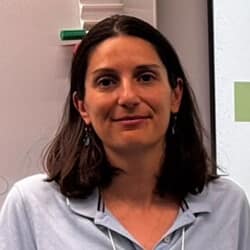
[ July 15, 2026 by ECWT 0 Comments ]

Dimitra Anastasiou

Your organization field and mission

At LIST, we connect fundamental and applied research across natural, built, and industrial environments, while tackling global challenges like AI, space, and defence and security to turn science into tangible results.

Please tell us briefly about your role in the company / at your organization

I am a Lead Research and Technology Associate at the Luxembourg Institute of Science and Technology (LIST). I am currently coordinating the Erasmus project Chat4EFL: https://www.chat4efl.eu/. Chat4EFL aims to improve the quality and effectiveness of EFL instruction in secondary schools by using AI technologies to create personalized learning experiences that address diverse student needs (giftedness, bilingualism, special needs).

Your interest in STEM

I followed the literature path (ancient Greek, Latin, History). My STEM curiosity began later towards the end of my BA Translators Degree.

Your studies

S: Organisation, Professionalism
W: Stress, Anxiety of Failure
O: Going abroad, doing a PhD and postdocs afterwards
T: not good financing

To try it out! To get informed about various possibilities, make internships, follow webinars, courses, talk to people!

You at work

LIST is extremely active in DEIS. It has a gender policy, it participates in equality marches, in diversity breakfasts, special events on International Diversity Day, among others..There was also a leadership training program only for females, for which I was selected and learned a lot about mentorship, leadership models, efficient project and people management, etc.

To put my innovative ideas in practice. To make AI research as science engagement project. To inspire young generation.

Your point of view

I turn it around: Women can inspire technology. We need female voices to train AI models, to make tools more inclusive and diverse.

To dare! Not be afraid of other voices and believe in you! Build your expertise and network and you will reach your goal!

To finish with

Professionalism, integrity, transparency, loyalty

Continue to be a scientific leader, supervise and motivate the younger generation and particularly young females to STEM

The current activity has been implemented in the framework of the Project: Code4Europe,
GA Number: 101158834. Official project website : 
https://codeweek.eu/ 
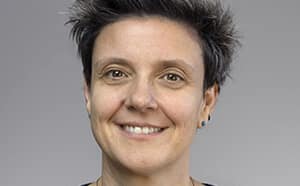
[ June 16, 2026 by ECWT 0 Comments ]

Marialena Vagia

Your organization field and mission

SINTEF’s field is applied research and technology development, and its mission is to create technology for a better society.  SINTEF researchers focus on combining research excellence with real‑world challenges, ensuring that our scientific work leads to practical, impactful solutions.

Please tell us briefly about your role in the company / at your organization

I work as a Senior Researcher at SINTEF, focusing on applied research that addresses real‑world industrial and societal challenges. My work combines scientific methods with practical problem‑solving, including developing and evaluating new technologies, collaborating with industry partners, and translating research results into solutions that can be implemented in practice.

Your interest in STEM

I’ve always loved mathematics. For as long as I can remember, I knew I wanted to work with numbers, logic, and problem‑solving. My interest in STEM didn’t have a specific starting point — it has simply always been there. I grew up wanting to become an engineer, driven by the excitement of understanding how things work and finding solutions to complex challenges. That early passion naturally led me into engineering and research, where I get to work with the things I’ve always enjoyed the most.

I never had one specific role model growing up, but I’ve always admired women who made a difference. I’m inspired by women who have fought for women’s rights, who have survived challenges, and who have thrived in male‑dominated fields. But it’s not only the well‑known figures who inspire me — I admire all women who push boundaries, create opportunities, and support each other. Their strength, resilience, and determination continue to shape my own path.

Your studies

I never had one single role model, but I’ve always been deeply inspired by women who make a difference. Growing up, I admired women who stood up for women’s rights, who refused to be limited by expectations, and who found the strength to thrive in male‑dominated fields.

But my role models aren’t only the famous ones. I’m equally inspired by everyday women — women who work hard, who support each other, who overcome challenges quietly, and who keep going even when things are difficult. Their resilience, courage, and determination have shaped how I see myself and the kind of person I want to be.

Just do it. There’s nothing to overthink, if you’re curious and motivated, go for it.

You at work

We are committed to diversity, equity, inclusion, and sustainability (DEIS) across our activities. This includes promoting gender balance and equal opportunities in hiring and project participation, encouraging diverse perspectives in research and innovation, and maintaining an inclusive and respectful workplace culture. Additionally, sustainability is embedded in our work, with a focus on responsible innovation and long-term environmental and societal impact.

I’m most proud of making things happen—bringing people together, navigating complexity, and turning ambitious ideas into real projects (even under tight deadlines!).

Your point of view

For me, technology has been a powerful enabler. It has opened opportunities to collaborate internationally, contribute to meaningful projects, and have a voice in shaping solutions. I believe real empowerment comes when women are not just users of technology, but also active creators of it.

We need you! Your ideas, perspectives, and skills are essential for shaping the future of this sector.

To finish with

I value being curious, working well with others, and actually getting things done.

Trying to do things well without overcomplicating them, and learning to say no when needed.

I just want to keep growing, doing interesting work, and being part of projects that matter.

The current activity has been implemented in the framework of the Project: Code4Europe,
GA Number: 101158834. Official project website : 
https://codeweek.eu/ 
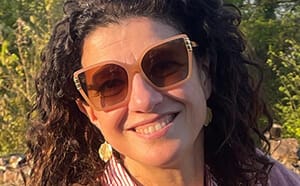
[ April 28, 2026 by ECWT 0 Comments ]

Sihem Amer-Yahia

Your organization field and mission:

Research and Education

Please tell us briefly about your role in the company / at your organization:

CNRS Research Director and Deputy Director of the lab.

You at work

I launched the DEI initiative foe the data management organization and the most impactful events are informal lunch, chatting events.

Your point of view

To finish with

Reliability.

Maintain high energy and excitement in my work.

Reach out to underrepresented communities in Africa.

The current activity has been implemented in the framework of the Project: Code4Europe,
GA Number: 101158834. Official project website : 
https://codeweek.eu/ 
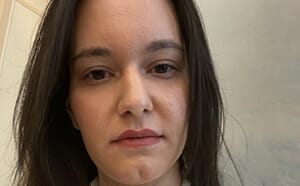
[ April 28, 2026 by ECWT 0 Comments ]

Efstathia Soufleri

Your organization field and mission:

Athena Research Center is one of Greece’s leading research institutions, advancing innovation in artificial intelligence, data science, language technologies, health informatics, and digital transformation. Its mission is to produce impactful research that benefits society, science, and industry.

Please tell us briefly about your role in the company / at your organization:

I work as a postdoctoral researcher focusing on trustworthy and efficient artificial intelligence. My research includes privacy-preserving machine learning, large language models, multimodal AI systems, and understanding how modern AI systems learn, generalize, and memorize information.

Your interest in STEM

My interest in STEM began early through mathematics. I was fascinated by how logic and equations could explain the world with clarity and elegance. Later, programming and artificial intelligence showed me how mathematics can be transformed into systems that solve real-world problems.

My first role models were teachers who believed in discipline, curiosity, and excellence. Today, I am inspired by scientists and innovators who combine technical brilliance with integrity and social impact, especially women who open paths for future generations.

Your studies

One of my biggest challenges was navigating highly competitive international academic environments while continuously adapting to new fields and expectations. At the same time, these experiences became strengths: resilience, independence, discipline, and confidence in solving difficult problems.

Believe that you belong in technical spaces. Do not underestimate your abilities, and do not let temporary setbacks define you. Build strong fundamentals, stay curious, ask questions, and keep going consistently.

You at work

Athena Research Center promotes equal opportunity, interdisciplinary collaboration, and inclusive participation in research and innovation. It supports merit-based excellence while encouraging diverse voices and international collaboration.

I am most proud of contributing original research in AI that combines scientific rigor with real societal value, especially in privacy-preserving machine learning and trustworthy AI systems.

Your point of view

Technology can empower women by expanding access to education, remote work, entrepreneurship, healthcare, financial independence, and global networks. It can also amplify women’s voices and leadership opportunities across every sector.

Develop confidence through competence. Learn deeply, stay persistent, and do not wait for permission to pursue ambitious goals. Your perspective is valuable, and the field needs more women leaders.

I would like to see equal representation in leadership, fair access to opportunities, transparent hiring and promotion systems, and AI technologies designed responsibly for all communities.

To finish with

Integrity, excellence, resilience, fairness, curiosity, discipline, and meaningful impact.

My future challenge is to continue growing as an independent researcher and leader while building impactful projects that bridge advanced AI research with real-world applications.

By 2030, I hope to be leading research initiatives in trustworthy artificial intelligence, mentoring younger scientists, collaborating internationally, and helping shape the future of ethical and high-impact AI.

The current activity has been implemented in the framework of the Project: Code4Europe,
GA Number: 101158834. Official project website : 
https://codeweek.eu/ 
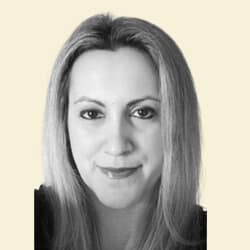
[ April 16, 2026 by ECWT 0 Comments ]

Anna Antonakopoulou

Your organization field and mission:

I-SENSE Group is a dynamic research unit of the Institute of Communication and Computer Systems (ICCS).Today, the Group brings together 10 cutting-edge research divisions and a global network of more than 300 partners, driving advancements in intelligent transport systems, smart and sustainable technologies, virtual and immersive environments, AI applications, robotics and industry 5.0 applications and beyond.

Please tell us briefly about your role in the company / at your organization:

Dr. Anna Antonakopoulou leads with a strong blend of strategic project management and team leadership. She is responsible for shaping and proposing project strategies, translating objectives into clear plans, and ensuring their effective execution through careful resource allocation, time scheduling, cost estimation, and continuous monitoring. Her role includes defining project activities, tasks, and deliverables, evaluating outcomes against expectations, and maintaining regular, accurate status reporting. With a close focus on follow-up and organisation, she ensures that projects progress efficiently, remain aligned with their goals, and deliver measurable results.

Alongside her project management responsibilities, Dr. Antonakopoulou provides leadership and supervision to the Smart Mobility team within the ISENSE Group of ICCS, a multidisciplinary group of 15 professionals including senior and junior researchers, project managers, and software and hardware developers. In this capacity, she coordinates and orchestrates the team’s activities and overall strategy, oversees project implementation, and ensures effective scheduling and monitoring across all workstreams. She also plays a key role in motivating team members and fostering the development of their skills and competences, creating an environment that supports both high performance and professional growth.

Your interest in STEM

My interest in STEM was born quite early, out of a natural curiosity about how things work and how ideas can be transformed into practical solutions. I was always drawn to subjects that combined logic, creativity, and problem-solving, and I found science and mathematics especially exciting because they offered a way to understand the world in a structured yet innovative way.

As I grew older, that curiosity developed into a deeper interest in engineering and technology. I became fascinated by the possibility of using scientific knowledge not only to explore complex challenges, but also to design systems and tools that can improve everyday life. This is what gradually led me toward STEM: the realization that it is a field where analytical thinking meets real-world impact.

Over time, this interest evolved into a professional commitment. Through my studies and career, I discovered that STEM gives me the opportunity to contribute to meaningful innovation, collaborate across disciplines, and help shape solutions for smarter, more sustainable societies. That combination of intellectual challenge and social value is what continues to motivate me today

My first role models were the people close to me who showed me the value of hard work, perseverance, and continuous learning. They inspired me to be curious, to aim high, and to believe that with dedication you can overcome challenges and achieve meaningful goals.

At present, I am inspired by people in science, technology, and leadership who combine knowledge with vision and use their work to create a positive impact on society. I especially admire those who support innovation, collaboration, and the development of younger generations, because they remind me that success is not only about personal achievement, but also about helping others grow.

Your studies

During my studies, one of my biggest challenges was managing the demanding workload and balancing different responsibilities at the same time. STEM studies often require strong commitment, continuous effort, and the ability to cope with pressure, so staying organised and consistent was very important.

Another challenge was building confidence in highly competitive and demanding academic environments. At times, this required perseverance and self-discipline, but it also helped me become more resilient and focused.

At the same time, these challenges became strengths, because they taught me how to work systematically, adapt to difficulties, and keep moving forward. They helped me develop both academically and personally, and they played an important role in shaping my professional path

My advice to girls and women who want to study in this sector is to believe in their abilities and not be discouraged by stereotypes or challenges. STEM needs diverse perspectives, creativity, and determination, and women have a very important role to play in shaping its future. It is important to stay curious, work hard, and not be afraid of difficult subjects, because confidence grows through effort and experience.

Most importantly, they should follow their interests with confidence and persistence. With dedication and passion, they can succeed, contribute meaningfully, and become role models for the next generation.

You at work

At ICCS and the I-SENSE Group, DEIS is not just a principle on paper; it is something we try to apply both in the way we work and in the kind of impact we want our research to have. ICCS has a formal Gender Equality Plan that focuses on areas such as governance, recruitment and career progression, flexible working, gender in research, participation in events and activities, and organisational culture. The plan states clearly that equality of opportunity is central to the Institute’s mission.

From my perspective within I-SENSE, this is reflected in a highly collaborative and multidisciplinary environment. I-SENSE is a research unit of ICCS within NTUA, with 10 research divisions, more than 100 researchers and engineers, and a strong network of partners, which naturally brings together people with different backgrounds, skills, and perspectives.

In my own area, as Division Leader of Smart Mobility Applied Systems, I see inclusion and sustainability as closely connected. Our work in smart mobility is driven by the goal of making mobility cleaner, safer, more efficient, and more inclusive, while supporting greener and more sustainable cities and communities.

So, if I had to describe our DEIS approach in a personal way, I would say that at ICCS/I-SENSE we aim to combine equal opportunities and an inclusive working culture with research and innovation that contribute to a more sustainable and people-centered future.

What I am most proud of in my work is being able to contribute to projects that have real impact on society, especially in the field of smart mobility and sustainable innovation. It is very rewarding to see ideas develop into practical solutions that can improve everyday life, support more efficient systems, and contribute to smarter and greener communities.

I am also proud of the teams I have led and supported throughout this journey. For me, success is not only about project results, but also about building strong collaboration, helping people grow, and creating an environment where innovation and teamwork can thrive. Seeing both projects and people develop successfully is one of the most meaningful achievements in my work

Your point of view

Technology can empower women by creating more opportunities for education, professional growth, entrepreneurship, and participation in decision-making. It gives women access to knowledge, digital skills, networks, and tools that can help them build confidence, develop their careers, and make their voices heard.

It can also reduce barriers by offering more flexible ways to work, learn, and collaborate, which is especially important in balancing different professional and personal responsibilities. At the same time, technology can support women in becoming innovators, leaders, and creators of solutions, not only users of them.

For me, the most important aspect is that technology can be a powerful enabler of inclusion and independence. When women have equal access to technology and digital opportunities, they are better positioned to contribute, lead, and shape the future in every sector.

My advice to girls and women who want to work in this sector is to trust their abilities, stay curious, and not be discouraged by challenges or stereotypes. Most importantly, they should believe that they belong in this field. With persistence, hard work, and passion, they can build a successful career, make a meaningful contribution, and inspire others to follow the same path.

By 2030, I would like to see DEIS become a natural and fully integrated part of the culture in our sector, not just a target or a policy discussion. I would like to see more women in leadership, more equal opportunities for career development, and more inclusive environments where different perspectives are truly valued.

I would also like to see technology and innovation developed with sustainability and social impact at their core, so that progress is not only measured by technical achievement, but also by the benefit it brings to people and society. For me, the goal is a sector where diversity is seen as a strength, inclusion is actively practiced, and sustainability guides the way we design and implement solutions.

To finish with

My core values are responsibility, integrity, collaboration, and continuous learning. I believe in working with professionalism and consistency, building trust through honesty and respect, and always aiming for quality and meaningful impact in what I do.

I also value teamwork and inclusion very strongly, because I believe that the best results come when people with different skills and perspectives work together toward a common goal. At the same time, I am deeply motivated by innovation and by the idea that our work should contribute positively to society and support a more sustainable future.

One of my future professional challenges is to keep growing as a leader in a fast-changing environment shaped by technology and innovation. This means continuing to learn, adapting to change, and guiding teams effectively.

At the same time, I want to balance strong project delivery with people-centered leadership, supporting collaboration, development, and meaningful impact

By 2030, I hope my career will have evolved through even greater contribution to impactful research and innovation, especially in areas that support smart, sustainable, and people-centered mobility solutions. I would like to continue growing as a leader, taking on broader strategic responsibilities while helping shape projects with strong scientific and societal value. At the same time, I hope to keep building and supporting strong teams, encouraging collaboration, innovation, and professional development.

The current activity has been implemented in the framework of the Project: Code4Europe,
GA Number: 101158834. Official project website : 
https://codeweek.eu/ 
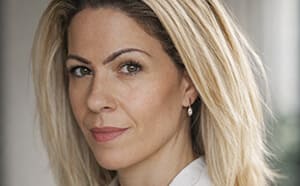
[ April 16, 2026 by ECWT 0 Comments ]

Ioanna Doutsou

Your organization field and mission:

Promoting groundbreaking research and innovation in all fields of sciences related to digital technologies (Institute of Communication and Computer Systems).

Please tell us briefly about your role in the company / at your organization:

As Senior PR Manager, I lead the strategic communication and public engagement activities of ICCS and the I-SENSE Group, with a strong focus on digital technologies, innovation and emerging research ecosystems. My role is to translate complex, high-impact work—ranging from AI, 5G/6G and IoT to smart mobility and Industry 5.0—into clear, compelling narratives that are accessible to media, stakeholders and the wider public.

I shape and manage our digital presence and branding strategy, designing targeted communication campaigns that highlight how innovation and advanced technologies are transforming key sectors such as mobility, sustainability and industry.At the same time, I actively contribute to large-scale European innovation projects, leading dissemination and communication activities to ensure that research results are not only visible, but also understood, adopted and translated into real-world impact. My work supports the connection between technology, innovation and society, strengthening ICCS and the I-SENSE Group’s role within the global digital innovation ecosystem.

Your interest in STEM

My interest in STEM goes back to my high school years, in the PC classroom. I still remember the atmosphere—rows of computers, the low hum of machines, and the curiosity we all felt as something new was unfolding in front of us. The internet was just starting to become widespread, and for the first time, we could access information, images and ideas from beyond our textbooks…

My first role model was actually one of my father’s students at the university. I remember being impressed by his enthusiasm for emerging technologies at a time when the internet was still new and full of unexplored potential. He was constantly trying to connect research with real-world applications, and always writing—blogging about new ideas, new tools and the possibilities that internet technologies were opening up.
As I progressed academically, I found new role models among my lecturers and professors. These were people who not only had strong scientific backgrounds, but also a clear vision of how technology can shape society. Unfortunately, I do not recall having a women as a role model..

Your studies

Over the past 20 years, the field of media and digital technologies has evolved rapidly, creating a constantly shifting landscape. Computer-mediated communication was -and still is- a game changer, and keeping pace with this change has required continuous learning and rapid adaptation to new tools and approaches. as concepts, technologies—even entire fields such as media law—were quickly becoming outdated.

This, At the same time, this dynamic environment pushed me to think across disciplines, combining technology, media and real-world applications, while also fostering creativity—since everything felt new and evolving. The allure of constant change has always been what sparked my curiosity about what comes next. Over time, this became one of my key strengths. During my studies, I often struggled with attention to detail, as I was naturally drawn to big ideas and the broader conceptual framework rather than finer execution points.

An open mind and flexibility towards change—these are essential ways of thinking and key attitudes in a rapidly evolving field. A genuine curiosity and love for learning are the most precious skill. Technology and science are constantly advancing, and the ability to continuously explore new knowledge will set you apart.
Develop the ability to think beyond the boundaries of your own discipline—to connect, synthesize and create at the intersection of fields, where technology meets other domains.This interdisciplinary mindset is critical for navigating the new era we are entering, where artificial intelligence is already reshaping the rules of the game.

You at work

Launching my own technology start-up at the intersection of digital marketing and emerging technologies has been one of the most defining -and innovative- recent chapters of my work. Earlier in my career, teaching at a UK university in areas such as digital marketing, digital network theory and media production laid a strong foundation, shaping the way I approach both technology and communication today. Over the years, coordinating and managing digital projects has been equally central to my journey, bringing together multidisciplinary teams to design and deliver platforms that translate complex ideas into practical solutions.Along the way, seeing my articles on science and technology published in major media outlets in the UK and Greece has been particularly rewarding, turning topics like AI and digital transformation into narratives that resonate beyond academia and reach a wider audience.
But what I am most proud of goes beyond work in the conventional sense: it is being able to build a rising career while raising two children, without feeling that one comes at the expense of the other. I feel proud that I managed throughout these years, to redefine success as a balance constantly negotiated and shaped at the conjunction of two completely different worlds – professional growth and motherhood-. It is a demanding path, but also a deeply transformative one, leading to resilience, perspective and a distinct form of leadership—one grounded in lived experience and a strength that only women come to recognise as their own

Your point of view

Technology provides the tools for women’s voices to be heard and gives them space to be heard on their own terms, beyond filters and expectations. This visibility can break established narratives and stereotypes create new ones, that have the power to spread rapidly and open new role models and ways for fulfilment for women. And perhaps importantly: it creates the conditions for women to combine motherhood and career in ways that were once structurally difficult, turning time, presence and productivity into something they can redefine for themselves.

Stay open-minded and adaptable—curiosity and continuous learning are your greatest assets in a rapidly evolving digital world.
Think beyond boundaries: the future belongs to those who connect disciplines and create at the intersection of technology and society, especially in the age of AI.
-Redefine success on your own terms: not as a choice between career and motherhood, but as a balance you consciously shape at the intersection of both: Embrace this dual path—it will challenge you, but it will also build resilience, a unique kind of leadership, grounded in real life—one that only women can truly define.

By 2030, DEIS in my sector should move beyond a one-size-fits-all approach and truly recognise that equality does not mean sameness. It should take into account that women and men work differently, real-life factors—such as motherhood—that require thoughtful and supportive structures, not neutral treatment. True inclusion means designing conditions that respond to these differences, enabling everyone to thrive on equal terms.

To finish with

Innovation. Freedom of Expression and Spirit. Impact. Leadership with empathy. Authenticity. Resilience. Curiocity and constant learning.

My future challenges, as a person, center on my role as a leader in a technology start-up: can I grow my leadership while balancing vision with empathy and a truly human-centered approach? And at the same time, can I meaningfully combine this path with my role in the research institution, without losing focus or purpose?

My future challenges, in terms of career, are closely tied to growing my technology start-up into a meaningful and sustainable venture, while continuing to evolve in my role as PR Manager and Senior Researcher at ICCS. A key part of my path is the work I carry out within the research institution—supporting the dissemination of high-impact results and showcasing the innovative work of research teams, ensuring that knowledge does not remain within labs but reaches society. Ultimately, the challenge is to connect all these roles—entrepreneur, communicator and professional—into a coherent trajectory that stays grounded in real-world needs and aligned with my personal values.

The current activity has been implemented in the framework of the Project: Code4Europe,
GA Number: 101158834. Official project website : 
https://codeweek.eu/ 
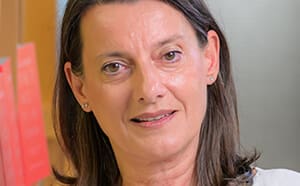
[ April 16, 2026 by ECWT 0 Comments ]

Vassiliki Kotroni

Your organization field and mission:

Key sector: Environmental research and sustainable development, with core activity spanning four thematic pillars: atmospheric environment, meteorology and hydrology, climate and climate change, and energy. Mission: To serve the research, scientific, technological and operational needs of its field through cutting-edge research, development of scientific instruments and software, provision of services to the scientific community, society and policy-makers, dissemination of scientific knowledge, and contribution to postgraduate and doctoral education.

Please tell us briefly about your role in the company / at your organization:

I am a Research Director at IERSD/NOA, holding a PhD in Meteorology. My role combines scientific research, project coordination, and applied support to society in the fields of weather, climate, and hydrometeorological hazards. I work on forecasting and modelling systems for extreme events, flood risk assessment, climate prediction, and climate services, while also contributing to national and European research projects, stakeholder engagement, and dissemination activities. Through this work, I support the development of science-based solutions for climate resilience, disaster risk reduction, and sustainable development.

Your interest in STEM

My interest in STEM began at an early age, when I developed a natural love for mathematics and science. I was especially drawn to problem-solving and to the challenge of understanding how things work.

My first role model was my mother, because she deeply believed in the value of education and passed this belief on to me. Later, my primary school teacher inspired me through his dedication and by cultivating in us a true love for learning. Τoday, I am mostly inspired by people who remain committed to justice, transparency, and integrity, and who achieve success without abandoning their principles.

Your studies

During my studies, one of my main challenges was to identify which direction within my education would best prepare me for the next stage of my career. At the same time, I had to develop my background in informatics and computational methods largely on my own, as my university studies did not provide relevant training, although these skills were crucial for the field I later followed, especially numerical weather prediction.

My advice is to study with dedication, work hard, and stay open to innovation. Equally important is to build a supportive environment by surrounding yourself with people who share your values and ideals, because this can make a real difference both in your professional path and in maintaining a healthy work–life balance.

You at work

A particularly important DEIS initiative in our organization is the establishment of a reintegration fellowship for women postdoctoral researchers who interrupted their research career because of maternity. This initiative helps address career discontinuities, supports equal opportunities in research, and reflects a meaningful commitment to inclusion, equity, and sustainability in the academic environment.

What I am most proud of in my work is having progressed in my career without losing my motivation, my sense of purpose, or my commitment to the values that guide me. I am proud that I continue to pursue each next step with consistency and determination, not only for my own development but also in a way that supports the people I work with and contributes to shared progress.

Your point of view

In our sector, technology has always progressed in parallel with research. For women, its empowering role lies not in a separate pathway, but in the way it broadens access to knowledge, strengthens participation in scientific work, enables collaboration, and supports a better balance between professional development and personal life.

My advice is to work hard, and stay open to innovation. In my field, research is not particularly male-dominated, so the main challenge is less about entering the sector and more about sustaining a healthy balance between personal life and professional growth.

By 2030, I would like to see more women holding positions of responsibility and leadership in my sector. Greater representation at this level would be an important step toward a more inclusive, fair, and forward-looking research environment.

To finish with

Integrity, honesty, meritocracy.

A key future challenge in my professional context is the need for new research positions in our sector. While the challenges facing society and science continue to grow, the permanent staff is ageing and decreasing, making renewal essential for the sustainability and future development of research.

A key future challenge in my professional context is the need for new research positions in our sector. While the challenges facing society and science continue to grow, the permanent staff is ageing and decreasing, making renewal essential for the sustainability and future development of research.

The current activity has been implemented in the framework of the Project: Code4Europe,
GA Number: 101158834. Official project website : 
https://codeweek.eu/ 
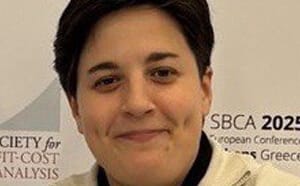
[ March 26, 2026 by ECWT 0 Comments ]

Georgia Papageorgiou

Your organization field and mission:

The Alliance of Excellence for Research and Innovation on Αephoria (AE4RIA) is an initiative for collaboration between research institutions, innovation accelerators, science-technology-policy interface networks, scientific associations, and academies focused on sustainable development. Our mission is to facilitate a science-driven and human-centric transformation towards the joint implementation of the Sustainable Development Goals of UN Agenda 2030, the Paris Agreement on Climate Change, and the European Green Deal.

Please tell us briefly about your role in the company / at your organization:

Economist with more than a decade of experience across academic research, European project development, and corporate leadership environments. Currently serving as Junior Researcher and Proposals Coordinator at AE4RIA, contributing to Horizon Europe proposal design, interdisciplinary research initiatives, and stakeholder engagement activities. Strong background in industrial organization, econometrics, and applied microeconomic analysis, combined with hands-on experience in project coordination, scientific writing, and dissemination strategy. Demonstrated ability to bridge rigorous economic analysis with real-world implementation, supporting evidence-based policy design, sustainability transitions, and strategic decision-making. Experienced educator and mentor at undergraduate and postgraduate levels, with additional leadership experience in corporate training, quality assurance, and service optimization. Recognized for analytical precision, organizational effectiveness, and the capacity to operate across research, policy, and operational contexts.

Your interest in STEM

My interest in STEM started with a strong inclination toward mathematics and analytical thinking. I was particularly interested in how structured, logical approaches could be used to understand complex problems. During my studies in economics, this interest deepened through econometrics and quantitative analysis, where I realized how powerful mathematical and statistical tools are in explaining real-world phenomena and supporting policy decisions. This experience led me to pursue a research-oriented path focused on data-driven and evidence-based approaches.

My first role models were my teachers, who demonstrated how knowledge, discipline, and curiosity can shape both personal and professional paths. Their ability to explain complex ideas and inspire critical thinking had a lasting impact on me. 

Today, I am inspired by researchers and leaders in the field of environmental and resource economics, particularly those who combine rigorous scientific work with real-world impact. Individuals who successfully bridge research, policy, and societal needs motivate me to continue developing my work in a way that contributes meaningfully to sustainable transitions.

Your studies

During my studies, one of my main strengths was my strong analytical thinking and ability to work with quantitative methods, which helped me perform well in demanding courses such as econometrics and advanced economics. I was also highly disciplined and committed to continuous learning.
A key weakness was balancing multiple responsibilities, especially as I was combining studies with teaching support and work experience. However, this gradually became a strength as I developed strong time management and organizational skills.
In terms of opportunities, my academic environment allowed me to engage with high-level research, develop technical skills, and gain teaching experience, which shaped my interest in pursuing a research-oriented career. 
One of the main challenges I faced was navigating the uncertainty of an academic path, particularly during my PhD candidacy years. This experience strengthened my resilience and adaptability, and helped me refine my professional direction toward applied research and project-based work.

My advice would be to trust your abilities and not be discouraged by stereotypes or self-doubt. Fields related to economics and STEM require persistence, curiosity, and analytical thinking, skills that are not defined by gender.
It is important to build a solid foundation in quantitative methods, seek supportive mentors, and actively engage in opportunities such as research projects or collaborations. At the same time, do not hesitate to step into leadership roles and make your voice heard.
Finally, remember that your perspective is valuable. Diverse viewpoints are essential for addressing complex challenges, especially in areas like sustainability and policy, where inclusive thinking leads to better solutions.

You at work

My organization promotes Diversity, Equity, Inclusion, and Sustainability through both research and community initiatives. A key example is the DEI Initiative of the European Association of Environmental and Resource Economists (EAERE), launched under the leadership of Professor Phoebe Koundouri. It focuses on fostering inclusivity in academia through dialogue, awareness, and actions addressing structural barriers.

In addition, DEIS principles are integrated into research and policy work, ensuring that sustainability transitions are not only environmentally effective but also socially inclusive and equitable

I am most proud of building a career that combines academic research, teaching, and real-world impact. From my early experience as a teaching assistant and lecturer to my current role in research and proposal coordination, I have consistently worked at the intersection of theory and application.
In particular, I take pride in leading and coordinating research proposals that translate complex ideas into funded projects. Over the past year, I contributed to the submission of more than 40 proposals and helped secure over €1.4 million in funding, supporting work on sustainability, climate, and socio-economic challenges.
At the same time, I value my experience in teaching, mentoring, and team leadership, as well as my background in corporate environments, which strengthened my ability to manage teams, improve processes, and deliver results. Overall, I am most proud of being able to connect analytical thinking, collaboration, and practical implementation in a meaningful way

Your point of view

Technology can empower women by increasing access to education, information, and professional opportunities, regardless of geographic or social barriers. Digital tools and online platforms allow women to develop skills, participate in research, and engage in global networks that were previously less accessible.
It also enables greater participation in decision-making processes, as data and digital solutions support evidence-based contributions in fields such as policy, business, and sustainability. At the same time, technology can foster entrepreneurship and financial independence, creating new pathways for women to lead and innovate.
Ultimately, when combined with inclusive policies and equal access, technology becomes a powerful enabler of both opportunity and representation.

My advice would be to build a strong foundation in analytical and quantitative skills, as these are essential in economics and research-related fields. At the same time, stay curious and open to interdisciplinary perspectives, as many of today’s challenges require combining knowledge from different domains.

Do not hesitate to take initiative, seek opportunities, and engage with research, projects, or networks early on. Having supportive mentors and collaborators can make a significant difference.

Most importantly, trust your abilities and be confident in your voice. Your perspective is valuable, especially in fields like sustainability and policy, where diverse insights are critical for developing effective and inclusive solutions

By 2030, I would like to see DEIS principles fully embedded in the economics and research sector, not as separate initiatives, but as a standard practice. This includes more balanced representation in leadership roles, research teams, and decision-making processes.

I would also like to see greater inclusivity in research itself, with more diverse perspectives shaping questions, methodologies, and policy recommendations, especially in areas like sustainability and climate transition.

Finally, I hope for more structured support systems, mentorship, funding opportunities, and institutional policies, that actively reduce barriers and create equal opportunities for women and underrepresented groups to thrive.

To finish with

My core values are integrity, curiosity, and responsibility. I value rigorous, evidence-based work and a commitment to producing knowledge that has real societal impact. I believe in collaboration, inclusivity, and respect for diverse perspectives, as these are essential for addressing complex challenges.

I am also guided by a strong sense of accountability and continuous learning, always aiming to improve both professionally and personally.

One of my main future challenges is to continue growing into a leadership role where I can guide complex, interdisciplinary projects while maintaining high scientific quality and real-world impact. This requires continuously strengthening both my technical expertise and my ability to coordinate diverse teams and stakeholders.

Another challenge is staying adaptable in a rapidly evolving field, particularly as sustainability, climate policy, and research funding landscapes become more complex and interconnected.

At the same time, I see it as a priority to contribute to more inclusive and collaborative working environments, ensuring that diverse perspectives are effectively integrated into research and decision-making processes.

By 2030, I hope to have further developed my career at the intersection of research, policy, and project coordination, contributing to impactful work in sustainability and socio-economic transitions. A key objective for me is to pursue and complete a PhD, strengthening my academic and research profile and deepening my expertise.

I also aim to take on more advanced leadership roles, managing complex interdisciplinary projects and contributing to high-level research and policy initiatives. Overall, I would like my work to have a clear and measurable impact, both scientifically and in real-world applications,

The current activity has been implemented in the framework of the Project: Code4Europe,
GA Number: 101158834. Official project website : 
https://codeweek.eu/ 
[ March 24, 2026 by ECWT 0 Comments ]

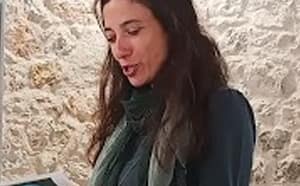
Eleni Athanasopoulou

Your organization field and mission:

Ensuring a healthy environment and well-being for current generations, while building a sustainable and resilient future for those to come, through innovative research and collaboration to address multiple forms of environmental degradation and the climate crisis. (Organization is IERSD/NOA, https://www.iersd.noa.gr/).

Please tell us briefly about your role in the company / at your organization:

I am a founding member of the Atmospheric Physics and Chemistry Group (APCG, http://apcg.meteo.noa.gr/) with an expertise in atmospheric numerical modeling. I have a research and co-ordination role in several European (and National) research projects of the National Observatory of Athens (NOA, Greece). I am the communication manager of the APCG research activities. I am a member of the Gender Equality and Anti-Discrimination Committee of NOA.

Your interest in STEM

My interest in STEM originated in high school. It was during my undergraduate studies in the Department of Geology that I developed a strong interest in environmental studies, while my interest in atmospheric science took shape during my postgraduate education.

I never had specific role models I wished to emulate. However, I have come to admire ordinary women who have managed to combine leadership and high-impact roles with a healthy and fulfilling quality of life. More broadly, I admire people who remain ethical and productive without being overwhelmed by work-related stress.

Your studies

My biggest challenge during my studies was the transition from the field of Geology to advanced studies in Atmospheric Physics and Chemistry. I had to remain competitive despite not having a strong background in Physics, while at the same time progressing in both the theoretical and practical aspects of numerical atmospheric modelling. Another major challenge was that I remained on project-based contracts throughout the duration of my postgraduate studies. In parallel, I had to balance my research role in projects not directly related to my PhD with the demands of my doctoral research. At the same time, I worked to build the foundations that would allow me to pursue a postdoctoral position abroad.

My advice to girls and women who wish to pursue studies in atmospheric science is to do so with confidence. In the context of the climate crisis, there is a strong need for fair and inclusive research, and therefore for greater female representation in our field. I would also encourage them to advocate for fair pay from the very beginning, so that they can fully dedicate themselves to their research without being distracted by the need to secure their livelihood.

You at work

In the framework of supporting new mothers, the National Observatory of Athens has established a research reintegration fellowship, as part of a broader institutional initiative. (https://www.astro.noa.gr/news/nea/ypotrofia-epanentaxis-stin-ereyna-gia-gynaikes-ereynitries-poy-echoyn-prosfata-teknopoiisei-i-teknothetisei/)

With regard to the social impact of my presence within my institution, I feel particularly proud of my effort to advocate for the inclusion of adoptive mothers among the eligible beneficiaries of the reintegration fellowship mentioned above. Adoption is an equally valid path to family formation, and this should be consistently reflected in every relevant initiative, provision, and institutional policy.

Your point of view

Technology strengthens women’s collaborative networks and supports the continuity of their professional work, especially as long as they continue to bear a disproportionate share of care responsibilities. At the same time, digital tools provide greater visibility to their work, creating more opportunities for recognition, participation, and leadership.

My advice is much the same as for pursuing studies: go for it, and do not hesitate to move forward in claiming positions of responsibility, coordination, and leadership. Break the glass ceiling.

Wishful thinking: a world where DEIS is so deeply embedded that it no longer needs defending, explaining, or discussing.

To finish with

The values that guide me are integrity over self-interest, support for what is fair and just — even when this may be uncomfortable, disadvantageous, or personally risky — authenticity and openness, a commitment to quality of life, and kindness.

The challenges I see ahead for myself include securing the professional stability that will allow me to focus on work with the highest possible impact for people and the planet. I also aspire to contribute to the wider dissemination of scientific knowledge in society, and to encourage girls and young women to engage with science through education.

By 2030, I hope to have meaningfully and impactfully brought together my two current professional commitments: environmental research and children’s literature.

The current activity has been implemented in the framework of the Project: Code4Europe,
GA Number: 101158834. Official project website : 
https://codeweek.eu/ 

[ March 24, 2026 by ECWT 0 Comments ]

Evanthia Bellou

Your organization field and mission:

IMBRIW is the leading public research institution in Greece, with a key role in the Mediterranean region and the EU, spearheading fisheries and inland water research.
IMBRIW is Greece’s largest public research institute focusing on marine and inland water ecosystems

Please tell us briefly about your role in the company / at your organization:

  • Pursue science-based conservation and management of aquatic ecosystems
  • Provide scientific guidance to decision makers
  • Supports public awareness and education for conserving marine and inland water environments

Your interest in STEM

During my studiesMy interest in STEM was born during my studies as an ichthyologist. Through studying fish biology and aquatic ecosystems, I developed a deep appreciation for environmental science and the complexity of natural systems. Working closely with ecological research helped me understand how scientific methods can be applied to real-world environmental challenges. This experience sparked my curiosity not only about biological systems but also about the broader scientific principles that shape our natural world. 

My first role models were the scientists I watched in documentaries while growing up. I was inspired by the way they traveled the world, explored new environments, and shared their discoveries with the public. What impressed me most was not only their knowledge, but their passion for educating others and contributing to a better understanding of our planet. 

At present, I am deeply inspired by my supervisor, Helen (Eleni) Kalogianni. She is an exceptional scientist who generously shares her knowledge and actively supports my professional development. Through her guidance, she has helped me grow scientifically and has given me valuable opportunities that contribute to my future career evolution.

Your studies

During my studies in ichthyology, my biggest challenge was strengthening my quantitative and statistical skills, as environmental research often requires handling complex datasets. At first, this was demanding, but I worked on improving through extra practice and guidance, which significantly increased my confidence in data analysis.

One of my main strengths was my passion for environmental science and field research, which kept me motivated even during demanding periods. The competitive nature of research opportunities was sometimes challenging, but it pushed me to become more disciplined, adaptable, and resilient.

You at work

At HCMR and within IMBRIW, DEIS principles are reflected both in our research mission and institutional culture.
In terms of Sustainability, our core work focuses on the conservation and sustainable management of marine and inland water ecosystems, directly contributing to environmental protection and responsible resource use. Regarding Diversity and Inclusion, HCMR promotes interdisciplinary and international collaboration, bringing together scientists from different backgrounds and expertise. The institute also engages actively with local communities, stakeholders, and schools, ensuring that scientific knowledge is accessible and inclusive. In terms of Equity, early-career researchers are supported through participation in international projects, mobility opportunities, and mentorship within research teams, fostering professional growth and equal development opportunities.

What I am most proud of in my work is the professional respect I have earned from my colleagues and supervisors. As a female scientist working extensively in demanding field conditions in rivers and remote environments, gaining recognition for my competence, resilience, and scientific contribution has been particularly meaningful to me. I am also very proud of receiving a scholarship from WWF Hellas to work on the conservation of a critically endangered endemic freshwater species in Greece. This opportunity marked the beginning of my PhD journey, which I have just started, and represents both recognition of my work and a significant milestone in my academic development.

Your point of view

Technology can empower women by increasing access to education, information, and professional opportunities. Digital platforms make it easier for women to gain skills, participate in global networks, and access scientific knowledge regardless of geographical or social barriers. It also enables flexibility in work environments, which can help balance professional and personal responsibilities. In STEM fields especially, technology creates new career pathways and gives women the tools to lead research, innovation, and entrepreneurship. Importantly, technology can amplify women’s voices — through communication platforms, data transparency, and visibility in professional spaces — helping to challenge stereotypes and promote equality. However, true empowerment requires inclusive design and equal access, ensuring that women are not only users of technology but also creators and decision-makers in shaping it.

By 2030, I would like to see DEIS principles fully integrated into environmental research and field-based science — not as policies on paper, but as everyday practice.
I would like to see more women in leadership roles within research institutes, especially in field-intensive disciplines. Fieldwork should no longer be perceived as gender-biased, but as an inclusive space where competence and collaboration matter most. I also hope to see stronger support systems for early-career researchers — transparent funding opportunities, fair evaluation processes, and mentorship structures that ensure equal professional growth. In terms of inclusion, I would like science to become more connected with society, involving local communities more actively in conservation and decision-making processes.

And finally, sustainability should go beyond research topics and be reflected in how institutions operate — from responsible resource use to long-term environmental accountability. By 2030, I would like DEIS to be embedded in the culture of our sector, shaping not only who participates in science, but how science is conducted and shared.

To finish with

My core values are integrity, resilience, curiosity, and responsibility.

  • Integrity is fundamental to me, both scientifically and personally. I believe in honest research, transparency, and taking responsibility for the impact of our work on society and the environment.
  • Resilience has shaped my journey, especially through demanding fieldwork and competitive academic environments. I believe challenges are opportunities for growth.
  • Curiosity drives my scientific path. The desire to understand natural systems and protect biodiversity is at the heart of my work.
  • And finally, responsibility, toward ecosystems, future generations, and the communities affected by environmental decisions. Science, for me, is not only about discovery but about contributing meaningfully to sustainability and conservation

One of my future challenges will be maintaining a healthy balance between personal life and professional growth. As I advance in my career, especially within research and field-based science, the demands can be intense and time-consuming.
I want to continue evolving academically and professionally, while also preserving space for personal well-being and meaningful relationships. I believe long-term success in science requires sustainability not only in ecosystems, but also in our own lives.
For me, the challenge is not choosing between career and personal life, but learning how to build both in a balanced and intentional way.

The current activity has been implemented in the framework of the Project: Code4Europe,
GA Number: 101158834. Official project website : 
https://codeweek.eu/