
[ March 24, 2026 by ECWT 0 Comments ]

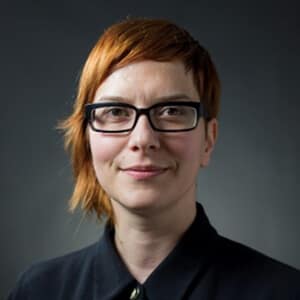
Vassiliki Markogianni

Your organization field and mission:

IMBRIW’s mission is to support the conservation and management of aquatic biological resources, habitats and ecosystems, provide scientific guidance and services to national, Mediterranean, EU and other International bodies on environmental conservation and management and sensitize the public at large on issues related to the conservation of aquatic biological resources, habitats and ecosystems.

Please tell us briefly about your role in the company / at your organization:

My research interests are focused on Environmental Monitoring and Management, Environmental Water Resources management, Integrated River/Lake basin management, GIS applications, Aerial/Satellite Remote Sensing.

Your interest in STEM

At the end of my postgraduate studies and during the preparation of my postgraduate thesis. My involvement with satellite remote sensing, a subject that in 2010 was still nascent, won me over and gave me the motivation to benefit more from the unlimited potential of this valuable tool with the aim of monitoring the quality of inland waters.

The professor that supervised my PhD along with the researcher whose scientific projects I am involved.

Your studies

To not give up and to truly love what they do. Science doesn’t pay a lot of money but it gives joy, pride and makes you feel useful to society. This is my big motivation to continue.

You at work

Regarding equality, I only know that male and female employees are about 50-50.

For the completion of my PhD. The topic was an idea I came up with on my own, I was working during the coronavirus pandemic and had a child at a very young age. I am very happy that I finally succeeded.

Your point of view

In the same way that it empowers men, I don’t detect any difference.

Go for it, just love it. Be patient and reading-lovers.

To finish with

Meritocracy, Scientificity, Ethics.

The biggest problem is the bureaucracy in terms of attracting funding and managing research programs. There is also uncertainty about the continuity of work based on the existence or absence of funding.

I would like to become a researcher or my work become more of a consulting nature.

The current activity has been implemented in the framework of the Project: Code4Europe,
GA Number: 101158834. Official project website : 
https://codeweek.eu/ 
[ March 24, 2026 by ECWT 0 Comments ]

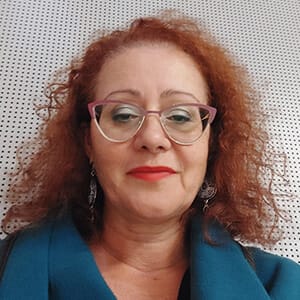
Theodora Katsila

Your organization field and mission:

NHRF advances interdisciplinary science, translational research, and AI-enabled innovation for societal benefit and sustainable development.

Please tell us briefly about your role in the company / at your organization:

I lead an interdisciplinary research laboratory at NHRF, where we integrate computational science, biochemistry, and bioengineering to accelerate innovation in healthcare. Launching the IN3© framework, my team develops AI-driven biomarker discovery strategies and translational solutions that bridge fundamental science with real-world clinical impact. I am passionate about empowering young scientists and advancing research that serves society.

Your interest in STEM

My interest in STEM was born very early, driven by curiosity rather than a specific career plan. As a child, I was fascinated by understanding how things work — from biological systems to patterns in nature. During school, chemistry and biology became my way of making sense of the world, while mathematics gave me the language to describe it.

Over time, I realized that science is not only about knowledge, but about solving real problems that affect people’s lives. That realization transformed curiosity into purpose. Today, my passion lies at the intersection of sciences, where we can translate scientific discovery into tangible societal impact.

My first role model was not a single famous scientist, but my mum, who showed me that science is all about asking bold questions and my dad, who shaped the way I see research; craving for brainteasers. I have been inspired and still am by Marie Sklodowska Curie, while I have been deeply influenced by Friedrich Nietzsche. Mme. Curie was radically committed to knowledge. Her intellectual discipline, resilience, and refusal to accept imposed limits shaped my understanding of scientific responsibility and ambition. Friedrich Nietzsche insisted on intellectual independence. Scientific breakthroughs require the willingness to dismantle outdated paradigms and construct new ones with rigour and accountability

Your studies

During my studies, one of my biggest challenges was navigating interdisciplinary thinking in environments that were often structured within rigid disciplinary boundaries. I was deeply interested in connecting biochemistry, computation, and systems thinking at a time when such integration was not always encouraged. This sometimes meant pursuing unconventional paths and defending ideas that did not fit neatly into traditional frameworks.
At the same time, these challenges became strengths. They pushed me to develop independence, intellectual courage, and the ability to build bridges across fields; qualities that now define my leadership and research approach.

My two cents to the youth: Be intellectually fearless. STEM fields need your perspective, your questions, and your way of thinking.
Do not shrink yourself to fit existing systems. Learn the rules, master them, and then question them responsibly. Seek mentors, build alliances, and surround yourself with people who elevate your thinking rather than limit it. Most importantly, remember that competence builds confidence, not the other way around. Invest in your skills, stay curious, and do not apologize for ambition. Science advances through bold minds, and you are fully entitled to be one of them.

You at work

At NHRF, diversity and inclusion are embedded in our research culture through merit-based recruitment, equal opportunity policies, and active participation in European frameworks that promote gender equality and responsible research. NHRF supports interdisciplinary collaboration across institutes and encourages international mobility, fostering a diverse and globally connected research environment.

We operate within EU-aligned principles of open science, research integrity, and ethical compliance. Sustainability is reflected both in our research priorities, including health innovation, environmental resilience, and digital transformation, and in our institutional practices aimed at responsible resource management and long-term societal impact. As a laboratory head, I actively promote inclusive team environments, interdisciplinary mentorship, and equal participation in scientific leadership and visibility.

I am most proud of the research ecosystem I have built: a team culture that encourages bold thinking, cross-disciplinary integration, and scientific integrity. Launching the IN3© framework is just one of our achievement to better serve society and planetary health.

Your point of view

Technology empowers people. It reduces structural barriers, democratizes access to knowledge, and creates opportunities independent of geography, background, or social constraints. The real transformation happens when diverse minds design and lead technological development. When people participate not only as users but as creators, decision-makers, and innovators, technology becomes a force for broader societal equity.

My two cents to the youth:
Do not wait for permission to belong. You already do.
Invest deeply in your skills; competence builds confidence. Master your field, stay curious, and do not be afraid of complexity. Interdisciplinary sectors thrive on people who can think across boundaries. Seek mentors, but also become one. Build networks, collaborate generously, and choose environments that challenge and elevate you. And most importantly, do not dilute your ambition to make others comfortable. Science and technology move forward because of bold minds and your perspective is not optional; it is necessary.

By 2030, I would like diversity, equity, inclusion, and sustainability to be embedded structurally rather than discussed rhetorically. Representation should no longer be an initiative; it should be the norm across leadership, funding panels, and decision-making bodies. By 2030, success would mean that DEIS is no longer a corrective mechanism, but an integral feature of how science and technology operate.

To finish with

Intellectual integrity, courage, and responsibility.
I value rigorous thinking and evidence-based decision-making, but also the courage to question established frameworks and explore new ones. Innovation requires both discipline and boldness. I believe in accountability; to science, to society, and to the next generation of researchers and citizens. Excellence matters, but so does fairness. Collaboration, mentorship, and ethical responsibility are not optional in science; they are foundational. Above all, I value curiosity with purpose; using knowledge not just to understand the world, but to improve it.

One of my future challenges is contributing to shaping research ecosystems that are not only innovative, but transformative. As science becomes increasingly interdisciplinary and AI-driven, the real challenge is to help redefine how knowledge is generated, integrated, and translated responsibly.
I see my role evolving beyond leading projects toward helping design systems that accelerate impact while preserving scientific integrity. The future challenge is not only to advance technology, but to ensure that it serves humanity in meaningful and sustainable ways. 

By 2030, I hope to have grown not only in impact, but in perspective.
I hope to have expanded my role from laboratory leadership to broader strategic influence, contributing to the shaping of research agendas, strengthening industry–academia integration, and supporting sustainable innovation frameworks worldwide. At the same time, I hope to have grown as a leader, building resilient interdisciplinary teams, mentoring the next generation of scientists, and fostering research cultures grounded in integrity and collaboration. For me, career evolution is about deepening responsibility: ensuring that scientific progress remains ethically sound, socially relevant, and impactful.

The current activity has been implemented in the framework of the Project: Code4Europe,
GA Number: 101158834. Official project website : 
https://codeweek.eu/ 
[ March 24, 2026 by ECWT 0 Comments ]

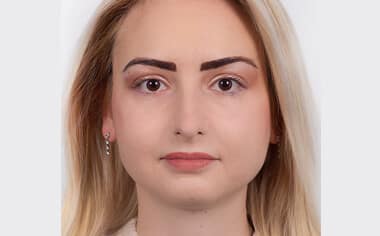
Paraskevi Karachle

Your organization field and mission:

Aquatic Research

Please tell us briefly about your role in the company / at your organization:

I am an expert in food ecology and fish eco-morphology. In recent years I have dealt with the involvement of interested parties (stakeholders), mainly fishers, in participatory processes in order to develop an adaptive management process. My main focus now is non-indigenous species (NIS) and towards that direction I have been collaborating with a wide range of stakeholders and citizen scientists on issues related to NIS in the Mediterranean.

Your interest in STEM

Being in part an islander (on my mother’s side) I have always had a strong relation with the sea. Later, during my early school years, I was always fascinated by biology. So I combined my two passions sea & biology into one!

My first role model was my school biology teacher. Then, at the University a professor of Zoology, and in my early career days a researcher working on NIS. I don’t know if this is a coincidence, but they were all women!

Your studies

Studying in a man-dominated field (i.e. fisheries) being a woman requested twice the time and energy!

Go for it! The only one that can keep you to the ground is yourself and no-one else. Follow your dream!

Your point of view

Go for it! The only one that can keep you to the ground is yourself and no-one else. Follow your dream!

To finish with

Ethos, sincerity, and simplicity.

I am not quite sure. I will face whatever comes along in the way.

I hope scientists become more simple and less competitive amongst them.

The current activity has been implemented in the framework of the Project: Code4Europe,
GA Number: 101158834. Official project website : 
https://codeweek.eu/ 
[ March 20, 2026 by ECWT 0 Comments ]

Aikaterini Tatsaki

Your organization field and mission:

The Biomedical Sciences Research Center (BSRC) “Alexander Fleming,” located in Vari, Greece, is a non-profit organization focused on advancing biomedical research, innovation, and education to combat human diseases. Its core mission is to understand the molecular mechanisms of diseases like cancer, immunity, and neurodegeneration, while developing novel diagnostic and therapeutic strategies.

Please tell us briefly about your role in the company / at your organization:

I am a postdoctoral researcher at the organization, where I conduct independent research, supervise Master’s and PhD students, write research grants, publish scientific papers, and teach in an international Master’s course.

Your interest in STEM

My interest in STEM developed during my school years, when I realized how much I enjoyed analytical thinking and problem-solving. I was particularly fascinated by how scientific research can generate new knowledge and have real-world impact. This motivation eventually led me to pursue advanced studies and a research career.

One of my early role models was Marie Curie, whose perseverance and groundbreaking work demonstrated that women belong in science at the highest level. Today, I am inspired by scientists and leaders such as Jennifer Doudna, whose contributions to CRISPR technology show how fundamental research can transform society.

Your studies

Funding uncertainties;
Balancing research, teaching responsibilities, and personal life.

Take opportunities to gain hands-on experience, through research projects, internships, or collaborations. Ask for guidance. It is also important to build a strong professional network. and surround themselves  with people who support and inspire them.

You at work

Our organization promotes Diversity, Equity, Inclusion, and Sustainability by ensuring equal opportunities in recruitment and career development, supporting mentorship programs, and fostering an inclusive and collaborative work environment. Sustainability is integrated into both our research activities and daily operations through responsible resource use and projects addressing societal challenges.

I am very  proud of my research contributions and of mentoring students, supporting them to reach their potential. On a personal level, I am deeply proud to be  the first member of my family to earn a PhD.

Your point of view

Technology can empower women by increasing access to education, professional opportunities, and global networks. Enable skill development and creating platforms for visibility and leadership.

When I started in STEM, I sometimes doubted whether I could succeed in such a challenging field. My advice to girls and women is to trust your curiosity, embrace challenges, and never be afraid to ask for guidance. Seek mentors, support each other, and remember that persistence and passion are very important.

By 2030, I hope STEM will be fully inclusive, with equal opportunities for women and underrepresented groups, widespread mentorship, and collaboration across cultures.

To finish with

I value collaboration, mentorship, and inclusivity, and I want  to contribute to research that positively impacts society.

My future challenges include balancing research, teaching, and mentorship while aiming for a permanent research position.

By 2030, I hope to have established myself in a permanent research position at a university or institute, leading impactful projects, mentoring the next generation of scientists, and contributing to a more inclusive and collaborative STEM community.

The current activity has been implemented in the framework of the Project: Code4Europe,
GA Number: 101158834. Official project website : 
https://codeweek.eu/ 

[ March 19, 2026 by ECWT 0 Comments ]

Dimitra Kogiannou

Your organization field and mission:

IMBBC’s mission is to continue to be a centre of excellence and knowledge production in marine research in Europe, and offer our scientific services to society, public administration and private companies active in the study, conservation and sustainable exploitation of marine biological resources.

Please tell us briefly about your role in the company / at your organization:

Seafood safety and quality assessment.

To finish with

The current activity has been implemented in the framework of the Project: Code4Europe,
GA Number: 101158834. Official project website : 
https://codeweek.eu/ 

[ March 19, 2026 by ECWT 0 Comments ]

Eleni Fountoulaki

Your organization field and mission:

Marine Research.

Please tell us briefly about your role in the company / at your organization:

Researcher on fish nutrition.

Your interest in STEM

Your studies

To chose between sea life and land based life.

Follow your instict on what you like best, try hard to make your dream comes true.

You at work

Diversity: We Prioritize diverse hiring pipelines, partner with community organizations, and ensure representation across all levels of HCMR.
Equity: We Provide transparent career‑growth pathways, conduct regular pay‑equity reviews, and offer equitable access to development programs.
Inclusion: We run employee resource groups, inclusive‑leadership training, and regular listening sessions to ensure all voices are heard.
Sustainability: We implement waste‑reduction programs, energy‑efficient operations, responsible sourcing, and annual sustainability reporting

I am proud of reaching the position I have now in a very short time!

Your point of view

Diiferent ways technology can empower women like 1. Online learning platforms 2. Mobile access enables learning 3. Digital literacy training 4. E-commerce platforms 5. Digital marketing tools 6.Remote work.

Be patient, beleive in your self, and insist in your skills as its a man world also in Aquaculture.

To finish with

Justice, honesty, open-mindedness.

Accuracy, Ethics, Trust, Responsible augmentation, Continius learning.

The current activity has been implemented in the framework of the Project: Code4Europe,
GA Number: 101158834. Official project website : 
https://codeweek.eu/ 
[ March 19, 2026 by ECWT 0 Comments ]

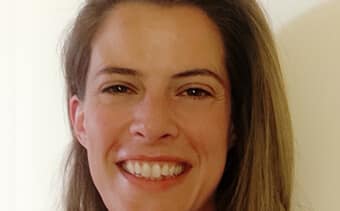
Christina Papadaki

Your organization field and mission:

Public research institution in Greece, with a key role in the Mediterranean region and the EU, spearheading fisheries and inland water research.

Please tell us briefly about your role in the company / at your organization:

Specialization in EcoHydrology, EcoHydraulics, and Environmental Management. Currently involved in European-funded projects, research in the field of freshwater ecology, water management, and the environmental management of mountain areas.

Your interest in STEM

My interest in STEM emerged from a deep curiosity about how natural systems function. During my early studies, I discovered that mathematics and physics were powerful tools to understand water movement and ecosystem dynamics.

The moment I realized how complex environmental processes can be understood and translated into measurable insights, I knew I wanted to work at the intersection of science, technology, and environmental sustainability.

I continue to be inspired by scientists and environmental researchers but also by my close colleagues, whose dedication, creativity, and collaborative spirit continually motivate me to push the boundaries of my own work.

Your studies

During my studies, one of my biggest challenges was managing the balance between ambitious research goals and limited time and resources. At the same time, these challenges helped me develop strong project management and problem-solving skills. I also saw opportunities in collaborating with peers and mentors across disciplines, which expanded my perspective and led to creative approaches to complex problems. Overall, navigating these challenges strengthened my resilience and adaptability, which continue to guide my professional work today.

I would encourage girls and women pursuing this field to explore and discover themselves through science, embracing their instincts and trusting in their own strengths. Τhese qualities will guide them to meaningful achievements, personal fulfillment and valuable collaborations.

You at work

Our organization promotes diversity, equity, inclusion, and sustainability. We have a Gender Equality Plan, and we support underrepresented groups through training, and inclusive practices across our research and operations.

What I value most is the opportunity to work hands-on in the field. Being able to engage directly with the natural environment fuels my enthusiasm and commitment to my research.

Your point of view

By providing tools, resources, and connectivity, technology allows women to grow professionally, work flexibly, and amplify their voices in any field.

I would encourage girls and women in this field to trust their instincts, embrace their curiosity, and pursue their passion. Understanding yourself through your work is key to growing and making an impact.

I would like to see a sector where DEIS principles are standard: inclusive leadership, fair opportunities, and research that benefits both people and the environment.

To finish with

I believe in curiosity, responsibility, and resilience. I am guided by the desire to understand complex systems, make informed decisions, and create a positive impact through my work.

I aim to strengthen my leadership and communication skills while staying deeply engaged in research and fieldwork, finding the right balance between innovation, collaboration, and impact.

By 2030, I envision myself leading impactful research, mentoring young researchers, and driving initiatives that link scientific insight with practical environmental solutions.

The current activity has been implemented in the framework of the Project: Code4Europe,
GA Number: 101158834. Official project website : 
https://codeweek.eu/ 
[ March 19, 2026 by ECWT 0 Comments ]

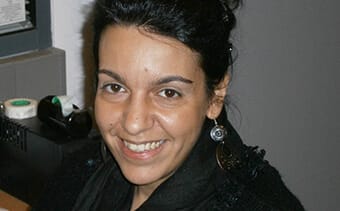
Aikaterini Nanou

Your organization field and mission:

Aiming to understand molecular mechanisms of complex biological processes in health and disease. The institution is committed to contribute to innovation in medicine, by developing novel therapeutic and diagnostic methods, focusing on immunity and inflammation, cancer, and neurodegenerative diseases.

Please tell us briefly about your role in the company / at your organization:

My main research focus is the study of inflammation in the Central Nervous System (CNS). More specifically, I am interested in Multiple Sclerosis and the effect of inflammation on the CNS resident cells with ultimate goal to identify factors that induce a pro-regenerative profile to be used as a therapeutic strategy.

Your interest in STEM

My interest in STEM began in middle school, when I realized how naturally drawn I was to science. I enjoyed the idea that even the most complex questions had explanations waiting to be uncovered. As I grew older, I was drawn to solving problems and working through challenging puzzles. I was especially fascinated by biology, where each question felt like unlocking a deeper understanding of how life functions. What started as simple curiosity gradually became a genuine passion for discovery.

My first role model was my science teacher, whose ability to explain complex ideas with clarity and enthusiasm deeply inspired me. The way she made difficult concepts feel accessible showed me that science isn’t just about memorizing facts, but it’s about understanding and curiosity. Today, many people inspire me; some well-known, others mentors and researchers I’ve met personally. What connects them is not their recognition, but their passion for science and their strong sense of ethics. I admire the way they pursue discovery with curiosity, integrity, and perseverance.

Your studies

One of my biggest challenges has been narrowing my focus. I am genuinely curious about many areas of biology, and I often want to explore every question that interests me. While this curiosity drives me, I have learned how to prioritize and commit to exploring certain topics more deeply.

You at work

An Equity and Anti-Discrimination Committee was established in 2021to promote gender equality, combat discrimination and prevent all forms of harassing behavior. The committee also participate in nationwide networks to discuss awareness policies, monitoring progress, provide support and policy recommendations.

I am most proud of the technical skills I have developed over the years. My experiences have strengthened my ability to approach complex biological problems from different perspectives and use appropriate techniques to address each challenge effectively. I am sincerely grateful for the opportunity to learn new methodologies, as it has been instrumental in my growth.

Your point of view

Technology can facilitate greater access to education, enabling women not only to gain knowledge and skills, but also to have a platform to promote equality beyond geographical and social barriers. Furthermore, it creates opportunities for innovation and active participation in shaping the future.

I would like DEIS principles to be fully integrated into academic culture, so that they are no longer discussed as separate initiatives but are simply part of everyday practice.

To finish with

My values are curiosity, integrity, perseverance, inclusion, and objectivity. I believe science should be guided by ethical responsibility, sustained by persistence, and enriched by diverse perspectives. I also value objectivity and the ability to remain independent in my thinking, resisting external pressure in order to ensure that decisions and conclusions are grounded in evidence and principle.

One of my future challenges will be maintaining my integrity and commitment to evidence-based principles, even in environments where science is underfunded or influenced by external interests. Staying true to ethical standards and objectivity, despite such pressures, will be essential to my professional development.

By 2030, I hope to continue working in academia, conducting research to the highest scientific and ethical standards.

The current activity has been implemented in the framework of the Project: Code4Europe,
GA Number: 101158834. Official project website : 
https://codeweek.eu/ 
[ March 19, 2026 by ECWT 0 Comments ]

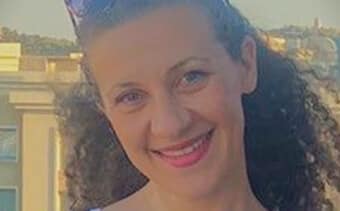
Eirini-Maria Georganta

Your organization field and mission:

Biomedical Science and Research.

Please tell us briefly about your role in the company / at your organization:

As a postdoctoral researcher, I lead and support research projects, conduct experimental studies, analyze data, and contribute to scientific publications and grant applications.

Your interest in STEM

My interest in Science developed in high school, particularly through biology classes that introduced me to experimental science and the process of scientific inquiry.

My first role model was the biology teacher in high school who encouraged curiosity and critical thinking. Today, I am inspired by researchers in my field who combine scientific excellence with ethical responsibility and collaborative mindset and prioritize mentorship and equity in science.

Your studies

Laboratory research involves experimental failure, limited resources, and uncertainty. Additionally, funding limitations and publication expectations create a lot of pressure. It is also very challenging to maintain work–life balance especially during demanding research periods. Over time, I (still) learn to manage priorities, set realistic timelines and work efficiently under pressure while maintaining a healthy work–life balance.

Believe in your abilities and don’t let self- and others’ doubt limit your ambitions. Find supportive mentors and collaborators and do not be discouraged by challenges.

You at work

I’m most proud of a) generating high-quality research data that helped our lab secure funding, b) guiding and mentoring students and c) taking part in science outreach to inspire broader public interest in biomedical research.

Your point of view

Technology empowers women by providing access to education, career opportunities, and professional networks, enabling them to learn and work remotely, while balancing career, family and personal growth.

Believe in your abilities and face challenges as opportunities to grow.

By 2030, I hope biomedical research is inclusive and sustainable, offering equal opportunities, strong mentorship, and collaborative environments that benefit both science and society.

To finish with

I prioritize curiosity, ethical responsibility, collaboration, mentorship and inclusivity. I also believe in using science to make a positive impact on society.

My future challenges include advancing my research, securing funding, mentoring effectively and maintaining work-life balance.

By 2030, I hope to lead impactful research, teach and mentor students and contribute to high-quality scientific discoveries.

The current activity has been implemented in the framework of the Project: Code4Europe,
GA Number: 101158834. Official project website : 
https://codeweek.eu/