

[ September 5, 2026 by ECWT 0 Comments ]

Leticia Gil Ramos

Your organization field and mission:

Our primary mission is to advise schools and educational institutions to ensure high-quality training tailored to their needs, while offering professional development courses aligned with their demands to foster educational innovation.

Please tell us briefly about your role in the company / at your organization:

I help identify schools’ training needs, coordinate professional development courses for teachers, and support educational innovation initiatives across the region.

Your interest in STEM

My interest in STEM grew from my passion for educational innovation and digital literacy. Seeing how computational thinking empowers both teachers and students inspired me to champion digital skills in the classroom. This drive led me to become an EU Code Week Ambassador in Spain, where I actively promote coding, technology, and problem-solving to make STEM accessible and engaging for all learners.

I was deeply inspired by STEM pioneers like Ada Lovelace and Grace Hopper, whose groundbreaking work proved that logical thinking and creativity could fundamentally change how we interact with technology.Today, I look up to modern educational innovators, open-source advocates, and community leaders who build accessible learning spaces and empower the next generation to master digital skills.

Your studies

During my studies, my biggest challenge was bridging the gap between theoretical academic knowledge and practical, real world STEM application. Keeping pace with rapidly evolving technology required significant self-directed learning outside the traditional curriculum. Additionally, balancing intense academic workloads with hands-on technical projects pushed me to develop strong time management, problem-solving, and adaptability skills.

Belonging in STEM isn’t about knowing everything from day one it’s about curiosity, persistence, and creative problem-solving. Never let anyone make you feel that technology or innovation isn’t for you; your unique perspective is essential for building better solutions. Build a strong network of supportive peers and mentors, embrace mistakes as a natural part of learning, and take up space with confidence.

You at work

At CFIE Soria, our DEIS initiatives focus on promoting gender equality in STEM, inclusive education, and equal digital access. Key actions include: Girls in STEM and gender equity: Running teacher training programs on coeducation, gender-neutral teaching strategies, and encouraging girls to pursue computational thinking and coding (aligned with EU Code Week). Inclusive pedagogy: Offering specialized courses on universal design for learning (UDL/DUA) and adaptive digital tools to support students with diverse learning needs and disabilities. Last, equal opportunity: ensuring all schools, regardless of size or location, have equal access to quality educational innovation resources.

I am proudest of my work as an EU Code Week Ambassador in Spain, specifically in making coding and computational thinking inclusive and accessible to all students. Leading workshops, supporting teachers, and creating initiatives that encourage young girls to explore STEM has been immensely rewarding. Knowing that these efforts help dismantle gender stereotypes and spark lifelong curiosity in digital skills is my greatest achievement.

Your point of view

I consider technology empowers women by giving them economic autonomy, flexibility, and a global platform to amplify their voices. Digital tools enable flexible and remote work, making it easier to balance professional ambitions with personal commitments. Moreover, e-commerce and digital financial services allow female entrepreneurs to launch businesses and manage their finances independently. Most importantly, technology gives women a seat at the table to solve complex global challenges, ensuring that the technology shaping our world reflects the diverse society it serves.

In my opinion, stepping into educational innovation and STEM leadership means shaping how future generations learn. Don’t wait until you feel 100% expert in every new technology this sector evolves daily, so curiosity and adaptability are far more valuable than knowing everything from day one. Trust the unique perspective you bring, build strong collaborative networks, and remember that by stepping into this field, you become the visible role model the next generation of girls needs.

By 2030, I want to see complete equity in digital education where every girl feels confident pursuing STEM, every rural school has equal access to technological innovation, and every teacher is fully trained in inclusive, accessible EdTech methodologies. Diversity should be embedded in every curriculum so technology truly empowers all learners.

To finish with

My core values are equity, empowerment, continuous learning, and collaboration. I believe that technology and STEM education should be powerful tools for inclusion, ensuring that rural communities and underrepresented groups especially women and girls have equal access to future opportunities. Through continuous learning, I strive to stay adaptable and foster curiosity in others. Above all, I value collaboration, knowing that real educational innovation happens when communities of educators work together to inspire the next generation.

My primary professional challenges lie in leading the ethical integration of emerging tools like AI into education, keeping my own skill set ahead of rapid tech evolution, and ensuring that digital transformation reaches rural and under resourced schools equitably. I aim to overcome these by fostering continuous learning, driving collaborative networks, and leading systemic change in teacher training.

By 2030, I envision my career expanding into international educational advocacy, leveraging my experience as an EU Code Week Ambassador and teacher trainer to shape scalable, inclusive EdTech frameworks. I hope to be leading cross-border initiatives that champion gender parity in STEM, empower educators with cutting-edge digital pedagogy, and bridge the digital divide for underserved communities across Europe.

The current activity has been implemented in the framework of the Project: Code4Europe,
GA Number: 101158834. Official project website : 
https://codeweek.eu/ 
[ March 26, 2026 by ECWT 0 Comments ]

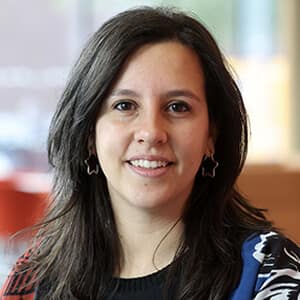
Maria Jose Galvez Trigo

Your organization field and mission:

Cardiff University’s key sectors are arts, humanities and social sciences, biomedical and life sciences, and physical sciences and engineering, and its mission is to create and share knowledge and educate for the benefit of all.

Please tell us briefly about your role in the company / at your organization:

At Cardiff University, I am a Lecturer (Assistant Professor) in Computer Science and Deputy Director for Equality, Diversity and Inclusion at the School of Computer Science and Informatics. I lead research projects on robotics and AI in health and social care, and I am Co‑Investigator and Executive Board member of the UK Robotics and Autonomous Systems (UK‑RAS) Network.

Your interest in STEM

My interest in STEM started at home, long before I knew what the acronym meant. My dad worked as a programmer and was passionate about informatics, so he was the first person to explain to me what a computer was and what it could do. As I grew older and started to show a genuine curiosity about technology and how things work, both my dad and my mum consistently encouraged me to follow that interest. Their support and enthusiasm for my curiosity were key in my decision to study Computer Science and Engineering, which became the foundation for my career in robotics and human-robot interaction.

My first role model was my dad. He showed me how exciting technology could be and encouraged me to believe that I could build a career in this field. As my career developed, I found new role models, including my late PhD supervisor, Professor Penelope Standen, whose dedication to improving the lives of people with learning disabilities through technology deeply influenced my work and values. Today, I am inspired by anyone who is bold enough to innovate, challenge the status quo, and follow their dreams, especially in ways that make STEM more inclusive and socially impactful.

Your studies

During my studies, one of my biggest challenges was dealing with self‑doubt and being made to feel I was not good enough, often linked to being a woman in STEM. Following a non‑traditional path (doing a part‑time PhD while working full‑time, after time in industry) and not fitting the ‘expected’ academic trajectory meant I was repeatedly required to prove my worth and fight stereotypes, while living in another country and away from my main support network. At the same time, I faced periods of job insecurity and delayed building a family until I felt more stable and established in my field. These challenges were difficult, but they also strengthened my resilience and now drive my commitment to making academic careers more inclusive and supportive for others.

My advice to girls and women who want to study in my sector is: your curiosity and motivation are enough reason to be here, even if you do not fit the stereotype. Seek out mentors, peers and communities that support you, and remember there is no single ‘right’ path into robotics, AI or computer science. Your perspective as a woman is not a weakness but a strength the field needs to create more inclusive technologies.

You at work

At Cardiff University there is a strong institutional focus on Equality, Diversity, Inclusion and Sustainability, with university‑wide EDI policies, awareness training and a clear sustainability strategy. In my School, I contribute as Deputy Director for EDI, and I am part of the management team for EMPOWER, a university-wide network supporting current and aspiring women Principal Investigators. My research on accessible, human‑centred robotics and AI also supports the University’s inclusive and sustainable innovation goals.

I am proud of every step I have taken in my career, and I am actively learning to recognise and celebrate each achievement instead of playing them down. I am especially proud of being a mum in a demanding field like robotics and AI, and of showing that it is possible to build a research career while caring deeply about family. I am also proud that my work and leadership roles focus on making robotics and AI more inclusive and accessible, and on helping create a more supportive environment for the next generation of diverse researchers.

Your point of view

Technology can empower women by giving them flexible access to education and skills, opening up new career and leadership opportunities, and connecting them with supportive networks and role models. When designed in a human‑centred and inclusive way, it also amplifies women’s voices and needs, enabling them to shape the technologies and decisions that affect their lives.

My advice to girls and women who want to work in this sector is to back your skills and keep learning, even when others underestimate you. Look for workplaces, teams and leaders whose values align with yours and where you feel respected, and do not be afraid to change environments that hold you back. Build and nurture your network (mentors, collaborators and peers) and remember that your lived experience and ideas are exactly what we need to create robotics and AI that work for everyone.

I would like DEIS in robotics and AI to move from isolated initiatives to being built into how we design technologies, build teams and measure success. By 2030, I want diverse voices, including women and other under‑represented groups, to be genuinely represented and empowered at every level of the sector, from students to leadership, so that our systems are fair, trustworthy and sustainable for the people and communities they serve.

To finish with

My core values are curiosity, empathy and integrity. I care about using robotics and AI in human‑centred, inclusive and accessible ways, and I value collaboration and community so others can thrive.

One of my main future challenges is growing my family while living in another country, away from my own support network, and at the same time continuing to establish myself as a leader in my field. Balancing these two ambitions in a demanding, fast‑moving sector will require setting clear boundaries, building strong local support systems and advocating for more family‑friendly, inclusive practices in academia and robotics.

I hope that by 2030 I will have consolidated my position as a recognised leader in human‑centred robotics and AI, ideally progressing towards (or into) a professorial role. I would like my work to have a clear impact on how accessible and inclusive technologies are designed and deployed, and to be in a position where I can use my experience to support and mentor the next generation of diverse researchers and practitioners in the field.

The current activity has been implemented in the framework of the Project: Code4Europe,
GA Number: 101158834. Official project website : 
https://codeweek.eu/