
[ July 23, 2026 by ECWT 0 Comments ]

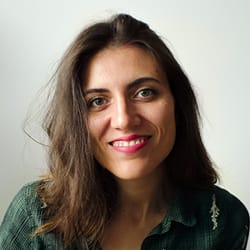
Brunella Balzano

Your organization field and mission

Education and Research.

Please tell us briefly about your role in the company / at your organization

I am a Senior Lecturer in Structural Design. My role involves designing and delivering lectures and workshops aimed at integrating the discipline of structural engineering within architectural practice. I also lead my own research on climate adaptation in the existing built environment, focusing on the development of smart technologies to monitor and mitigate damage within structural systems.

Your interest in STEM

My first vivid memory of STEM subjects dates back to my early teenage years, when I was first introduced to them at school. From the very beginning, I was fascinated by subjects such as physics and mechanics. Although I was still far from deciding what career path I wanted to follow, I knew that these subjects would have a significant influence on the choices I would eventually make and help shape my future.

I do not recall having one specific role model. Instead, I have always tried to learn from a variety of people and the qualities they embody. Growing up, I looked up to several adults in my family, each of whom inspired me in different ways. Over the years, I have been fortunate to encounter many remarkable individuals who have influenced my personal and professional growth. I continue to look up to them and draw inspiration from their example as I strive to become a better person every day.

Your studies

Strengths: One of the key strengths I developed during childhood, partly thanks to the education and values instilled at home, is discipline. I grew up with the belief that anything can be learned if enough dedication and effort are invested in it. This mindset has been fundamental to my success, helping me develop determination, resilience, and a strong sense of purpose.
Weaknesses: Balancing my studies with employment and a long daily commute was a significant challenge. For an extended period, I had to sacrifice sleep in order to meet my commitments, which inevitably affected my energy levels, well-being, and ability to maintain focus.
Opportunities: My education provided me with many opportunities, including the chance to build a life in a new country, establish a successful career, develop a professional network, and create a family. It opened doors both personally and professionally, allowing me to grow and achieve goals that might otherwise have seemed out of reach.
Threats: Time constraints and lack of sleep were constant challenges throughout my studies. In addition, the theoretical nature of academic learning occasionally clashed with the practical realities of professional practice. This sometimes led me to adopt an overly critical perspective when theoretical concepts did not align with workplace experiences.

To try it out! To get informed about various possibilities, make internships, follow webinars, courses, talk to people!

You at work

I am a member of my School’s Equality, Diversity and Inclusion (EDI) Committee, as well as an active member of the Marie Curie Alumni Association EDI Task Group. Each year, we engage in a range of activities aimed at promoting equality, diversity, inclusion, and a sense of belonging across our communities.

I am proud to have developed a highly multidisciplinary profile that is unique within my field. This has been possible because I had the courage to step outside my comfort zone and embrace new roles and opportunities, even when they required me to learn unfamiliar skills and knowledge. These experiences have broadened my expertise, strengthened my adaptability, and enabled me to approach research challenges from multiple perspectives.

Your point of view

Technology empowers women to participate fully in the workforce, drive innovation, and address complex societal challenges. By expanding access to education, reducing barriers to opportunity, and supporting more inclusive workplaces, technology plays a vital role in advancing gender equality and enabling women to reach their full potential.

Engineering is an incredibly broad field that encompasses a wide range of disciplines and opportunities. Let your curiosity be the driving force behind your journey, as technology and knowledge are constantly evolving, requiring continuous learning and professional development.
This advice extends beyond engineering. Success is not necessarily about working harder than everyone else, but about working consistently, with discipline and perseverance. Maintaining a commitment to steady progress and lifelong learning is, in my experience, the key to achieving your goals

By 2030, I would like Equality, Diversity, Inclusion, and Social Justice (DEIS) to be fully embedded in the culture of engineering and academia, rather than being viewed as a separate initiative or a box-ticking exercise. Success would mean that diversity is reflected at every career stage—from students and early-career researchers to senior leadership—and that everyone has equitable access to opportunities, resources, and career progression.

I also hope to see more inclusive research environments where different perspectives are actively valued, leading to more innovative and impactful solutions to global challenges. Flexible working practices, transparent recruitment and promotion processes, effective mentoring, and accountability for DEIS outcomes should become the norm rather than the exception.

Ultimately, I would like future generations to enter the sector without feeling limited by their gender, ethnicity, disability, socioeconomic background, or any other aspect of their identity. The focus should be on talent, potential, and contribution, in an environment where everyone feels respected, supported, and empowered to succeed.

To finish with

I value Curiosity, Courage, Inclusion, Integrity, Perseverance, Collaboration.

My future challenge is to continue growing as a leader while staying true to my values of curiosity, inclusion, and lifelong learning. I want to strengthen interdisciplinary collaborations that translate engineering research into real-world impact, while helping to build a more diverse and inclusive engineering community. Most importantly, I aim to continue learning, embracing new challenges, and creating opportunities for others to thrive.

By 2030, I hope to have established myself as a recognised leader in civil engineering, leading research that delivers meaningful benefits to our built environment. I also aspire to have expanded my role in mentoring early-career researchers, fostering interdisciplinary collaborations, and contributing to a more inclusive and diverse engineering community. Ultimately, I hope my career will be defined not only by scientific excellence but also by the positive impact I have on people and the opportunities I create for others.

The current activity has been implemented in the framework of the Project: Code4Europe,
GA Number: 101158834. Official project website : 
https://codeweek.eu/ 
[ May 10, 2026 by ECWT 0 Comments ]

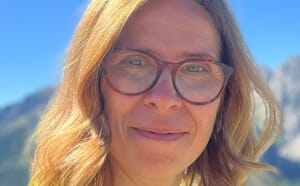
Domenica Mastrandrea

Your organization field and mission

The Institute is a lower secondary school committed to meeting students’ educational needs and open to didactic and technological innovation. In an ever-evolving educational landscape, the school promotes active and inclusive methodologies, placing student agency and the development of 21st-century key competencies at the center of its mission.

Please tell us briefly about your role in the company / at your organization

I am a lower secondary school teacher with expertise in new technologies and innovative teaching methodologies. As a maker and active promoter of female protagonism projects, I am committed to empowering girls through hands-on, creative, and technology-driven learning experiences. I believe in fostering students’ agency, critical thinking, and digital skills as essential tools for their future.

Your interest in STEM

My interest in STEM was born in 2022, when I attended a STEAM Masterclass at Fondazione Golinelli in Bologna. That experience was a turning point: it opened my eyes to the transformative potential of science, technology, engineering, art and mathematics in education, inspiring me to bring innovative, hands-on and interdisciplinary approaches into my classroom.

My first role model was the spirit of curiosity and creativity that I encountered in my early teaching years. Today, my role models are the many innovation movements that are reshaping education worldwide — from the Maker Movement to STEM/STEAM education advocates, from Design Thinking communities to open-source learning networks, like Fondazione Golinelli, FabLab di Bitonto and others.

Your studies

My academic journey has been shaped by two degrees obtained at different stages of my life: Mathematics and Primary Education Sciences. This non-linear path was not always easy, but it reflects who I am — an open-minded, enthusiastic person who embraces new challenges and opportunities with curiosity and passion.
Strengths: My dual background gives me a rare combination of analytical thinking and pedagogical sensitivity. I am naturally open to new ideas and proposals, and I bring genuine enthusiasm to everything I do — in and out of the classroom.
Weaknesses: Balancing two demanding fields of study at different moments in life required great resilience and personal sacrifice. At times, the path felt long and uncertain.
Opportunities: The intersection of Mathematics and Education Sciences led me to discover my true calling — STEAM education, innovative teaching and the Maker Movement. Each new experience, like the Masterclass at Fondazione Golinelli, has fuelled my passion even further.
Threats: The persistent gender gap in STEM remains a real obstacle, both in academia and in the professional world. Yet it is precisely this challenge that motivates me to be a role model for my female students.

My advice to girls and women who want to pursue studies in STEM and education is simple: trust your creativity and curiosity — they are your greatest strengths. Do not let stereotypes or self-doubt hold you back. Science, technology and mathematics are not “male” subjects. These Subjects need female unique perspective, sensitivity and imagination. they aren to follow what excites , even when the path seems unconventional or non-linear. The world needs the girls and women voice.

You at work

One of the most significant DEIS initiatives carried out by our organization is the participation in the Girls Code It Better project — a national program aimed at bridging the gender gap in technology and digital education. Through this initiative, female students are empowered to explore coding, computational thinking and digital creativity in a supportive and inspiring environment. The project reflects the school’s deep commitment to equity and inclusion, promoting the active protagonism of girls in STEM fields and challenging gender stereotypes from an early age. By engaging students in hands-on, collaborative and innovative activities, the school fosters confidence, curiosity and a sense of belonging in the world of technology.

What I am most proud of is seeing my girls become true protagonists — confident, harmonious and empowered. For me, the greatest achievement is the moment when a student discovers her own potential and steps forward with courage and joy. Supporting female protagonism is at the heart of everything I do: I believe that every girl deserves a space where she can express herself freely, collaborate, create and lead. Watching my female students grow in enthusiasm, creativity and inner balance confirms that education, when driven by passion and innovation, can truly transform lives and break down barriers.

Your point of view

Technology can be a powerful tool to empower women — it connects people, breaks down geographical and social barriers, and opens access to knowledge and opportunities that were once out of reach. However, I firmly believe that technology must be used wisely and critically. It is not enough to simply give girls a device or a platform — we must educate them to question, analyse and think independently. Artificial Intelligence, for example, is a fascinating and transformative tool, but it requires critical thinking and ethical awareness to be truly empowering. In my work, I strive to guide my students not just to use technology, but to understand it, question it and shape it — because women who master technology with a critical mind are women who can change the world.

My advice to girls and women who want to work in this sector is simple: be brave, break the stereotypes and, above all, be yourself. Technology, innovation and science are are spaces that belong to everyone, and women have every right to be there, to lead and to shine.today it seems that we can count only on half of potential. Do not let anyone tell you that you are not capable, that it is too difficult, or that it is not for you. Your curiosity, your creativity and your unique perspective are exactly what this sector needs. Never hide who you are to fit into a mold:  the authenticity is your greatest strength. Surround yourself with inspiring communities, seek out role models, and never stop learning. The path may not always be easy, but every barrier you break opens a door for the girl who comes after you. Be courageous, be yourself because the world of technology needs your voice.

By 2030, what I would like to see most in the DEIS landscape is genuine collaboration between schools, institutions, organizations and communities, all working together towards a common goal: a more equitable and inclusive world.  Collaboration between teachers, makers, technologists and policymakers can break down the structural barriers that still prevent many women and girls from fully expressing their potential in STEM. I believe that no one can create real change alone but it is only by joining forces, sharing knowledge and building bridges across different fields and communities that we can truly achieve diversity, equity and inclusion by 2030.

To finish with

The values I believe in are: the creativity,  the power to imagine new possibilities and transform them into reality. I believe in curiosity,  the driving force behind every discovery and every innovation. I believe in courage,  the strength to break stereotypes, take risks and be yourself even when the path is unconventional. I believe in collaboration,  because no meaningful change happens alone, and together we are always stronger. I believe in respect, for every person, every idea and every unique journey,  I believe in innovation and authenticity. These values are not just words to me — they are the foundation of my teaching, my projects and my commitment to female protagonism in STEM.

My greatest future challenge is to train both educators and students in the conscious and critical use of technologies and Artificial Intelligence. In a world increasingly shaped by AI, I believe it is essential to teach people to use technology as a tool at the service of the person, not as a substitute for human thinking. My goal is not to delegate to AI, but to use it as a catalyst for developing critical thinking, creativity and autonomy,  in teachers and students alike. I want to build a generation of learners and educators who are not passive consumers of technology, but active, aware and empowered users who can question, evaluate and shape the digital tools around them. This is my challenge, my mission and my passion for the years to come.

In future,  I hope my career will have evolved towards a broader leadership role as a trainer of trainers or as a school principal. I aspire to extend my impact beyond my own classroom, sharing my experience, passion and vision for innovative and inclusive education with other educators. I would love to build and lead professional communities where teachers have ready eyes on pupils: if there is a teacher who believes in you, no one will ever be lost.

The current activity has been implemented in the framework of the Project: Code4Europe,
GA Number: 101158834. Official project website : 
https://codeweek.eu/ 
[ April 30, 2026 by ECWT 0 Comments ]

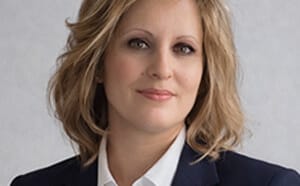
Elena Ziky

Your organization field and mission

Digital and business coaching in the education sector, with the mission of developing entrepreneurial skills, a digital mindset, and practical abilities in children and young people, helping them face the future with awareness through the project “Piccoli Imprenditori Academy”.

Please tell us briefly about your role in the company / at your organization

Founder and Digital & Business Coach: I design and lead educational programs for children and young people, develop content and training programs, and coordinate the activities of “Piccoli Imprenditori Academy.” I also work on digital learning pathways for schools, training students and teachers in coding, robotics, and artificial intelligence.

Your interest in STEM

My interest in STEM began about nine years ago, initially as a hobby. Through exploring new trends and innovations, it evolved into a passion and a professional commitment to digital education for children, young people, and teachers.

My first role model emerged from exploring the world of innovation and entrepreneurship rather than from a single person: individuals capable of transforming ideas into concrete projects and anticipating the future. Today, I continue to be inspired by innovators, educators, and entrepreneurs who work to make digital and STEAM skills accessible to new generations, with a positive impact on society.

Your studies

During my studies, one of the main challenges was navigating a context in which digital and STEM skills were not yet widespread or integrated into educational pathways.

  • Strengths: curiosity, initiative, and the ability to learn independently.
  • Weaknesses: an initial lack of clear references and structured pathways in the digital field.
  • Opportunities: the opportunity to explore new trends and build innovative skills before they became mainstream.
  • Threats: the rapid pace of technological change and difficulty in finding up-to-date educational environments.

My advice is to cultivate curiosity and confidence in your abilities, without being held back by stereotypes or the fear of not being “prepared enough.” The STEAM sector is constantly evolving and rewards those who experiment, make mistakes, and learn quickly.
Seek practical opportunities, explore coding, robotics, and artificial intelligence creatively, and build a network with other women and professionals in the field. Don’t wait until you feel ready—start, because skills and confidence develop through action.

You at work

In my organization, we promote DEIS initiatives by making digital education accessible to everyone, with particular attention to girls, young people, and communities with less exposure to technological opportunities.
We design inclusive coding, robotics, and artificial intelligence programs for schools and educational communities, adapted to different levels and learning styles, and actively work to reduce the gender gap in STEM. Additionally, we integrate sustainability and social impact themes into our programs, encouraging young people to develop innovative and responsible solutions for the future.

I am most proud of transforming OpenAIRE from a 3 year European project in 2008 into a sustainable organisation with a strong network of over 60 member universities. Equally important to me is having chosen a career that contributes to the public good (open science, science-technology-innovation) while working with diverse communities and partners across the world.

Your point of view

Through digital skills, women can create new career opportunities, start entrepreneurial projects, work more flexibly, and actively participate in innovation processes. Additionally, technology provides spaces to showcase skills and ideas, promoting greater female representation in STEM sectors and decision-making roles.

It is important not to be limited by stereotypes and to actively seek learning opportunities: courses, projects, school-based experiences, or educational innovation initiatives. Surrounding yourself with people who inspire you and share the same vision greatly supports both personal and professional growth.

I would like to see greater female participation in technological and entrepreneurial pathways starting from primary school, with programs accessible to all socio-economic contexts. I also hope that schools will increasingly become spaces of open innovation, where coding, robotics, and artificial intelligence are everyday tools for developing skills and reducing educational inequalities.

To finish with

The values that guide my work are curiosity, as a driver of continuous learning, and innovation, understood as the ability to transform ideas into concrete solutions. Another fundamental value is educational responsibility: using technology not only effectively but also consciously, with a focus on positive social impact.

My future professional challenges will mainly be linked to keeping pace with the rapid evolution of technology, particularly in the field of artificial intelligence, and integrating it effectively into educational pathways for children, young people, and teachers. Another challenge will be expanding the impact of my educational projects, making them increasingly scalable and accessible to different school and regional contexts, without losing quality or the personalized dimension of learning.

I hope to have expanded the reach of “Piccoli Imprenditori Academy” and training programs for schools and teachers at an international level, contributing to making coding, robotics, and artificial intelligence accessible as everyday tools for learning.

The current activity has been implemented in the framework of the Project: Code4Europe,
GA Number: 101158834. Official project website : 
https://codeweek.eu/ 

[ April 15, 2026 by ECWT 0 Comments ]

Valentina Bertani

Your organization field and mission:

Promote the STEAM approach in schools, cultural centres and youth centres through hands-on workshops and the creative use of technology.

Please tell us briefly about your role in the company / at your organization:

STEAM education expert.

Your interest in STEM

I became passionate about STEAM education about six years ago, not so much for the scientific content as for the approach; I believe it is an effective way of conveying knowledge and essential for the way today’s young people learn, so that what they learn sticks with them over time.

Exoloratorium San Francisco, Mitchel Resnick Lifelong Kindergarden.

Your studies

The biggest challenge during my studies was figuring out what would be useful for me in preparing for a job I didn’t even know I wanted to do; by chance, I came across the STEAM workshops and realised I’d found my calling.

Never stop searching, trying new things, being curious and passionate.

You at work

I run workshops using picture books that explore environmental sustainability and recycled materials; my activities can often be adapted for children and young people with special needs.

The greatest satisfaction comes from working with teachers or sceptical pupils who gradually change their minds, become increasingly engaged in the activity, and see its benefits.

Your point of view

Technology opens up a whole host of possibilities, bridges distances, enables people with limited financial means to achieve things, and is essential for narrowing the gender gap.

In extracurricular settings, it is mainly boys who take part in my activities; we need women and girls who are passionate about education and keen to adopt the STEAM approach, to show that these activities are suitable for everyone, that they open up new possibilities and help participants discover interests to pursue in the future.

I would like education to play a more central role and to be accessible to everyone, everywhere.

To finish with

Critical Thinking: The ability to analyze facts, generate ideas, and defend opinions based on evidence rather than assumptions.
Creative Problem-Solving: Encouraging students to find unconventional solutions by blending logic with artistic intuition.
Collaboration & Teamwork: Most STEAM projects are group-based, teaching students how to communicate effectively and value diverse perspectives.
Resilience (Growth Mindset): In STEAM, “failure” is seen as a necessary prototype. It teaches students to persevere through trial and error.
Adaptability: The capacity to pivot and apply knowledge across different disciplines in a rapidly changing world.
Empathy & Human-Centric Design: By including the “Arts,” students learn to design solutions that consider the human experience and social impact.
Curiosity and Inquiry: Shifting the focus from “having the right answer” to “asking the right questions.”
Ethics and Responsibility: Understanding the social and environmental consequences of technological and scientific advancements.

To work towards greater recognition of my profession at national and international level.

I hope there will be greater recognition of the teaching profession.

The current activity has been implemented in the framework of the Project: Code4Europe,
GA Number: 101158834. Official project website : 
https://codeweek.eu/ 

[ April 15, 2026 by ECWT 0 Comments ]

Giulia Morlacchi

Your organization field and mission:

As a Coach Maker within the educational sector, my role is to act as a facilitator and bridge-builder, empowering both students to navigate the complexities of the modern world with critical thinking, creativity, and empathy. I focus on transforming abstract pedagogical goals into actionable, hands-on learning experiences.

Please tell us briefly about your role in the company / at your organization:

My work is rooted in Design Thinking and Constructionism. I help the educational community iterate on their teaching methods, treating every challenge as a prototype to be improved. By combining the “Coach” element—nurturing soft skills, mentorship, and self-reflection—with the “Maker” element—tangible creation, prototyping, and technical problem-solving—I help build an educational ecosystem that is both human-centered and future-ready.

Your interest in STEM

My interest in STEAM (Science, Technology, Engineering, Arts, and Mathematics) did not emerge as a separate academic pursuit, but rather as an organic evolution of my life as a musician. As a musician, I have always viewed the studio as a laboratory. My transition from purely artistic expression to the STEAM mindset began when I realized that the boundaries between these disciplines are entirely artificial.

Your studies

As a woman navigating the intersection of technology, music, and education, my path has not been without its hurdles. These challenges, while sometimes subtle, have been a constant thread in my professional and academic journey. The most pervasive difficulty was the constant feeling of being an “exception” or an intruder in technical spaces. In both music production studios and computer labs, the environment was—and often still is—designed with a predominantly masculine perspective.

To the girls and women navigating the path toward STEAM, music technology, and digital innovation, my advice is shaped by the reality that while the landscape is changing, the journey still requires resilience and, most importantly, intentional community. My piece of advice is this: Your voice and your vision are exactly what the future of technology is missing. Do not let the lack of representation in current textbooks or studios make you feel like you are in the wrong place. You are not an intruder; you are an innovator.

You at work

In 2016 I was awarded at the UNITED NATIONS ORGANIZATION (Vienna) as part of the ZERO PROJECT contest for my work Music & Autism.
My work aims to include people with autism by transforming the school environment into a creative and sensorial space, harnessing the power of technology and art as universal languages. (https://sites.google.com/view/maria-giulia-morlacchi/risocnoscimenti-e-premi-progetti-musicali?authuser=0)

The award obtained by the United Nation Organization, which recognized the power of STEAM for inclusion in education and the power of the feminine touch.

Your point of view

Technology acts as a powerful catalyst for women’s empowerment by breaking down traditional barriers to education, economic participation, and social influence. When intentionally designed and accessed, digital tools shift the landscape from exclusion to agency.

By 2030, my vision for DEI (Diversity, Equity, and Inclusion)—which I view as the foundational pillar for any meaningful progress in my sector—is to move beyond “check-the-box” compliance and reach a state of systemic, authentic integration. A landscape where a girl, a neurodivergent student, or anyone from an underrepresented background doesn’t just enter a space and have to “fit in” to the existing culture. Instead, they should feel that the culture itself is evolved to welcome their unique perspective. * The Change: Curricula and workplaces must be redesigned from the ground up to reflect diverse histories, contributors, and problem-solving methodologies.

To finish with

I believe that education should never be a passive reception of information. My core mission is to transition learners from passive consumers of technology to proactive creators. By providing students with the “maker” tools to prototype their ideas, I aim to foster a sense of agency—the belief that they have the power to shape their own reality and build the future they want to see. “Making” is not an end in itself; it must serve a purpose. Whether we are building a piece of music, a coding project, or an educational workshop, my value is that our work must contribute to the common good. I encourage students to use their technical talents to solve community problems, address environmental concerns, and advocate for social justice.

As I look toward the next few years, my professional challenges are defined by the intersection of rapid technological evolution and the urgent need for systemic cultural change in education. Balancing the role of an artist, a technologist, and an educator requires navigating several complex tensions. My challenge is to continue to foster authentic human creativity based on doing, ensuring that my workshops emphasize the human process—the sometimes chaotic, emotional, and collaborative creative journey—rather than the flawless end result. I must teach students that the value of their work lies in their unique perspective, which no artificial intelligence will ever be able to replicate.

By 2030, I aim to evolve from being an “on-the-ground” Coach Maker into a Systemic Architect of Inclusive Learning. My professional growth will focus on moving from individual classroom interventions to influencing the broader educational ecosystem.

The current activity has been implemented in the framework of the Project: Code4Europe,
GA Number: 101158834. Official project website : 
https://codeweek.eu/ 

[ April 14, 2026 by ECWT 0 Comments ]

Sarah Ricchitelli

Your organization field and mission:

I’m a freelance Technical Artist collaborating with Girls Code It Better in Italy to bring STEAM subject into the schools with the Learn By Doing teaching method.

Please tell us briefly about your role in the company / at your organization:

As a Technical Artist in the videogame development field I’m in charge of optimizing both code and graphic assets so the game runs smoothly.
I create tools for artist to use and mange a team of artist.

Your interest in STEM

I always wanted to create videogames, so I took interest in programming and Engineering in middle school.

I don’t remember my first role model, but as of today a lot of women in the game industry insiper me: Lois Van Baarle, Jasmin Habezai-Fekri, Marina Alexandra Reinhold, Daphne Fiato, Nina Klos.

Your studies

My biggest challage during my studies were taking care of my grandma while she was in the last stages of Alzheimer. And I ended my studies during teh Covid-19 pandemic so afterwards it was kind of hard finding a job.

Stay cuirious and keep working on somenthing new, if somenthig doesn’t feel right, put it aside and work on somenthing else, every experience could be useful for your next job.

You at work

GIRLS CODE IT BETTER is a project created to introduce girls to the world of STEAM. In Italy, girls choosing technology-related studies are much fewer than boys. Through diversified workshops in various STEAM fields, we help girls discover this curious and intriguing world.

Having girls fell in love with any kind of technology and how it works, making them curious and not afraid to explore this curiosity for STEAM subjects.

Your point of view

Technology allows women to have fee-free education and gain skills that other times were impossible to achive without going to University. Gaining Tech skills allows women to have more position in male-dominated field and close the gap of salaries. Technology for women who wants to build and have time for family allows more flexibility.

Stay cuirious and keep working on somenthing new, if somenthig doesn’t feel right, put it aside and work on somenthing else, every experience could be useful for your next job.

More women in leading roles, outside of the arts development the other leading roles in videogame development are for the most part male.

To finish with

I thik everyone should be valued based on his work and not their gender, age or nationality. I always worked hard and valued people who put the effort in doing thei job.

With the advancing of AI, most roles are being replaced or reformed, keeping up with these fast paced changes in surely hard.

I became a freelance because the bigger studios in videogame development since the end of the pandemic are going through a lot of mass layoff. I hope to get a stable position within a studio i Europe.

The current activity has been implemented in the framework of the Project: Code4Europe,
GA Number: 101158834. Official project website : 
https://codeweek.eu/ 

[ March 24, 2026 by ECWT 0 Comments ]

Lucia Grilli di Cortona

Your organization field and mission:

Schuman Associates (SA) is Brussels’ leading EU funding and public affairs consultancy with an outstanding track-record of securing EU and public sector funding for our clients. SA have over 30 years of close ties and expertise working with our EU partners, and unrivalled access to high-level EU stakeholders.

SA provide bespoke EU funding solutions to meet their clients’ needs, with a focus on delivering measurable value and building long-term partnerships in all major sectors, including ICT and security, energy and environment, education and health, trade and development, financial services and telecommunications. Their clients range from large multinational companies, governments and EU institutions, to universities, NGOs and SMEs.

Please tell us briefly about your role in the company / at your organization:

Lucia specialises in project implementation. She advises multinational consortia and oversees the execution of complex European-funded projects across Digital and Green Skills domains under the Digital Europe and Erasmus+ programmes, including Digital4Security, Reskill4NetZero, AI4GreenDeal and GreenSkillsforH2. Lucia also provides support to partners in the management of grant proposal bids and assists clients in Italy on strategic positioning in line with their organisational objectives and EU funding opportunities. Prior to joining Schuman Associates, she worked on energy and innovation issues at the European Affairs office of the French company Orano. Prior to that, she completed a traineeship at the European Parliament.

Your interest in STEM

My interest in STEM developed gradually and somewhat unexpectedly through my professional journey. I did not initially pursue a STEM-focused path, but as I specialised in project implementation—particularly within European programmes such as Erasmus+ and Digital Europe—I increasingly worked on initiatives centred around digital and green skills. This exposure naturally brought me closer to STEM-related topics, especially in areas such as digital transformation, sustainability, and emerging technologies. 

A pivotal moment came earlier in my career when I had the opportunity to work for an energy company. This was my first direct experience engaging with technically complex environments. It sparked my curiosity and gave me a new appreciation for the role of STEM in addressing societal and environmental challenges. Since then, my interest has continued to grow through hands-on involvement in multinational projects that bridge policy, education, and innovation. Today, I engage with STEM not from a purely technical perspective, but as a facilitator—helping connect stakeholders, translate complex needs into actionable projects, and contribute to building the skills ecosystems needed for Europe’s digital and green transitions.

My first and most influential role model has been a colleague and mentor I had the opportunity to work closely with early in my career. He played a fundamental role in shaping my professional path as a project manager, not only by teaching me the technical aspects of the role, but also by demonstrating how to approach challenges with resilience, clarity and integrity. What inspired me most was his ability to navigate complex projects and high-pressure environments while maintaining a strong sense of purpose and collaboration. Through his example, I learned how to lead with both structure and empathy, and how to turn challenges into opportunities for growth.

Your studies

During my studies, one of my main challenges was feeling the need to be at the same level as my peers, many of whom seemed more confident or academically prepared. This initially created a sense of pressure and self-doubt, particularly in demanding environments. 

If I reflect on it in a SWOT perspective:
Strengths: determination, discipline, and the ability to learn quickly
Weaknesses: initial lack of confidence compared to peers
Opportunities: exposure to diverse perspectives and collaborative learning
Threats: risk of self-doubt limiting performance

My advice to girls and women who want to pursue studies in political science or European studies is to be confident in the value of their perspective and not to underestimate the impact they can have. It is important to stay curious, engage actively with real-world issues, and seek practical experiences early on, such as internships, international projects or volunteering.

You at work

At the moment, I am not directly involved in or aware of specific formal DEIS-labelled initiatives within my organisation.

One of the things I am most proud of in my work is my ability to successfully navigate the complexity of EU funding programmes and manage large, multinational consortia independently. Over time, I have built the confidence and expertise to lead complex proposals and projects from concept to implementation, translating policy priorities into concrete actions and results. This has allowed me to contribute to impactful initiatives in areas such as digital and green skills, supporting Europe’s broader transition. What makes me particularly proud is managing in a way that fosters collaboration, trust, and shared ownership among partners—turning a group of organisations into a truly functioning alliance.

Your point of view

Technology can be a powerful enabler for women by opening access to opportunities, knowledge, and networks that were previously less accessible. It allows women to develop new skills, enter emerging sectors, and participate more actively in the digital and green economy.

Working in European projects and policy-related fields means dealing with multidisciplinary topics—ranging from education and skills to digitalisation, sustainability, and innovation—so having an open mindset and willingness to learn is essential.

By 2030, I would like to see Diversity, Equity, Inclusion and Sustainability become fully embedded as standard practice across European projects and funding programmes—not just as horizontal priorities, but as measurable and actionable components of every initiative.

To finish with

My core values are integrity, collaboration, and continuous learning. I believe in working with transparency and responsibility, especially when managing complex projects that involve multiple partners and stakeholders.

One of my main future challenges in a professional context will be to continue growing as a leader while managing increasingly complex projects and partnerships at European level.

By 2030, I hope to grow into a stronger leadership role, continuing to build bridges between policy, technology, and people, and contributing to impactful digital and skills initiatives at the European level.

The current activity has been implemented in the framework of the Project: Code4Europe,
GA Number: 101158834. Official project website : 
https://codeweek.eu/