
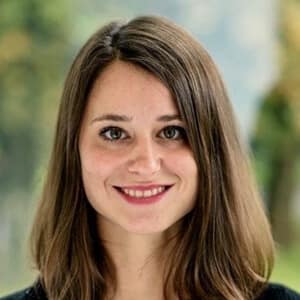
Lucia Grilli di Cortona

Job Title:
Project Manager
Company - Organization:
Schuman Associates
Experience:
6 years
Education:
Master's Degree
Universty - College:
College of Europe - Natolin
Nationality:
Italian

Your organization field and mission:

Schuman Associates (SA) is Brussels’ leading EU funding and public affairs consultancy with an outstanding track-record of securing EU and public sector funding for our clients. SA have over 30 years of close ties and expertise working with our EU partners, and unrivalled access to high-level EU stakeholders.

SA provide bespoke EU funding solutions to meet their clients’ needs, with a focus on delivering measurable value and building long-term partnerships in all major sectors, including ICT and security, energy and environment, education and health, trade and development, financial services and telecommunications. Their clients range from large multinational companies, governments and EU institutions, to universities, NGOs and SMEs.

Please tell us briefly about your role in the company / at your organization:

Lucia specialises in project implementation. She advises multinational consortia and oversees the execution of complex European-funded projects across Digital and Green Skills domains under the Digital Europe and Erasmus+ programmes, including Digital4Security, Reskill4NetZero, AI4GreenDeal and GreenSkillsforH2. Lucia also provides support to partners in the management of grant proposal bids and assists clients in Italy on strategic positioning in line with their organisational objectives and EU funding opportunities. Prior to joining Schuman Associates, she worked on energy and innovation issues at the European Affairs office of the French company Orano. Prior to that, she completed a traineeship at the European Parliament.

Your interest in STEM

My interest in STEM developed gradually and somewhat unexpectedly through my professional journey. I did not initially pursue a STEM-focused path, but as I specialised in project implementation—particularly within European programmes such as Erasmus+ and Digital Europe—I increasingly worked on initiatives centred around digital and green skills. This exposure naturally brought me closer to STEM-related topics, especially in areas such as digital transformation, sustainability, and emerging technologies. 

A pivotal moment came earlier in my career when I had the opportunity to work for an energy company. This was my first direct experience engaging with technically complex environments. It sparked my curiosity and gave me a new appreciation for the role of STEM in addressing societal and environmental challenges. Since then, my interest has continued to grow through hands-on involvement in multinational projects that bridge policy, education, and innovation. Today, I engage with STEM not from a purely technical perspective, but as a facilitator—helping connect stakeholders, translate complex needs into actionable projects, and contribute to building the skills ecosystems needed for Europe’s digital and green transitions.

My first and most influential role model has been a colleague and mentor I had the opportunity to work closely with early in my career. He played a fundamental role in shaping my professional path as a project manager, not only by teaching me the technical aspects of the role, but also by demonstrating how to approach challenges with resilience, clarity and integrity. What inspired me most was his ability to navigate complex projects and high-pressure environments while maintaining a strong sense of purpose and collaboration. Through his example, I learned how to lead with both structure and empathy, and how to turn challenges into opportunities for growth.

Your studies

During my studies, one of my main challenges was feeling the need to be at the same level as my peers, many of whom seemed more confident or academically prepared. This initially created a sense of pressure and self-doubt, particularly in demanding environments. 

If I reflect on it in a SWOT perspective:
Strengths: determination, discipline, and the ability to learn quickly
Weaknesses: initial lack of confidence compared to peers
Opportunities: exposure to diverse perspectives and collaborative learning
Threats: risk of self-doubt limiting performance

My advice to girls and women who want to pursue studies in political science or European studies is to be confident in the value of their perspective and not to underestimate the impact they can have. It is important to stay curious, engage actively with real-world issues, and seek practical experiences early on, such as internships, international projects or volunteering.

You at work

At the moment, I am not directly involved in or aware of specific formal DEIS-labelled initiatives within my organisation.

One of the things I am most proud of in my work is my ability to successfully navigate the complexity of EU funding programmes and manage large, multinational consortia independently. Over time, I have built the confidence and expertise to lead complex proposals and projects from concept to implementation, translating policy priorities into concrete actions and results. This has allowed me to contribute to impactful initiatives in areas such as digital and green skills, supporting Europe’s broader transition. What makes me particularly proud is managing in a way that fosters collaboration, trust, and shared ownership among partners—turning a group of organisations into a truly functioning alliance.

Your point of view

Technology can be a powerful enabler for women by opening access to opportunities, knowledge, and networks that were previously less accessible. It allows women to develop new skills, enter emerging sectors, and participate more actively in the digital and green economy.

Working in European projects and policy-related fields means dealing with multidisciplinary topics—ranging from education and skills to digitalisation, sustainability, and innovation—so having an open mindset and willingness to learn is essential.

By 2030, I would like to see Diversity, Equity, Inclusion and Sustainability become fully embedded as standard practice across European projects and funding programmes—not just as horizontal priorities, but as measurable and actionable components of every initiative.

To finish with

My core values are integrity, collaboration, and continuous learning. I believe in working with transparency and responsibility, especially when managing complex projects that involve multiple partners and stakeholders.

One of my main future challenges in a professional context will be to continue growing as a leader while managing increasingly complex projects and partnerships at European level.

By 2030, I hope to grow into a stronger leadership role, continuing to build bridges between policy, technology, and people, and contributing to impactful digital and skills initiatives at the European level.

The current activity has been implemented in the framework of the Project: Code4Europe,
GA Number: 101158834. Official project website : 
https://codeweek.eu/