
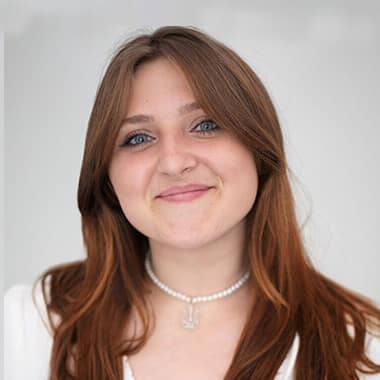
Natalia Honcharova

Job Title:
Head of Digital Skills Projects
Company - Organization:
Junior Achievement Ukraine
Experience:
6 years
Education:
PhD on Development of Digital Competence
Universty - College:
Donbas State Pedagogical University
Nationality:
Ukrainian

Your organization field and mission:

Non-profit organizations that for over 100 years has helped young people acquire the knowledge and skills needed to become successful participants in the global economy. JA programs operate successfully in 40 European countries and more than 100 countries worldwide, reaching over 100 million young people annually. The main goal of JA Ukraine is to develop and expand educational programs for Ukrainian youth in economics and entrepreneurship, digital by establishing and strengthening connections between the private sector, public sector, and youth, in line with the principles and standards of the international Junior Achievement educational movement. Our mission is to educate economically literate, prepared, creative, proactive, and confident young Ukrainians who are ready to succeed in various fields. Our objective is to prepare youth for the labor market and to develop their entrepreneurial skills.

Please tell us briefly about your role in the company / at your organization:

As Head of Digital Skills Projects, I manage programs and initiatives including Code4Europe (an EU Code Week initiative), Microsoft Generative AI, and IBM SkillsBuilding. I lead the design and implementation of projects that develop digital literacy, entrepreneurship, and STEM skills among Ukrainian youth. Through these programs, we have engaged over 150,000 students and 700 educators. I also create training materials, organize workshops, mentor students and educators, and collaborate with national and international partners to expand impact and reach.

Your interest in STEM

My interest in STEM was born during my school years. I grew up in a modest family that couldn’t afford gadgets or a personal computer, so every free moment during IT classes I spent catching up with those who had access to technology at home. Later, I decided not to stop there and enrolled in a specialized lyceum to better understand technology. What fascinated me most was learning the ten-finger typing method, which became a symbol of persistence and structured learning for me. Over time, I realized that I wanted not only to study technology but also to teach it to others — especially girls like me who didn’t always have equal access to digital resources.

My passion for STEM deepened during my university studies, when I realized how technology can transform education and create opportunities for community development. I became fascinated with digital literacy, coding, and artificial intelligence, and their potential to empower young people — particularly girls — to thrive in the modern world. Currently, I am working on my PhD dissertation on developing digital skills among university educators, as I believe that teachers are the driving force behind building the digital competencies of future generations. By empowering educators, we create the foundation for sustainable digital growth in our society.

My first role model was my school informatics teacher, who believed in me long before I believed in myself. I still remember how she stayed after classes to show me how computers work — even when I could barely type or save a file. She used to say, “You don’t need the newest technology to create something meaningful — you just need curiosity and courage.” Those words stayed with me. At university, my inspiration shifted to women in technology who broke stereotypes — people like Ada Lovelace, the world’s first programmer, and Susan Wojcicki, who helped shape the digital world through leadership and vision.

Today, I continue to draw inspiration from Ukrainian women in STEM and education who, despite challenges and limited resources, keep teaching, innovating, and supporting students. They prove every day that true leadership is not about having everything — it’s about making the most of what you have and helping others rise with you.

Your studies

One of my biggest challenges was growing up without access to personal technology. My family couldn’t afford computers, so I spent extra hours in the school computer lab learning to code, type, and explore the digital world. This limitation became my strength — it taught me perseverance, adaptability, and how to learn creatively with few resources.

I also faced the lack of female role models in technology, which at first felt like a threat, but later turned into my motivation — to become that role model for others. My opportunities came through continuous learning, collaboration, and international programs that expanded my digital and leadership skills.

Don’t be afraid to start — even if you think you’re not ready. None of us ever truly are. Curiosity is your greatest tool, and courage grows with every small step you take. I know what it feels like to doubt yourself or to think that technology is “not for you,” but it is — it’s for everyone who wants to create, help others, and make the world better. Find people who believe in you, and never stop believing in yourself. Every question you ask, every skill you learn, every challenge you overcome — it all brings you closer to who you’re meant to be. The world of technology needs your ideas, your empathy, and your unique story.

You at work

At JA Ukraine, we integrate DEIS principles across all our programs. We promote equal access to digital education for students from diverse regions of Ukraine — including rural areas and communities affected by war. Our projects encourage gender balance by engaging both girls and boys in coding, entrepreneurship, and AI activities, often led by female mentors and role models. We also emphasize sustainability by teaching students to use technology responsibly and to develop projects that address real social and environmental challenges. Through these initiatives, we strive to make digital skills a tool for inclusion and empowerment.

I’m most proud of building programs that, in just one year, have reached over 150,000 students and 700 educators across Ukraine, helping them develop digital and entrepreneurial skills that can truly change their lives.

Seeing young people — especially girls — who once doubted themselves now confidently creating apps, coding, and leading projects is the greatest reward. I’m also proud that our initiatives — including EU Code Week, Microsoft Generative AI, and IBM SkillsBuild — have become national examples of how education and innovation can empower an entire generation, even in times of challenge.

Your point of view

Technology gives women the power to learn, create, and connect without limits. It removes barriers of geography, status, and even stereotypes — allowing women to access knowledge, build businesses, and share their voices with the world. For women in Ukraine and beyond, technology has become not only a tool of resilience but also a path to leadership and independence. When women gain digital skills, they gain freedom — to choose, to influence, and to shape the future.

Start where you are, with what you have — and don’t wait until you “feel ready.” The tech world needs your ideas, empathy, and creativity.
Be curious, stay brave, and remember that your unique perspective is your greatest strength. Find mentors, keep learning, and never let fear of failure stop you — every mistake is a lesson. Technology isn’t just about coding or machines — it’s about people, collaboration, and building a better world. And women belong at the heart of that change.

By 2030, I hope to see a tech and education sector where diversity, equity, inclusion, and sustainability are not just values — they are everyday practices. I envision more women and underrepresented groups leading digital projects, shaping policies, and designing technologies that reflect real social needs. I want every teacher, student, and community — regardless of location or background — to have equal access to digital skills education. My dream is for Ukraine to become a place where digital inclusion and sustainability drive both innovation and empathy, making technology a force for good for everyone.

To finish with

My core values are education, empathy, integrity, and innovation. I believe that meaningful change begins with learning and sharing knowledge. I value collaboration over competition and strive to create opportunities that empower others — especially young people and women — to believe in their potential. As a Ukrainian educator, I deeply value resilience and community — the spirit that keeps us learning, creating, and helping others even in times of uncertainty.

One of my biggest challenges is ensuring that digital education remains accessible, inclusive, and relevant for all — especially in Ukraine, where education has become both a tool of recovery and a bridge to the future. I aim to bridge the gap between technology and pedagogy, helping teachers confidently adapt to AI and new tools. Another challenge is keeping a balance between rapid innovation and human connection while leading projects that bring real social impact to Ukrainian communities.

By 2030, I hope to be a recognized expert and mentor in digital skills development and inclusive education — leading national and European initiatives that support educators and youth across Ukraine.

I want to see more Ukrainian teachers and students using technology not just as consumers, but as creators and innovators who rebuild, inspire, and lead. My ultimate goal is to help make Ukraine a model of how digital skills, education, and resilience can transform a nation — and empower people to shape a better, more connected world.

The current activity has been implemented in the framework of the Project: Code4Europe,
GA Number: 101158834. Official project website : 
https://codeweek.eu/