
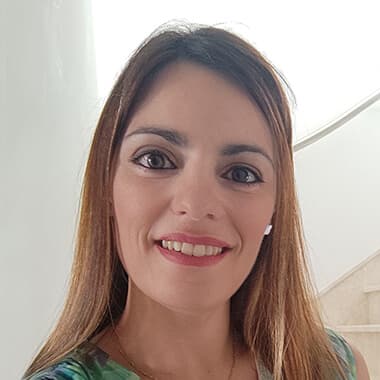
Maureen Sciberras

Job Title:
Digital Literacy Support Teacher
Company - Organization:
DDLTS
Experience:
16 Years
Education:
Masters in Educational Leadership & Management
Universty - College:
University of Malta
Nationality:
Maltese

Your organization field and mission:

The Directorate for Digital Literacy & Transversal Skills (DDLTS) in Malta is dedicated to empower learners of all ages with the digital competences they need to succeed in the 21st century world. With a focus on collaboration, communication, creativity, critical thinking, citizenship and computational thinking, the DDLTS leads national initiatives in digital learning, supports educators in integrating technology into teaching and drives forward Malta’s digital education agenda. This year a new national Digital Education Strategy (covering 2025-2030) was launched by the Directorate which includes measures such as one device per student, greater educator training in digital tools and AI and a focus on inclusive access to technology for all learners. 

Please tell us briefly about your role in the company / at your organization:

As a Digital Literacy support educator, I work closely with educators to help them integrate digital tools and technologies into their teaching and learning practices. This involves providing one-to-one support, delivering tailored training sessions and developing resources that align with the national digital literacy strategy. I occasionally also deliver hands-on workshops directly to students to introduce them to emerging technologies such as VRs, coding and artificial intelligence.

Your interest in STEM

Unlike many, my journey into STEM didn’t begin in childhood. During my primary and secondary education, opportunities to explore coding or STEM subjects were limited. It was at university, while preparing for teaching practice, that I was introduced to the world of Web 2.0 tools and realised the potential of digital technology in education. That initial spark grew stronger during my teaching years, eventually leading me to join the digital literacy team, where I could work more closely with digital technologies.

As a Digital Literacy support teacher, my passion for technology deepened even further—supporting educators in integrating tools like VR sets, coding platforms, and AI into their classrooms made me realise the transformative impact of technology on teaching and learning. These hands-on experiences not only enhanced my own understanding but reinforced my commitment to making STEM more engaging and accessible for both teachers and students.

The first figure in STEM who truly inspired me was Ada Lovelace. Her courage to pursue her passion for mathematics—despite societal limitations—reminds me that women have always had a place in STEM, even when that space wasn’t acknowledged. As someone who came into STEM later in life, her story encourages me to keep learning and pushing boundaries. She showed me that innovation often begins with curiosity and the bravery to see things differently.

Another person who truly inspires me is Reshma Saujani, founder of Girls Who Code. Her dedication to closing the gender gap in technology resonates deeply with me, as I also strive to empower girls and women through digital literacy and STEM education. Organisations like this  motivates me to keep working toward making STEM accessible and exciting for all learners, especially those who might not otherwise see themselves represented in this field.

Your studies

One of my strengths during my studies was strong self-motivation and resilience. I began my Masters’ degree just as I returned to work from maternity leave—with a six-month-old baby at home. Balancing academic work, professional responsibilities, and motherhood required determination and focus. A weakness I faced was my limited early exposure to STEM, which meant I had to put in extra effort to build my knowledge and skills later in life. Fortunately, I was eager to learn and welcomed every opportunity to improve, attending online on onsite professional development opportunities that arose.  This was not always easy considering that I live on an island and most of these opportunities are offered in mainland Malta. A major threat I continue to navigate is the challenge of caring for my daughter, who has a severe disability and is fully dependent on me. This has shaped my perspective and made me even more determined to stay abreast of developments in STEM—especially those that can help improve my daughter’s quality of life.

My advice to girls and women who want to pursue studies and careers in STEM is to stay curious, be brave, and never underestimate the power of your ideas. Reshma Saujani encourages us to “be brave, not perfect,” reminding us that it’s okay to take risks and learn from failure along the way. Be resilient and never give up despite all the challenges.

You at work

We are committed to promoting gender diversity in the tech field by actively encouraging and supporting girls to explore coding and digital skills. In fact, one of the strategic measures under the Digital Education Strategy is to provide learners with training in crucial areas such as the digital divide, career roles in IT, and the vital issue of gender equality within technology-related professions. As a woman teaching digital technology and coding, I’ve seen how my presence alone can make a significant impact; many girls feel more confident and motivated when they see someone like themselves in this role. It helps challenge the stereotype that tech is only for boys and reinforces the message that digital technology is a space where girls belong and can thrive.


My organisation helps promote equitable access to digital education by contributing to community events like Code Week and Digital Literacy Week which is organised by my Directorate.  The One Device Per Child program, which has been extend to students in Years 7, 8, and 9 helps bridge the digital divide by equipping all learners—regardless of their socioeconomic background—with the necessary tools to fully participate in digital education. This also includes neurodiverse learners to foster an inclusive and accessible environment to help every learner build confidence in their technological abilities. Through our involvement in various eTwinning projects, we encourage the integration of digital tools in cross-curricular learning. These projects not only enhance digital competence among students but also foster collaboration across countries, helping young people understand their role in addressing global challenges through innovation and responsible digital practices.

I take great pride in supporting continuous learning for educators, helping them build confidence and skills in integrating technology effectively into their teaching. During subject meetings, I assist teachers by demonstrating how particular technologies can be effectively integrated into their curriculum to enhance student learning and engagement. By collaborating closely with teachers and schools, I ensure that digital tools are used thoughtfully to enhance learning experiences while fostering responsible digital citizenship. This also helps students develop the critical awareness needed to navigate the digital world responsibly and confidently.

Your point of view

Technology empowers women by increasing their representation in STEM fields and leadership roles, breaking down long-standing gender stereotypes. By providing access to digital education, technology creates pathways for women to enter and thrive in traditionally male-dominated industries. This visibility and participation help challenge societal norms about gender roles, inspire future generations, and promote greater gender equality in both the workplace and society at large. Through these opportunities, technology acts as a catalyst for empowering women to lead, innovate, and contribute fully to the digital economy.

Believe in your ability to succeed in the digital and technology sector—your voice and perspective are not only valuable but necessary. Don’t be discouraged by stereotypes or the lack of representation; instead, see yourself as part of the change. Take every opportunity to learn, stay curious, and don’t be afraid to ask questions or make mistakes—it’s all part of the journey. Most importantly, know that there is space for you in tech—not just to participate, but to lead, innovate, and make a real difference. An inspiring quote by Katherine Johnson who works in NASA says “Girls are capable of doing everything men are capable of doing. Sometimes they have more imagination than men.”

By 2030, I hope to see a digital education sector that fully embraces and reflects the principles of Diversity, Equity, Inclusion, and Sustainability. This means closing the digital divide so that every student—regardless of gender, background or ability—has equal access to high-quality digital tools, computational thinking skills, and opportunities. I would like to see more women and underrepresented groups not only participating in, but also leading, innovation in technology and education. Additionally, I hope there is a stronger focus on using digital learning to address global challenges, with sustainability embedded into both the content we teach and the way we use technology in schools.

To finish with

I believe that digital technology is not just a tool, but a fundamental part of education, innovation, and daily life in today’s world. The COVID-19 pandemic clearly demonstrated how essential technology is for staying connected, continuing education, and solving real-world problems. My values in STEM are rooted in ensuring that everyone—especially girls—has the opportunity to develop strong digital skills, understand how technology works, and use it responsibly. I strongly value accessibility, inclusion, and the power of technology to empower individuals. I am dedicated to supporting both learners and educators in using digital tools to create a more connected, resilient, and future-oriented society that continue in narrowing the digital divide gap and strive to make the best possible ethical use of the opportunities arising by AI and the emergent technology.

In my professional role with DDLTS, one of my key future challenges is keeping pace with the advances in coding and artificial intelligence (AI) and ensuring these developments are harnessed in an inclusive way. As technology evolves rapidly, I must continuously update my own expertise and guide both teachers and students in using these tools effectively. 

By 2030, I hope my career will have evolved to include a leadership role within digital literacy education, where I can influence policy and practice on a broader scale. I aim to be at the forefront of integrating emerging technologies like AI and coding into inclusive, accessible learning environments. Additionally, I plan to collaborate closely with educators across other STEM subjects to raise awareness and foster interdisciplinary approaches that highlight the importance of digital skills for all students. 

The current activity has been implemented in the framework of the Project: Code4Europe,
GA Number: 101158834. Official project website : 
https://codeweek.eu/