

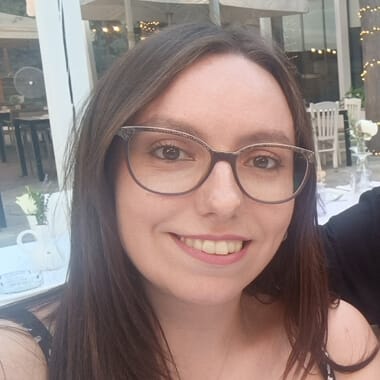
Konstantina Vrontaki
Your organization field and mission:
CityLab is a specialized STEM and Digital Skills center dedicated to fostering creative intelligence in students aged 4 to 18. Its primary sector is the delivery of high-level, project-based learning that combines Robotics, Computer Science, and Engineering with real-world application. The mission of CityLab is to transform students from passive consumers of technology into proactive creators and problem-solvers. By emphasizing deep “how-to” understanding over superficial knowledge, the center fosters critical thinking and a solid scientific foundation. Through its role as a National Hub for European initiatives, CityLab bridges the gap between traditional school curricula and the demands of the modern digital economy. Ultimately, it seeks to future-proof the next generation, equipping them with the logic and innovation skills necessary to excel in the careers of tomorrow.
Please tell us briefly about your role in the company / at your organization:
I am a STEM Educator at CityLab, where I specialize in Mechanics, Robotics, Programming, and Mechatronics. My work focuses on turning complex technical theories into practical, hands-on projects for students of all ages. Beyond the classroom, I design and implement original workshops covering diverse themes like Physics, Astrophysics, and Algorithmic Thinking. A key part of my role involves training other teachers, equipping them with the tools and methods to bring high-level STEM activities into their own schools. By moving away from “black-box” learning, I help both students and educators understand the deep logic behind modern technology.
Your interest in STEM
When I was ten years old, my favorite part of the day was coming home from school to watch documentaries about physics and the stars. Those stories sparked a deep curiosity in me about how our universe actually works. This curiosity lead to more reading that cultivated a love for Science and Physics.
My first role model was Marie Curie, a pioneer who broke every barrier to succeed. Her story remains deeply inspiring to me—from moving to a new country to pursue her studies to becoming the first person to win two Nobel Prizes.
I also find the story of Katherine Johnson inspiring. The mathematician who broke through stereotypes to help humanity reach the moon. Her brilliant work and determination remind me to push through any difficulty, no matter how a challenge may seem. These women taught me that science isn’t just about formulas, it’s about the courage to fight for your dreams and the persistence to innovate.
Your studies
During my studies, one of the greatest challenge was the hey workload. It was demanding and left little to no personal time. I had to organize program to be able to dedicat eenough time for every lesson. This challenge though taught me discipline and resilience.
Another setback was the COVID-19 pandemic, which made it difficult to build the professional partnerships and connections I needed in the STEM field
My advice is simple: stay curious and never stop dreaming. Don’t limit your learning to just one sector, keep filling your mind with knowledge from every field you can find. You must set your goals and remain resilient until you achieve them. The road might look very different from what you originally expected, but if you keep trying and keep adapting, that path will eventually lead you exactly where you want to be. Remember that every challenge is just a detour, not a dead end. Trust your curiosity to guide you, and your persistence to get you there.
You at work
At CityLab, Equity and Inclusion are core foundations of everything we do. Our team is built on a diversity of mindsets, ensuring a collaborative environment where every voice is respected and heard. We carry this same philosophy into our classrooms, where we treat every student with equal respect and dignity.
Our classes bring boys and girls together as equal partners, fostering a new generation that naturally values inclusion. Moreover, we organize targeted events designed to inspire young women and girls to pursue careers in digital and scientific fields. Last but not least, in the spirit of true inclusion, we provide specialized workshops for schools and students with special needs, ensuring STEM education is accessible to everyone.
The greatest achievement of my work is watching my students grow into independent thinkers with a deep mindset of curiosity. I am incredibly proud to help them cultivate a genuine love for learning and to provide the tools they need to discover their own unique paths. Seeing them ready to take on the world with their own ideas, is what makes my role as an educator truly rewarding.
Your point of view
Technology empowers women by proving that logic and innovation are the same for everyone, regardless of gender. By mastering fields like Robotics and AI, women move from being passive users to becoming the architects of the future. This technical literacy levels the playing field, offering the independence to lead in the world’s fastest-growing industries. It allows women to apply their unique perspectives to global challenges.
My advice is to stay curious and never be afraid to “get your hands dirty” with practical work. When you study, focus on the “why” behind everything—this mindset will always lead you to the most important answers. Don’t limit yourself to the materials you are taught; keep asking questions until you truly understand the logic. It is also vital to build strong relationships with your professors and peers, as these connections lead to the collaborations and partnerships that drive real-world success.
While we have seen more women entering Physics and Astrophysics in recent years, my goal for 2030 is to see them in leading positions. I want to see more women heading research departments, leading engineering firms, and shaping global tech policy. It is not enough to just have a seat at the table, we need to be at the head of it.
To finish with
I have four core values: curiosity, creativity, out-of-the-box thinking, and collaboration. To me, science isn’t just about following a manual, it’s about having the curiosity to ask “why” and the creativity to design a solution that doesn’t exist yet. I also believe that the greatest breakthroughs happen when we challenge traditional boundaries and look at problems from a completely new perspective. Lastly and most importantly, I value the power of working together. Innovation is rarely a solo journey—it thrives when different minds collaborate in unison.
My next major challenge is balancing my PhD research with my full-time job. Being a researcher while maintaining a career requires intense discipline and persistence, as both roles demand my full creative energy.
Beyond the schedule, there is the intellectual challenge of staying ahead of the curve. In a field that moves as fast as ours, staying up-to-date with the emerging technologies that will shape our digital future is a constant pursuit.
By 2030, my goal is to bridge the gap between high-level academic research and the younger generation. I want to bring the complexities of Physics and Astronomy to students in a more hands-on, accessible way, turning “black-box” theories into tangible discoveries. My career will be a blend of creating new knowledge through my own research and mastering the art of science communication. By combining these two worlds, I aim to translate the latest scientific breakthroughs into inspiring educational tools, ensuring that the explorers of tomorrow have the curiosity and the skills to lead the way.
The current activity has been implemented in the framework of the Project: Code4Europe,
GA Number: 101158834. Official project website : https://codeweek.eu/