
[ June 17, 2026 by ECWT 0 Comments ]

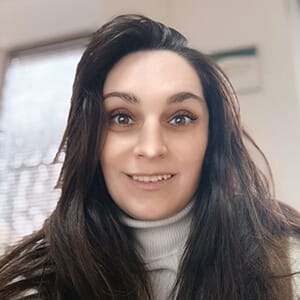
Sofiia Slobodska

Your organization field and mission

The non-governmental organisation ‘RECOVERY 2.0’ works in the fields of community development, education, the environment and youth work. We aim to help young people realise their potential, develop modern skills and play an active role in bringing about positive change in society.

Please tell us briefly about your role in the company / at your organization

I am the head of an organisation and have project management skills. My responsibilities include developing projects, preparing grant applications, coordinating partnerships, managing project activities and communicating with stakeholders.

Your interest in STEM

My interest in STEM developed gradually throughout my studies and professional career. I have always been fascinated by the opportunity to find practical solutions to complex problems, work with data and use modern technology to help communities develop. I have seen how technology can change people’s lives and open up new opportunities for learning and professional development. With the advancement of technology and the internet, these opportunities have become available even to children in remote mountain villages.

My first role models were teachers and lecturers who knew how to inspire a love of learning and showed that knowledge can be a tool for change.
Today, I am inspired by women leaders in the fields of technology, science, social entrepreneurship and project management.

Your studies

Strengths – Responsibility and perseverance.
Weaknesses – A tendency towards self-criticism.
Opportunities – Access to modern educational resources and digital tools.
Threats – Limited access to practical opportunities in small communities.

Don’t let stereotypes dictate your choice of career or education.

You at work

We ensure equal access to educational programmes for women and men, support the participation of young people from rural areas, and create a safe environment for learning and development.

As part of our work, we also promote digital inclusion and strive to ensure that modern educational opportunities are accessible to all.

Your point of view

Technology helps women to access high-quality education, work remotely, launch their own projects and participate in global professional communities, regardless of where they live.

Be brave, inquisitive and open to lifelong learning.

I would like to see more women in leadership roles in STEM, more girls in technical education, and greater access to digital opportunities for young people from small communities.

To finish with

My core values are responsibility, honesty, continuous development, cooperation and respect for others.

I aim to continue developing my project management skills

I hope to launch even more initiatives that will help young people, women and communities to gain new opportunities for development.

The current activity has been implemented in the framework of the Project: Code4Europe,
GA Number: 101158834. Official project website : 
https://codeweek.eu/ 

[ May 10, 2026 by ECWT 0 Comments ]

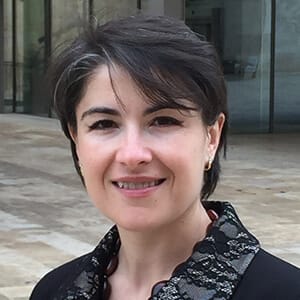
Domenica Mastrandrea

Your organization field and mission

The Institute is a lower secondary school committed to meeting students’ educational needs and open to didactic and technological innovation. In an ever-evolving educational landscape, the school promotes active and inclusive methodologies, placing student agency and the development of 21st-century key competencies at the center of its mission.

Please tell us briefly about your role in the company / at your organization

I am a lower secondary school teacher with expertise in new technologies and innovative teaching methodologies. As a maker and active promoter of female protagonism projects, I am committed to empowering girls through hands-on, creative, and technology-driven learning experiences. I believe in fostering students’ agency, critical thinking, and digital skills as essential tools for their future.

Your interest in STEM

My interest in STEM was born in 2022, when I attended a STEAM Masterclass at Fondazione Golinelli in Bologna. That experience was a turning point: it opened my eyes to the transformative potential of science, technology, engineering, art and mathematics in education, inspiring me to bring innovative, hands-on and interdisciplinary approaches into my classroom.

My first role model was the spirit of curiosity and creativity that I encountered in my early teaching years. Today, my role models are the many innovation movements that are reshaping education worldwide — from the Maker Movement to STEM/STEAM education advocates, from Design Thinking communities to open-source learning networks, like Fondazione Golinelli, FabLab di Bitonto and others.

Your studies

My academic journey has been shaped by two degrees obtained at different stages of my life: Mathematics and Primary Education Sciences. This non-linear path was not always easy, but it reflects who I am — an open-minded, enthusiastic person who embraces new challenges and opportunities with curiosity and passion.
Strengths: My dual background gives me a rare combination of analytical thinking and pedagogical sensitivity. I am naturally open to new ideas and proposals, and I bring genuine enthusiasm to everything I do — in and out of the classroom.
Weaknesses: Balancing two demanding fields of study at different moments in life required great resilience and personal sacrifice. At times, the path felt long and uncertain.
Opportunities: The intersection of Mathematics and Education Sciences led me to discover my true calling — STEAM education, innovative teaching and the Maker Movement. Each new experience, like the Masterclass at Fondazione Golinelli, has fuelled my passion even further.
Threats: The persistent gender gap in STEM remains a real obstacle, both in academia and in the professional world. Yet it is precisely this challenge that motivates me to be a role model for my female students.

My advice to girls and women who want to pursue studies in STEM and education is simple: trust your creativity and curiosity — they are your greatest strengths. Do not let stereotypes or self-doubt hold you back. Science, technology and mathematics are not “male” subjects. These Subjects need female unique perspective, sensitivity and imagination. they aren to follow what excites , even when the path seems unconventional or non-linear. The world needs the girls and women voice.

You at work

One of the most significant DEIS initiatives carried out by our organization is the participation in the Girls Code It Better project — a national program aimed at bridging the gender gap in technology and digital education. Through this initiative, female students are empowered to explore coding, computational thinking and digital creativity in a supportive and inspiring environment. The project reflects the school’s deep commitment to equity and inclusion, promoting the active protagonism of girls in STEM fields and challenging gender stereotypes from an early age. By engaging students in hands-on, collaborative and innovative activities, the school fosters confidence, curiosity and a sense of belonging in the world of technology.

What I am most proud of is seeing my girls become true protagonists — confident, harmonious and empowered. For me, the greatest achievement is the moment when a student discovers her own potential and steps forward with courage and joy. Supporting female protagonism is at the heart of everything I do: I believe that every girl deserves a space where she can express herself freely, collaborate, create and lead. Watching my female students grow in enthusiasm, creativity and inner balance confirms that education, when driven by passion and innovation, can truly transform lives and break down barriers.

Your point of view

Technology can be a powerful tool to empower women — it connects people, breaks down geographical and social barriers, and opens access to knowledge and opportunities that were once out of reach. However, I firmly believe that technology must be used wisely and critically. It is not enough to simply give girls a device or a platform — we must educate them to question, analyse and think independently. Artificial Intelligence, for example, is a fascinating and transformative tool, but it requires critical thinking and ethical awareness to be truly empowering. In my work, I strive to guide my students not just to use technology, but to understand it, question it and shape it — because women who master technology with a critical mind are women who can change the world.

My advice to girls and women who want to work in this sector is simple: be brave, break the stereotypes and, above all, be yourself. Technology, innovation and science are are spaces that belong to everyone, and women have every right to be there, to lead and to shine.today it seems that we can count only on half of potential. Do not let anyone tell you that you are not capable, that it is too difficult, or that it is not for you. Your curiosity, your creativity and your unique perspective are exactly what this sector needs. Never hide who you are to fit into a mold:  the authenticity is your greatest strength. Surround yourself with inspiring communities, seek out role models, and never stop learning. The path may not always be easy, but every barrier you break opens a door for the girl who comes after you. Be courageous, be yourself because the world of technology needs your voice.

By 2030, what I would like to see most in the DEIS landscape is genuine collaboration between schools, institutions, organizations and communities, all working together towards a common goal: a more equitable and inclusive world.  Collaboration between teachers, makers, technologists and policymakers can break down the structural barriers that still prevent many women and girls from fully expressing their potential in STEM. I believe that no one can create real change alone but it is only by joining forces, sharing knowledge and building bridges across different fields and communities that we can truly achieve diversity, equity and inclusion by 2030.

To finish with

The values I believe in are: the creativity,  the power to imagine new possibilities and transform them into reality. I believe in curiosity,  the driving force behind every discovery and every innovation. I believe in courage,  the strength to break stereotypes, take risks and be yourself even when the path is unconventional. I believe in collaboration,  because no meaningful change happens alone, and together we are always stronger. I believe in respect, for every person, every idea and every unique journey,  I believe in innovation and authenticity. These values are not just words to me — they are the foundation of my teaching, my projects and my commitment to female protagonism in STEM.

My greatest future challenge is to train both educators and students in the conscious and critical use of technologies and Artificial Intelligence. In a world increasingly shaped by AI, I believe it is essential to teach people to use technology as a tool at the service of the person, not as a substitute for human thinking. My goal is not to delegate to AI, but to use it as a catalyst for developing critical thinking, creativity and autonomy,  in teachers and students alike. I want to build a generation of learners and educators who are not passive consumers of technology, but active, aware and empowered users who can question, evaluate and shape the digital tools around them. This is my challenge, my mission and my passion for the years to come.

In future,  I hope my career will have evolved towards a broader leadership role as a trainer of trainers or as a school principal. I aspire to extend my impact beyond my own classroom, sharing my experience, passion and vision for innovative and inclusive education with other educators. I would love to build and lead professional communities where teachers have ready eyes on pupils: if there is a teacher who believes in you, no one will ever be lost.

The current activity has been implemented in the framework of the Project: Code4Europe,
GA Number: 101158834. Official project website : 
https://codeweek.eu/ 
[ April 16, 2026 by ECWT 0 Comments ]

Anamaria Magri Pantea

Your organization field and mission:

Business advisory and management consulting.
Supporting effective and inclusive innovation, digital transformation and green transition in our society through targeted and tailored education and training, coaching and consulting across various sectors.

Please tell us briefly about your role in the company / at your organization:

I am one of the founders and the managing consultant.

Your interest in STEM

I was interested in these since my time in school, but afterwards I also chose to support these areas by facilitating their connection with the market and society.

My first role model was my mother, a very driver woman who by the age of 30 was the CFO of a major Romanian company with thousands of employees.

Your studies

While studying economics, finance and business administration, the pervasive role of digital technologies was not yet fully clear and hence insufficiently covered. I thus had to further apply myself and learn about these on my own. 

Combine social sciences with technology studies. For example, by stacking a BSc and MSc from these different areas. This will be crucial as we more forward in a world more and more influenced by automation, robotics and AI. We must be able to ensure that the human stay in the loop.

You at work

Having persistently pursued my own and other’s empowerment. Being ready to go the extra mile and collaborate with various stakeholders, including competitors. Being able to be both a starter and finisher of projects and initiatives.

Your point of view

Technology is nowadays a key factor of production, and the ones that are able to manage them effectively, can actually progress and thrive.

Working in and with digital technologies allows women to also improve their financial standing and security, get a seat and be better heard at the table. 

Don’t be afraid of entering the sector. Skill, reskill and upskill as necessary, leverage and build upon any other experience you have. The digital sector is not a vertical anymore but a horizontal enabler, thus allowing women to enter when any other previous work areas.

Have women equally shaping digital technologies, not just being users.

To finish with

Equity, sustainability, moral ambition.

Continuing to keep up with the fast pace of change in digital technologies and their permeation of all aspects of work and life.

Encourage and support for girls, women and people in general to wisely and effectively engage with the fast evolving digital technologies, to keep our humanity, critical thinking and the planet still able to sustain future generations. 

The current activity has been implemented in the framework of the Project: Code4Europe,
GA Number: 101158834. Official project website : 
https://codeweek.eu/ 
[ April 16, 2026 by ECWT 0 Comments ]

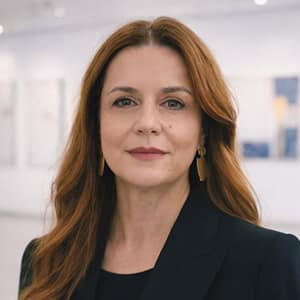
Elena Chasalevri

Your organization field and mission:

Our organization is a Vocational High School operating in the education sector, offering specialized training across five key fields: Information Technology, Applied Arts, Electrical Engineering, Mechanical Engineering, and Administration & Economics. Our mission is to equip students with practical skills, technical knowledge, and professional competencies that prepare them for both the labor market and further education, while fostering innovation, digital literacy, and lifelong learning.

Please tell us briefly about your role in the company / at your organization:

As the Principal, I am responsible for the overall leadership, strategic planning, and daily management of the school. My role includes overseeing educational programs across all sectors, supporting teachers and staff, ensuring a high quality of vocational training, and fostering partnerships with external stakeholders. I also promote innovation, digital skills development, and an inclusive learning environment for all students.

Your interest in STEM

My interest in STEM emerged through my work as a visual artist and graphic designer. While engaging with digital tools, design software, and creative technologies, I became increasingly interested in the intersection between art and technology. This led me to explore areas such as digital design, computational creativity, and the role of technology in modern education. Over time, I developed a strong appreciation for how STEM skills can enhance creativity, problem-solving, and innovation.

My first role models were my teachers and my family. There has always been a strong technical orientation in my family, and since I had a great interest in mathematics, I was inspired by relatives and teachers who encouraged me to engage with STEM subjects. Their support played a key role in motivating me to follow this direction during my high school education. Today, I continue to be inspired by educators and professionals who combine creativity, technology, and innovation in meaningful ways.

Your studies

Strengths: Strong interest in creativity, along with the ability to combine artistic thinking with analytical skills.
Weaknesses: At times, balancing creative interests with more structured subjects was demanding.
Opportunities: My work as an educator with a technical orientation encouraged me to pursue STEM-related paths and develop my skills further.
Threats: Limited access at times to advanced resources and the challenge of choosing between different career paths that interested me equally.
Overall, these challenges helped me build resilience, adaptability, and a multidisciplinary perspective that continues to influence my professional role today.

Believe in yourself and don’t let stereotypes limit your choices. STEM and vocational fields offer exciting opportunities for creativity and innovation. Stay curious, keep learning, and don’t be afraid to take on challenges. With confidence and persistence, you can succeed and make a real impact

You at work

Our organization promotes Diversity, Equity, Inclusion, and Sustainability by ensuring equal access to education for all students and encouraging participation in all sectors, including STEM. We foster an inclusive environment based on respect and collaboration, while integrating sustainability awareness and responsible practices into our educational activities.

I am most proud of the positive changes I have achieved in our school over the past three years, including strengthening extroversion and active citizenship, improving the quality of education, and creating a more inclusive and dynamic learning environment for our students.

Your point of view

Technology empowers women by opening doors to knowledge, creativity, and opportunity. It gives them the tools to learn, innovate, and shape their own futures, breaking barriers and challenging stereotypes. Through technology, women can amplify their voices, lead change, and contribute to a more inclusive and forward-thinking society.

Keep learning, stay curious, and embrace challenges as opportunities to grow. With determination and passion, you can build a meaningful career and inspire others along the way.

By 2030, I envision a fully inclusive vocational education sector where diversity thrives, women lead in STEM, and sustainability is embedded in every aspect of learning, empowering all students to shape a better future.

To finish with

I value respect, empathy, and fairness in everything I do. Lifelong learning guide both my personal and professional life.

One of my main future challenges is to balance my role as a school leader with my identity as an educator, while also maintaining my creativity as an artist.

By 2030, I hope my career will have evolved in ways I cannot yet fully imagine.

The current activity has been implemented in the framework of the Project: Code4Europe,
GA Number: 101158834. Official project website : 
https://codeweek.eu/ 

[ April 16, 2026 by ECWT 0 Comments ]

Drosou Despoina

Your organization field and mission:

Cognita’s mission is to deliver a personalized, world-class education that enables every student to thrive academically, socially, and emotionally. The organization recognizes and nurtures the individuality of each learner and each school, supporting their unique strengths while connecting them to a global network of knowledge, best practices, and opportunities. By combining local identity with international expertise, Cognita empowers students, teachers, and schools to reach their full potential and thrive in a rapidly evolving world.

Please tell us briefly about your role in the company / at your organization:


I lead a team of Computer Science educators while also overseeing digital education across the entire school. My role focuses on integrating innovative tools and AI into teaching and learning, ensuring a safe and effective digital environment, and designing engaging digital learning experiences. Additionally, I contribute to the development of school-wide digital policies and strategies, supporting both staff and students in adapting to a rapidly evolving educational landscape.

Your interest in STEM

My interest in STEM began from an unexpected starting point, as I come from a background in archaeology, a field traditionally considered more theoretical. Early on, I was often faced with the idea that STEM was “not for me.” Instead of discouraging me, this sparked my curiosity and determination to explore it further.
What also drew me in was the connection between both fields as forms of experiential and non-formal learning, learning through discovery, interpretation, and real-world engagement. This perspective helped me see STEM not just as a technical field, but as a creative and exploratory one.
Over time, I became motivated to bridge these worlds, discovering how technology can enrich learning experiences. This journey ultimately led me to fully embrace STEM and integrate it into my professional path.

My first role model was my piano teacher. Through music, she introduced me to a different “language” of learning, one based on creativity, discipline, and learning by doing. These values stayed with me and continue to shape my approach to education.
Today, I am inspired by educators in digital learning, such as Tony Bates, whose work highlights the potential of technology to create meaningful learning experiences. This continues to influence the way I design engaging and forward-thinking learning environments for our students.

Your studies

One of my main challenges was balancing postgraduate studies with full-time work and family responsibilities, as a mother of two. This required strong organization and adaptability.
At the same time, I was able to apply what I learned directly into practice, which helped me grow both academically and professionally.
Overall, this experience strengthened my resilience and ability to manage multiple priorities effectively

Don’t be afraid to combine different interests, such as pedagogy, technology, and creativity, as this is what will make you stand out. Try to apply what you learn in real settings, even in small ways, as this is how confidence is built.

Also, surround yourself with supportive people, ask questions, and don’t hesitate to take up space. Your perspective matters, and the field benefits from diverse voices.

You at work

In our organization, we actively promote inclusion and equity through the implementation of Universal Design for Learning (UDL), ensuring that learning experiences are accessible and adaptable to diverse student needs.

We also place strong emphasis on data-informed practices. By systematically collecting and analyzing learning data, we continuously refine our approaches to better support all learners, identify and root out biases.

Equally important is the student voice. We actively seek feedback from students and incorporate their perspectives into the design and improvement of learning experiences, fostering a more inclusive and responsive educational environment.

One of the achievements I am most proud of is having delivered training sessions that have reached over 150,000 educators throughout my career. A large percentage of this was via the nationwide introduction of smartboards in Greek public schools, for which I was a lead instructor. Beyond the scale, what stands out to me is the impact – seeing educators engaged, inspired, and sometimes surprised by how accessible digital learning can be.

I also value the moments when participants were curious about my background and were surprised to learn that I come from a humanities field. For me, this reflects something important: that meaningful innovation in education comes from combining different perspectives, not just technical expertise

Your point of view

Technology empowers women by enabling independence through access to remote work, entrepreneurship, and continuous learning, allowing them to shape their own career paths and futures.

Don’t wait for permission to enter the field. Υour voice and perspective are needed. Be curious, keep learning, and embrace both education and technology. Growth comes through doing, not waiting.

By 2030, I would like to see inclusion truly reflected in everyday practice, where learning is designed from the start to meet different needs, not adjusted afterwards.

I would also like decisions to be more informed by real data and, most importantly, by listening to students’ voices. For me, success would mean that every learner feels seen, supported, and able to participate equally

To finish with

My core values are to act with integrity, to live by always learning, to strive to leave this world better than I found it, and to bring a smile to those around me.

The most significant challenges are related to keeping abreast of all the developments (technical, legal, ethical) in artificial intelligence; This requires almost a daily commitment of continuous learning and adaptability, as well as helping to ensure that AI is used responsibly, effectively and fairly within a school environment.

By 2030, I hope to have further evolved through continuous learning and conscious career choices, strengthening the core I have built in education. I am particularly interested in advancing in lifelong and adult learning, while growing as a leader in the field of education.

The current activity has been implemented in the framework of the Project: Code4Europe,
GA Number: 101158834. Official project website : 
https://codeweek.eu/ 

[ April 15, 2026 by ECWT 0 Comments ]

Valentina Bertani

Your organization field and mission:

Promote the STEAM approach in schools, cultural centres and youth centres through hands-on workshops and the creative use of technology.

Please tell us briefly about your role in the company / at your organization:

STEAM education expert.

Your interest in STEM

I became passionate about STEAM education about six years ago, not so much for the scientific content as for the approach; I believe it is an effective way of conveying knowledge and essential for the way today’s young people learn, so that what they learn sticks with them over time.

Exoloratorium San Francisco, Mitchel Resnick Lifelong Kindergarden.

Your studies

The biggest challenge during my studies was figuring out what would be useful for me in preparing for a job I didn’t even know I wanted to do; by chance, I came across the STEAM workshops and realised I’d found my calling.

Never stop searching, trying new things, being curious and passionate.

You at work

I run workshops using picture books that explore environmental sustainability and recycled materials; my activities can often be adapted for children and young people with special needs.

The greatest satisfaction comes from working with teachers or sceptical pupils who gradually change their minds, become increasingly engaged in the activity, and see its benefits.

Your point of view

Technology opens up a whole host of possibilities, bridges distances, enables people with limited financial means to achieve things, and is essential for narrowing the gender gap.

In extracurricular settings, it is mainly boys who take part in my activities; we need women and girls who are passionate about education and keen to adopt the STEAM approach, to show that these activities are suitable for everyone, that they open up new possibilities and help participants discover interests to pursue in the future.

I would like education to play a more central role and to be accessible to everyone, everywhere.

To finish with

Critical Thinking: The ability to analyze facts, generate ideas, and defend opinions based on evidence rather than assumptions.
Creative Problem-Solving: Encouraging students to find unconventional solutions by blending logic with artistic intuition.
Collaboration & Teamwork: Most STEAM projects are group-based, teaching students how to communicate effectively and value diverse perspectives.
Resilience (Growth Mindset): In STEAM, “failure” is seen as a necessary prototype. It teaches students to persevere through trial and error.
Adaptability: The capacity to pivot and apply knowledge across different disciplines in a rapidly changing world.
Empathy & Human-Centric Design: By including the “Arts,” students learn to design solutions that consider the human experience and social impact.
Curiosity and Inquiry: Shifting the focus from “having the right answer” to “asking the right questions.”
Ethics and Responsibility: Understanding the social and environmental consequences of technological and scientific advancements.

To work towards greater recognition of my profession at national and international level.

I hope there will be greater recognition of the teaching profession.

The current activity has been implemented in the framework of the Project: Code4Europe,
GA Number: 101158834. Official project website : 
https://codeweek.eu/ 

[ April 15, 2026 by ECWT 0 Comments ]

Giulia Morlacchi

Your organization field and mission:

As a Coach Maker within the educational sector, my role is to act as a facilitator and bridge-builder, empowering both students to navigate the complexities of the modern world with critical thinking, creativity, and empathy. I focus on transforming abstract pedagogical goals into actionable, hands-on learning experiences.

Please tell us briefly about your role in the company / at your organization:

My work is rooted in Design Thinking and Constructionism. I help the educational community iterate on their teaching methods, treating every challenge as a prototype to be improved. By combining the “Coach” element—nurturing soft skills, mentorship, and self-reflection—with the “Maker” element—tangible creation, prototyping, and technical problem-solving—I help build an educational ecosystem that is both human-centered and future-ready.

Your interest in STEM

My interest in STEAM (Science, Technology, Engineering, Arts, and Mathematics) did not emerge as a separate academic pursuit, but rather as an organic evolution of my life as a musician. As a musician, I have always viewed the studio as a laboratory. My transition from purely artistic expression to the STEAM mindset began when I realized that the boundaries between these disciplines are entirely artificial.

Your studies

As a woman navigating the intersection of technology, music, and education, my path has not been without its hurdles. These challenges, while sometimes subtle, have been a constant thread in my professional and academic journey. The most pervasive difficulty was the constant feeling of being an “exception” or an intruder in technical spaces. In both music production studios and computer labs, the environment was—and often still is—designed with a predominantly masculine perspective.

To the girls and women navigating the path toward STEAM, music technology, and digital innovation, my advice is shaped by the reality that while the landscape is changing, the journey still requires resilience and, most importantly, intentional community. My piece of advice is this: Your voice and your vision are exactly what the future of technology is missing. Do not let the lack of representation in current textbooks or studios make you feel like you are in the wrong place. You are not an intruder; you are an innovator.

You at work

In 2016 I was awarded at the UNITED NATIONS ORGANIZATION (Vienna) as part of the ZERO PROJECT contest for my work Music & Autism.
My work aims to include people with autism by transforming the school environment into a creative and sensorial space, harnessing the power of technology and art as universal languages. (https://sites.google.com/view/maria-giulia-morlacchi/risocnoscimenti-e-premi-progetti-musicali?authuser=0)

The award obtained by the United Nation Organization, which recognized the power of STEAM for inclusion in education and the power of the feminine touch.

Your point of view

Technology acts as a powerful catalyst for women’s empowerment by breaking down traditional barriers to education, economic participation, and social influence. When intentionally designed and accessed, digital tools shift the landscape from exclusion to agency.

By 2030, my vision for DEI (Diversity, Equity, and Inclusion)—which I view as the foundational pillar for any meaningful progress in my sector—is to move beyond “check-the-box” compliance and reach a state of systemic, authentic integration. A landscape where a girl, a neurodivergent student, or anyone from an underrepresented background doesn’t just enter a space and have to “fit in” to the existing culture. Instead, they should feel that the culture itself is evolved to welcome their unique perspective. * The Change: Curricula and workplaces must be redesigned from the ground up to reflect diverse histories, contributors, and problem-solving methodologies.

To finish with

I believe that education should never be a passive reception of information. My core mission is to transition learners from passive consumers of technology to proactive creators. By providing students with the “maker” tools to prototype their ideas, I aim to foster a sense of agency—the belief that they have the power to shape their own reality and build the future they want to see. “Making” is not an end in itself; it must serve a purpose. Whether we are building a piece of music, a coding project, or an educational workshop, my value is that our work must contribute to the common good. I encourage students to use their technical talents to solve community problems, address environmental concerns, and advocate for social justice.

As I look toward the next few years, my professional challenges are defined by the intersection of rapid technological evolution and the urgent need for systemic cultural change in education. Balancing the role of an artist, a technologist, and an educator requires navigating several complex tensions. My challenge is to continue to foster authentic human creativity based on doing, ensuring that my workshops emphasize the human process—the sometimes chaotic, emotional, and collaborative creative journey—rather than the flawless end result. I must teach students that the value of their work lies in their unique perspective, which no artificial intelligence will ever be able to replicate.

By 2030, I aim to evolve from being an “on-the-ground” Coach Maker into a Systemic Architect of Inclusive Learning. My professional growth will focus on moving from individual classroom interventions to influencing the broader educational ecosystem.

The current activity has been implemented in the framework of the Project: Code4Europe,
GA Number: 101158834. Official project website : 
https://codeweek.eu/ 

[ April 14, 2026 by ECWT 0 Comments ]

Sarah Ricchitelli

Your organization field and mission:

I’m a freelance Technical Artist collaborating with Girls Code It Better in Italy to bring STEAM subject into the schools with the Learn By Doing teaching method.

Please tell us briefly about your role in the company / at your organization:

As a Technical Artist in the videogame development field I’m in charge of optimizing both code and graphic assets so the game runs smoothly.
I create tools for artist to use and mange a team of artist.

Your interest in STEM

I always wanted to create videogames, so I took interest in programming and Engineering in middle school.

I don’t remember my first role model, but as of today a lot of women in the game industry insiper me: Lois Van Baarle, Jasmin Habezai-Fekri, Marina Alexandra Reinhold, Daphne Fiato, Nina Klos.

Your studies

My biggest challage during my studies were taking care of my grandma while she was in the last stages of Alzheimer. And I ended my studies during teh Covid-19 pandemic so afterwards it was kind of hard finding a job.

Stay cuirious and keep working on somenthing new, if somenthig doesn’t feel right, put it aside and work on somenthing else, every experience could be useful for your next job.

You at work

GIRLS CODE IT BETTER is a project created to introduce girls to the world of STEAM. In Italy, girls choosing technology-related studies are much fewer than boys. Through diversified workshops in various STEAM fields, we help girls discover this curious and intriguing world.

Having girls fell in love with any kind of technology and how it works, making them curious and not afraid to explore this curiosity for STEAM subjects.

Your point of view

Technology allows women to have fee-free education and gain skills that other times were impossible to achive without going to University. Gaining Tech skills allows women to have more position in male-dominated field and close the gap of salaries. Technology for women who wants to build and have time for family allows more flexibility.

Stay cuirious and keep working on somenthing new, if somenthig doesn’t feel right, put it aside and work on somenthing else, every experience could be useful for your next job.

More women in leading roles, outside of the arts development the other leading roles in videogame development are for the most part male.

To finish with

I thik everyone should be valued based on his work and not their gender, age or nationality. I always worked hard and valued people who put the effort in doing thei job.

With the advancing of AI, most roles are being replaced or reformed, keeping up with these fast paced changes in surely hard.

I became a freelance because the bigger studios in videogame development since the end of the pandemic are going through a lot of mass layoff. I hope to get a stable position within a studio i Europe.

The current activity has been implemented in the framework of the Project: Code4Europe,
GA Number: 101158834. Official project website : 
https://codeweek.eu/ 
[ April 9, 2026 by ECWT 0 Comments ]

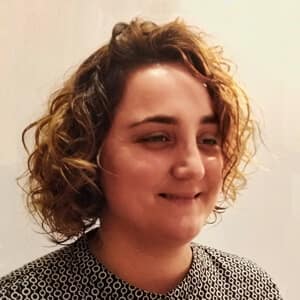
Marisa Abela Gatt

Your organization field and mission:

The Malta Digital Innovation Authority (MDIA) is the national authority responsible for promoting and regulating digital innovation in Malta. Its mission is to foster trust in emerging technologies by providing regulatory frameworks, guidance, and oversight for innovative digital solutions, while supporting the safe, ethical, and effective adoption of technologies. MDIA works to strengthen Malta’s digital ecosystem, enhance digital skills, and support innovation-driven growth in line with national and EU strategies

Please tell us briefly about your role in the company / at your organization:

In my role within the Project Management Unit (PMU) at the Malta Digital Innovation Authority (MDIA), I support the planning, coordination, implementation, and monitoring of projects aligned with the Authority’s strategic objectives. This includes managing project timelines and deliverables, coordinating with internal teams and external stakeholders, ensuring compliance with contractual, regulatory, and EU funding requirements, and supporting reporting and governance processes. The role contributes to the effective delivery of initiatives that promote digital innovation, skills development, and trust in emerging technologies in line with national and EU priorities.

Your interest in STEM

My interest in STEM started at a young age through a strong interest in mathematics and physics. This led me to pursue a career, first in telecommunications and later in the ICT field. Over time, this developed into a passion for empowering people through technology, education, and digital skills development.

My first role model was my Mathematics teacher, who encouraged my interest in mathematics and helped me develop a strong problem‑solving mindset. Today, I am inspired by educators, mentors, and professionals working in technology and education who use their knowledge to empower others, promote digital skills, and create learning opportunities, especially for young people.

Your studies

During my studies, one of my biggest challenges was keeping up with complex concepts and time management, but it helped me develop resilience, problem‑solving skills, and a structured approach to learning.

To believe in their abilities and not be discouraged by stereotypes or self‑doubt. STEM is built on curiosity, problem‑solving, and continuous learning. Seek mentors, and ask questions, because confidence grows with experience.

You at work

These are reflected through initiatives that promote inclusive access to digital skills, ethical and trustworthy use of technology, and sustainable digital transformation. MDIA supports diversity and inclusion by encouraging participation in digital education, skills development, and awareness initiatives that are accessible to different segments of society, including students and underrepresented groups.

I am most proud of the recognition I have received for my contribution to education and skills development, including receiving some years back, a Gold Award for exceptional overall performance, and last year being nominated for the EPALE Malta Best Adult Educator Award, where I achieved third place. These acknowledgements are especially meaningful to me as they reflect my commitment to lifelong learning.

Through my role in the Project Management Unit at the Malta Digital Innovation Authority, I am actively involved as an EU Code Week Hub member, working closely with schools and stakeholders to deliver impactful initiatives. I have helped coordinate and implement initiatives that translate ideas into tangible outcomes. Knowing that my work supports learning opportunities, inclusion, and long‑term impact in the digital sector is what I find most rewarding.

Your point of view

Technology can empower women by providing access to education, skills, and opportunities that might otherwise be out of reach. It enables flexible learning, career development, and entrepreneurship, while also giving women a stronger voice through digital platforms and networks.

My Advise is to never underestimate their abilities and to be confident in their potential, even when the path feels challenging. A strong foundation in learning, curiosity, and problem‑solving. Seek out mentors, and ask questions.

By 2030, I would like to see a sector where diversity, equity, inclusion, and sustainability are fully embedded.

To finish with

My core values are integrity, lifelong learning, inclusion, and collaboration. I believe in using technology and education as tools to empower people, create equal opportunities, and deliver meaningful, long‑term impact.

One of my main professional challenges will be continuing to adapt to rapid technological change while balancing multiple projects, compliance requirements, and stakeholder expectations.

By 2030, I hope my career will have grown through deeper involvement in projects that combine digital innovation, education, and social impact. I hope to keep making a positive difference by supporting learning opportunities, digital skills development, and people‑centred innovation.

The current activity has been implemented in the framework of the Project: Code4Europe,
GA Number: 101158834. Official project website : 
https://codeweek.eu/ 

[ March 30, 2026 by ECWT 0 Comments ]

Ghita Ramdhiansing

Your organization field and mission:

Our Approach explains the perspective behind our work. Our products show how this perspective is applied in practice.
Interaction Intelligence is a way of understanding how interaction unfolds between people. It focuses on how meaning is shaped, how pressure influences interaction, and how patterns emerge in real situations.

Rather than starting from individual traits or intentions, Interaction Intelligence looks at interaction as a contextual system. It examines how interaction organises itself under pressure, and how small shifts in timing, framing, or response can change what becomes possible between people. This perspective brings structure to the human side of work by making interaction visible and discussable — without reducing people to profiles, traits, or types.

Please tell us briefly about your role in the company / at your organization:

I work at the intersection of business, psychology, and human interaction, helping leaders see what is actually happening when communication stalls, alignment slips, or decisions don’t land. As the founder of See Suite, I design diagnostic tools and targeted interventions that make interaction patterns measurable and actionable. These are used in six countries by organizations that need clarity under pressure, particularly during growth, change, or moments of tension.

My work focuses on one core question: How do people interact when it matters most, and what does that create?

Across executive teams and fast-growing companies, my role is to:

  • Diagnose interaction patterns that block alignment and decision quality
  • Surface strengths and friction without blame or personality labels
  • Help teams work through tension instead of around it

I am the author of People: The Manual and Good Enough to Get Ahead, both grounded in the science and practice of interaction. If you are noticing that smart people are talking but not truly aligning, this is usually where I come in.

Your interest in STEM

My interest in STEM didn’t start in a traditional way. It developed later, through working with organizations and seeing how much of what we call “people problems” are actually system problems.

I became increasingly interested in how data, technology, and structured thinking could make invisible patterns visible, especially in how people interact, make decisions, and perform under pressure.

STEM, for me, became a way to bring objectivity into complex human environments. That’s what drew me in and continues to drive my work today.

My first role model was someone in my early environment who challenged me to think for myself rather than follow what was expected. That early influence shaped how I approach problems — with curiosity, but also with a degree of skepticism.

Today, I don’t look for role models in the traditional sense. I’m inspired by people who are able to see what is really happening beneath the surface, especially in complex systems, and who act on that insight in a practical way.

That combination of clarity and execution is something I continuously aim to develop.

Your studies

One of my biggest challenges during my studies was staying engaged in environments that prioritised theory over application. I tend to learn fast when I can connect concepts to real situations, but I found it difficult when learning remained abstract.

At the same time, that pushed me to develop my own way of working. I started translating theory into practical frameworks and real-world examples, which not only helped me understand the material better but became a strength later in my career.

Another challenge was balancing depth with breadth. I am naturally curious and tend to explore topics beyond what is required, which can slow down execution. Over time, I learned to prioritise and focus on what creates the most impact.

Looking back, these challenges shaped how I work today: practical, structured, and focused on turning knowledge into something usable.

Don’t try to “fit into STEM.” Make STEM work for how you think.
The field needs different perspectives, especially people who can connect technical thinking with real-world application.
Start early with applying what you learn. Theory becomes powerful only when you use it.
And don’t underestimate how often hesitation, not ability, holds people back. If you have a point, say it. If you see something, question it.
Progress comes from participation, not from waiting until you feel certain.

You at work

We don’t treat DEIS as a separate layer — it’s built into how we approach interaction.
Our work is based on the idea that many inclusion challenges are not about intent, but about how interaction actually unfolds. Who speaks, who is heard, how decisions are made, and how pressure changes behaviour. By making these dynamics visible, we help teams create more balanced and effective environments where different perspectives can contribute. We also work across different countries and sectors, which requires us to design with diversity in mind from the start.
From a sustainability perspective, we operate primarily digitally and focus on creating tools that have long-term usability rather than one-off interventions.
As the organisation grows, formal initiatives may follow, but the principles are already part of how we work.

What I’m most proud of is building a way to make something intangible — human interaction — visible and usable.

In many organisations, performance issues are often attributed to strategy, skills, or structure, while the real friction sits in how people interact. I’ve been able to translate that invisible layer into something people can actually see, discuss, and work with in practice.

Seeing teams shift from confusion or stalled decisions to clarity and ownership — not by adding more content, but by changing the interaction, is what I value most.

That shift is subtle, but it has a direct impact on how work gets done

Your point of view

Technology doesn’t empower women by default. It creates the conditions for empowerment. The real shift happens when women move from being users to being contributors, shaping how technology is applied, questioning how systems work, and using it to solve real problems. It can remove barriers to entry, open up global opportunities, and make expertise more visible. But the key is not access, it’s participation. Empowerment starts when women actively use technology to influence outcomes, not just consume it.

Start before you feel ready.
In this field, progress doesn’t come from knowing everything, but from applying what you know and learning as you go.
Don’t stay on the sidelines observing. Get involved in real projects, ask questions, and test your thinking in practice.
Also, build your own way of approaching problems. You don’t need to fit a predefined profile to work in this sector, different perspectives are an advantage, especially when they are used actively. And finally, don’t underestimate how much clarity and consistency matter. The people who move forward are often not the ones who know the most, but the ones who engage, contribute, and keep going.

By 2030, I would like DEIS to stop being a parallel conversation and become part of how work actually happens.
Too often, it sits in policies and statements, while everyday interaction tells a different story.
Real progress would mean that organisations understand and actively shape the interaction layer — who contributes, how disagreement is handled, and how ownership is created. It would also mean moving beyond one-size-fits-all approaches, and designing environments where different perspectives are not just present, but used.
DEIS becomes real when it changes behaviour, not just language.

To finish with

I value clarity over assumption, action over intention, and substance over appearance.
In my work, that means making things visible rather than leaving them implicit, turning discussion into decisions, and focusing on what actually works in practice.
These values guide how I approach both people and problems.

One of my future challenges is scaling my work without losing depth.
Much of what I do is rooted in nuanced understanding and context, and the challenge is to translate that into tools and approaches that remain practical and relevant at scale. Another challenge is continuing to challenge assumptions — both in others and in myself, while working in environments that often prefer familiar ways of thinking.
This requires balancing clarity with adaptability, and staying close to real-world application rather than drifting into abstraction.

By 2030, I want my work to have moved from niche to recognised.
The focus remains the same, making interaction, which is often invisible, something organisations can actually work with.
I see this evolving into broader adoption of my tools, stronger integration into leadership and organisational development, and a clearer position at a strategic level.
Growth, for me, is not just reach, but relevance and impact in real decision-making environments.

The current activity has been implemented in the framework of the Project: Code4Europe,
GA Number: 101158834. Official project website : 
https://codeweek.eu/