

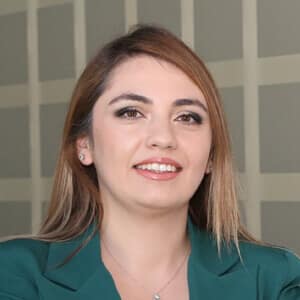
Sultan Nilay Sengol
Your organization field and mission:
Süleyman Demirel University is a research-oriented higher education institution committed to creating scientific, technological, and societal value through education, research, innovation, and collaboration.
Within this ecosystem, the Technology Transfer Office bridges academia, industry, entrepreneurs, and public institutions. Its mission is to transform knowledge and research into impact by supporting entrepreneurship, technology commercialization, university industry collaboration, intellectual property, and national and international innovation projects.
Please tell us briefly about your role in the company / at your organization:
As Technology Transfer Office Coordinator, I work at the intersection of academia, entrepreneurship, innovation, and industry. I coordinate programs that help researchers, students, entrepreneurs, and companies transform ideas and research outcomes into projects, collaborations, and scalable solutions.
My work includes entrepreneurship and technology commercialization programs, university-industry collaboration, national and EU-funded initiatives, mentoring, and capacity-building activities. I am particularly interested in how digital transformation, sustainability, and emerging technologies can create more inclusive innovation ecosystems and new opportunities for women and young people.
Your interest in STEM
My interest in STEM grew from a fascination with what happens when technology meets entrepreneurship and real-world problems. I was not originally trained as an engineer or computer scientist; my academic background is in entrepreneurship and business. This became an advantage because it taught me to approach technology through its human, economic, and societal impact.
Working within technology ecosystems showed me that STEM is not only about developing technology, it is also about asking the right questions, connecting disciplines, and turning knowledge into solutions. Today, my interest focuses particularly on artificial intelligence, digital transformation, sustainability, and technology-driven entrepreneurship.
My first role models were the educators who made me believe that curiosity and continuous learning could open doors beyond one’s original field of study.
Today, rather than having a single role model, I am inspired by women who move between disciplines and turn knowledge into impact researchers, entrepreneurs, educators, and leaders who make technology more accessible and inclusive. I particularly admire women who succeed professionally without feeling that they have to imitate traditional models of leadership and who create space for other women to succeed with them.
Your studies
My greatest strength has always been curiosity and the ability to connect different disciplines. Entrepreneurship taught me to see opportunities, while my academic journey taught me to question assumptions and build evidence.
My main weakness was initially believing that I needed to know everything before I could contribute confidently, particularly when entering technology-oriented environments without a traditional STEM degree.
The greatest opportunity has been interdisciplinarity. Moving between entrepreneurship, European studies, digital transformation, sustainability, and emerging technologies has allowed me to develop a perspective that would not have emerged from a single discipline.
The main challenge has been keeping pace with rapidly changing technologies while balancing academic development with an active professional career. Over time, I learned that continuous learning is not a temporary stage—it is part of working in innovation.
Do not wait until you feel completely ready. Technology changes too quickly for anyone to know everything, and confidence often comes after taking the first step, not before it.
Build strong foundations, but remain curious beyond your own discipline. Learn how technology works, how people use it, and what problems it can solve. Seek mentors, participate in international networks, develop your digital skills, and create projects rather than only collecting certificates.
Most importantly, do not eliminate yourself from an opportunity before anyone else has even evaluated you. Apply, speak, experiment, and allow yourself to grow into ambitious roles.
You at work
At Süleyman Demirel University, we contribute to DEIS through initiatives that broaden access to entrepreneurship, innovation, digital technologies, and international opportunities for students, researchers, entrepreneurs, and different stakeholder groups.
Through the Technology Transfer Office and our national and European collaborations, we support capacity-building activities in areas such as digital entrepreneurship, green transformation, emerging technologies, and innovation. We also work to connect academia with industry and entrepreneurship ecosystems, creating pathways for individuals from different disciplines and backgrounds to participate in innovation.
For me, inclusion means more than inviting people into existing systems; it also means designing innovation ecosystems in which different people have a genuine opportunity to contribute, lead, and create value.
I am most proud of creating bridges—between universities and industry, researchers and entrepreneurs, ideas and implementation, and local potential and international opportunities.
Throughout my career, I have contributed to entrepreneurship and innovation programs, technology transfer activities, national initiatives, and European projects that bring together academia, business, public institutions, and young innovators. Seeing an idea evolve into a project, a collaboration, or an entrepreneurial opportunity is still one of the most rewarding parts of my work.
What matters most to me is not a single project or title, but creating multiplier effects: helping people gain the confidence, networks, and opportunities that enable them to create further impact themselves.
Your point of view
Technology can reduce some of the traditional barriers that have limited women’s access to knowledge, networks, markets, finance, and professional opportunities. A woman can learn globally, build a company, access customers, collaborate internationally, and make her expertise visible without being limited entirely by geography or traditional institutional structures.
But access alone is not empowerment. Women must also participate in designing, developing, governing, and investing in technology. Especially in the age of artificial intelligence, women should not only be users of the future; they should be among its architects.
Learn the language of technology, but never underestimate the value of your own discipline. The future belongs increasingly to people who can connect different worlds: technology and society, research and business, sustainability and growth.
Build your network before you need it. Find mentors, but also become a mentor as you progress. Volunteer for projects that initially feel slightly beyond your experience. Learn to communicate your ideas clearly and make your work visible.
And remember: you do not need permission to become more ambitious.
By 2030, I hope we will have moved beyond discussing women’s participation simply in terms of numbers. Representation matters, but real inclusion means women having equal opportunities to lead research, build technology companies, attract investment, shape innovation policy, and participate in decisions about emerging technologies.
I would particularly like to see more women represented at the intersection of artificial intelligence, entrepreneurship, investment, and technology leadership. My goal is not only to see more women entering innovation ecosystems, but more women shaping how those ecosystems work.
To finish with
Curiosity, integrity, courage, continuous learning, collaboration, and impact.
I believe knowledge becomes more valuable when it is shared, leadership becomes stronger when it creates opportunities for others, and innovation becomes meaningful when it improves people’s lives. I also value the courage to remain a learner to question what we know, enter unfamiliar fields, and continually reinvent ourselves.
My next challenge is to deepen the connection between my academic research and my professional work, particularly in artificial intelligence, entrepreneurship, digital transformation, and sustainability.
I want to move from managing and supporting innovation to contributing more strongly to how innovation ecosystems are designed and shaped. This requires continuously developing my research capabilities, international networks, technological literacy, and leadership skills while remaining open to disciplines and perspectives beyond my own.
By 2030, I hope to have evolved into an internationally connected academic and innovation leader working at the intersection of artificial intelligence, entrepreneurship, sustainability, and European innovation ecosystems.
I aim to combine academic research with real-world impact: contributing to international projects, developing evidence-based approaches to entrepreneurship and innovation, mentoring the next generation of entrepreneurs and researchers, and building stronger bridges between Türkiye and European innovation networks.
Most importantly, I hope that some young women will be able to look at my journey and think, “There is a place for me there too.” For me, that would be one of the most meaningful measures of professional success.
The current activity has been implemented in the framework of the Project: Code4Europe,
GA Number: 101158834. Official project website : https://codeweek.eu/