
[ March 19, 2026 by ECWT 0 Comments ]

Antigoni Vasilaki

Your organization field and mission:

The Hellenic Centre for Marine Research (HCMR) operates in the marine research and sustainable aquaculture sector, with emphasis on marine biology, biotechnology, and environmentally responsible aquaculture systems. Its mission is to advance scientific knowledge and innovation that support sustainable blue growth, circular bioeconomy practices, and evidence-based management of marine resources.

Please tell us briefly about your role in the company / at your organization:

I serve as a Researcher in Aquaculture Nutrition and Fish Physiology at the Institute of Marine Biology, Biotechnology & Aquaculture (IMBBC) of the Hellenic Centre for Marine Research (HCMR). My work focuses on the development and evaluation of sustainable aquafeeds, alternative protein sources, and biotechnological interventions to improve fish performance, health, and environmental sustainability.

Your interest in STEM

My interest in STEM was born from an early fascination with biology and the natural sciences, especially the mechanisms that regulate living organisms and ecosystems. It evolved during my academic training in aquaculture and marine biology, where I realized that solving real-world challenges in fish nutrition, sustainability, and blue bioeconomy requires the integration of science, technology, and applied research to create measurable impact.

My first role model was one of my early university professors, who combined scientific rigor with genuine passion for teaching and research, showing me that science can be both intellectually demanding and socially meaningful. 

At present, I am inspired by researchers and innovators in sustainable aquaculture and marine biotechnology who translate advanced scientific knowledge into practical solutions for environmental sustainability, fish welfare, and circular bioeconomy—bridging academia, industry, and real-world impact.

Your studies

During my studies, my biggest strengths were strong analytical thinking, persistence, and resilience. One of the main challenges was balancing demanding laboratory research and academic responsibilities while raising two children, which required exceptional time management, organization, and discipline.
Navigating both motherhood and scientific training strengthened my adaptability, focus, and ability to perform under pressure — skills that continue to define my professional trajectory today.

Believe in your intellectual capacity and do not let anyone make you feel that science and technology are “too demanding” or incompatible with your personal life. Especially sectors like marine science and aquaculture — need diverse perspectives, critical thinking, and resilience, qualities that women bring strongly to the field.
Build a solid scientific foundation, seek mentors, collaborate widely, and do not be afraid to take space in laboratories, meetings, and decision-making tables. Your voice, your expertise, and your leadership are essential for shaping a more sustainable and innovative future in science.

You at work

HCMR has adopted a Gender Equality Plan (GEP) to promote gender equity and fair access within the institution’s research and operational structures, aiming to reduce barriers and support equal opportunities for all staff.

I am most proud of contributing to the development of sustainable aquafeeds that improve fish health while reducing environmental impact. I am also proud of mentoring young scientists and helping translate research into practical solutions for the aquaculture sector.

Your point of view

Technology can empower women by giving them access to education, information, and professional networks regardless of geographic or social barriers. Digital tools enable flexible learning, remote collaboration, and entrepreneurship, making it easier to balance career ambitions with personal responsibilities.

Be confident in your scientific abilities and do not hesitate to enter spaces that may seem competitive or traditionally male-dominated. Marine science and aquaculture need strong analytical minds, resilience, and creativity — qualities that women bring powerfully to the field.

I hope to see balanced representation of women in senior scientific and decision-making roles, transparent career progression pathways, inclusive research environments, and sustainability criteria integrated into every stage of production and innovation — from feed formulation to ecosystem management.

To finish with

My core values are scientific integrity, transparency, and responsibility toward both society and the environment. I strongly believe in evidence-based decision making, rigorous research, and knowledge that translates into real, measurable impact.

One of my future professional challenges is to continue bridging high-level scientific research with real-world industry application, ensuring that innovation in aquaculture nutrition translates into scalable, sustainable solutions. Maintaining scientific excellence while navigating complex collaborations, funding competitiveness, and evolving environmental demands will require strategic thinking and adaptability.

I aim to lead multidisciplinary projects that connect science, industry, and policy, delivering measurable environmental and socio-economic impact.

The current activity has been implemented in the framework of the Project: Code4Europe,
GA Number: 101158834. Official project website : 
https://codeweek.eu/ 

[ March 19, 2026 by ECWT 0 Comments ]

Aikaterini Nanou

Your organization field and mission:

Aiming to understand molecular mechanisms of complex biological processes in health and disease. The institution is committed to contribute to innovation in medicine, by developing novel therapeutic and diagnostic methods, focusing on immunity and inflammation, cancer, and neurodegenerative diseases.

Please tell us briefly about your role in the company / at your organization:

My main research focus is the study of inflammation in the Central Nervous System (CNS). More specifically, I am interested in Multiple Sclerosis and the effect of inflammation on the CNS resident cells with ultimate goal to identify factors that induce a pro-regenerative profile to be used as a therapeutic strategy.

Your interest in STEM

My interest in STEM began in middle school, when I realized how naturally drawn I was to science. I enjoyed the idea that even the most complex questions had explanations waiting to be uncovered. As I grew older, I was drawn to solving problems and working through challenging puzzles. I was especially fascinated by biology, where each question felt like unlocking a deeper understanding of how life functions. What started as simple curiosity gradually became a genuine passion for discovery.

My first role model was my science teacher, whose ability to explain complex ideas with clarity and enthusiasm deeply inspired me. The way she made difficult concepts feel accessible showed me that science isn’t just about memorizing facts, but it’s about understanding and curiosity. Today, many people inspire me; some well-known, others mentors and researchers I’ve met personally. What connects them is not their recognition, but their passion for science and their strong sense of ethics. I admire the way they pursue discovery with curiosity, integrity, and perseverance.

Your studies

One of my biggest challenges has been narrowing my focus. I am genuinely curious about many areas of biology, and I often want to explore every question that interests me. While this curiosity drives me, I have learned how to prioritize and commit to exploring certain topics more deeply.

You at work

An Equity and Anti-Discrimination Committee was established in 2021to promote gender equality, combat discrimination and prevent all forms of harassing behavior. The committee also participate in nationwide networks to discuss awareness policies, monitoring progress, provide support and policy recommendations.

I am most proud of the technical skills I have developed over the years. My experiences have strengthened my ability to approach complex biological problems from different perspectives and use appropriate techniques to address each challenge effectively. I am sincerely grateful for the opportunity to learn new methodologies, as it has been instrumental in my growth.

Your point of view

Technology can facilitate greater access to education, enabling women not only to gain knowledge and skills, but also to have a platform to promote equality beyond geographical and social barriers. Furthermore, it creates opportunities for innovation and active participation in shaping the future.

I would like DEIS principles to be fully integrated into academic culture, so that they are no longer discussed as separate initiatives but are simply part of everyday practice.

To finish with

My values are curiosity, integrity, perseverance, inclusion, and objectivity. I believe science should be guided by ethical responsibility, sustained by persistence, and enriched by diverse perspectives. I also value objectivity and the ability to remain independent in my thinking, resisting external pressure in order to ensure that decisions and conclusions are grounded in evidence and principle.

One of my future challenges will be maintaining my integrity and commitment to evidence-based principles, even in environments where science is underfunded or influenced by external interests. Staying true to ethical standards and objectivity, despite such pressures, will be essential to my professional development.

By 2030, I hope to continue working in academia, conducting research to the highest scientific and ethical standards.

The current activity has been implemented in the framework of the Project: Code4Europe,
GA Number: 101158834. Official project website : 
https://codeweek.eu/ 

[ March 19, 2026 by ECWT 0 Comments ]

Eirini-Maria Georganta

Your organization field and mission:

Biomedical Science and Research.

Please tell us briefly about your role in the company / at your organization:

As a postdoctoral researcher, I lead and support research projects, conduct experimental studies, analyze data, and contribute to scientific publications and grant applications.

Your interest in STEM

My interest in Science developed in high school, particularly through biology classes that introduced me to experimental science and the process of scientific inquiry.

My first role model was the biology teacher in high school who encouraged curiosity and critical thinking. Today, I am inspired by researchers in my field who combine scientific excellence with ethical responsibility and collaborative mindset and prioritize mentorship and equity in science.

Your studies

Laboratory research involves experimental failure, limited resources, and uncertainty. Additionally, funding limitations and publication expectations create a lot of pressure. It is also very challenging to maintain work–life balance especially during demanding research periods. Over time, I (still) learn to manage priorities, set realistic timelines and work efficiently under pressure while maintaining a healthy work–life balance.

Believe in your abilities and don’t let self- and others’ doubt limit your ambitions. Find supportive mentors and collaborators and do not be discouraged by challenges.

You at work

I’m most proud of a) generating high-quality research data that helped our lab secure funding, b) guiding and mentoring students and c) taking part in science outreach to inspire broader public interest in biomedical research.

Your point of view

Technology empowers women by providing access to education, career opportunities, and professional networks, enabling them to learn and work remotely, while balancing career, family and personal growth.

Believe in your abilities and face challenges as opportunities to grow.

By 2030, I hope biomedical research is inclusive and sustainable, offering equal opportunities, strong mentorship, and collaborative environments that benefit both science and society.

To finish with

I prioritize curiosity, ethical responsibility, collaboration, mentorship and inclusivity. I also believe in using science to make a positive impact on society.

My future challenges include advancing my research, securing funding, mentoring effectively and maintaining work-life balance.

By 2030, I hope to lead impactful research, teach and mentor students and contribute to high-quality scientific discoveries.

The current activity has been implemented in the framework of the Project: Code4Europe,
GA Number: 101158834. Official project website : 
https://codeweek.eu/ 

[ March 19, 2026 by ECWT 0 Comments ]

Eirini Liotou

Your organization field and mission:

Informatics and Telematics.

Please tell us briefly about your role in the company / at your organization:

I am an Assistant Professor at the Department of Informatics and Telematics, Harokopio University. My research field is “Design and Management of Software-Defined Networks.

You at work

We have a Committee for Gender Equality and Combating Discrimination.

Students feel comfortable discussing with me their concerns and dreams.

Your point of view

To finish with

Integrity, Honesty, Consistency of words and actions.

Become recognized among my fellow colleagues for my research profile and achievements.

I hope I will become Associate Professor having an impact on the research of computer networks.

The current activity has been implemented in the framework of the Project: Code4Europe,
GA Number: 101158834. Official project website : 
https://codeweek.eu/ 
[ March 18, 2026 by ECWT 0 Comments ]

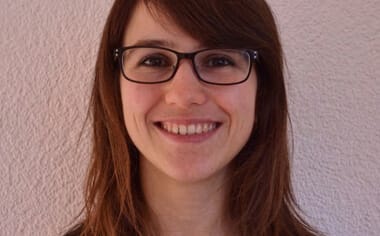
Agni Gavriilidou

Your organization field and mission:

Establishing a leading research unit at BSRC Fleming to advance biomolecular mass spectrometry and structural biology for biomedical innovation.

Please tell us briefly about your role in the company / at your organization:

Establish mass spectrometry protocols to answer structural biology questions.

Your interest in STEM

It was natural to me, I was always better at STEM courses since a young kid.

First: My physics professor at high school, amazing person, great at transferring knowledge.
Currently: Professor Dame Carol Vivien Robinson, great story as a woman in science. Took an 8 year gap to raise her children, she was the first woman professor in the department of chemistry at both the University of Cambridge (2001) and the University of Oxford (2009).

Your studies

Changing fields, from chemical engineering to analytical chemistry and biochemistry.

You at work

Apply my knowledge at different countries and scientific backgrounds. 

Your point of view

I want to see more women in leading positions and society being more supportive top support family life.

To finish with

Family, equality. 

Establish myself as an independent scientist, the funding is limited. 

I want to spread my experience on my scientific subject because it’s under-represented in Greece and North Europe. 

The current activity has been implemented in the framework of the Project: Code4Europe,
GA Number: 101158834. Official project website : 
https://codeweek.eu/ 

[ March 18, 2026 by ECWT 0 Comments ]

Maria Fountana

Your organization field and mission:

To conduct research in ICT and its applications, with a particular focus on Education, to develop and utilize conventional and digital media in Education and Lifelong Learning as well as to publish and distribute Greek school textbooks.

Please tell us briefly about your role in the company / at your organization:

I am an educational technologist at the Computer Technology Institute and Press “Diophantus”, specialising in teacher training, digital transformation of education, and the design of innovative learning environments. I am a member of the INNOVETE (Innovation and Emerging Technologies in Education) research team and play a key role in the development of training programmes and curricula for teachers working in the newly established Innovation Centres, while also contributing in a research capacity to the national B-Level ICT teacher training initiative and actively participating in the acquisition, design, and implementation of innovative European research projects.

Your interest in STEM

My interest in STEM was born in 2000, when I actively sought and secured a scholarship for the most innovative Master’s program of that era at the Institute of Education, University of London, focused on Information and Communications Technology in Education. This experience ignited my passion for integrating technology into pedagogy, leading me to explore educational software design, teacher communities, and the transformative potential of digital tools in STEAM learning environments. Over the years, it has evolved through my research and projects at CTI Diophantus, where I now advance emerging technologies like gamification and AI in education.

My first role model was my MA supervisor at the Institute of Education, University of London, who in 2000 showed me how to blend rigorous research with practical edtech passion—igniting my career path. Today, I’m inspired by great Greek women like Hélène Glykatzi-Ahrweiler for her resilient leadership in academia and culture, and Maria Efthymiou for her bold historical insights that challenge norms—alongside edtech pioneers proving self-organized learning empowers communities.

Your studies

During my studies, the biggest challenge was balancing the demands of a rigorous academic program with financial constraints as an international student, which pushed me to proactively seek scholarships. Technically, adapting to rapidly evolving ICT tools required constant self-learning, but this built my resilience and problem-solving skills (strengths from SWOT). Opportunities arose through collaborative projects that expanded my network, while threats like limited access to cutting-edge resources in Greece at the time motivated my focus on innovative, accessible edtech solutions.

My advice to girls and women pursuing studies in educational technology is to embrace curiosity and hands-on experimentation with emerging tools like AI, gamification, and digital platforms early on, while building a strong foundation in both pedagogy and tech through online courses, open-source projects, and networking at conferences. This field is highly dynamic and emerging, with surging future demand for skilled personnel. While AI poses a potential deskilling risk for professionals across sectors by automating routine tasks, education will play a pivotal role in countering this through continuous, targeted upskilling initiatives. Persistence pays off.

You at work

At CTI Diophantus, we prioritize DEIS through targeted initiatives, including designing and developing e-learning environments for teacher that promote knowledge exchange among communities and networks, alongside large-scale teacher training programs like the A-Level and B-Level ICT initiatives (https://e-pimorfosi.cti.gr).

We advance educational innovation in distance learning—particularly English as a Foreign Language (EFL)—via projects such as ENRICH (2018-1-EL01-KA201-047894), REVIT (143664-LLP-1-2008-1-GR-KA3-KA3MP, Best Practice in social inclusion), and MuStLearnIT (225427-CP-1-2005-1-GR-MINERVA-M, awarded for creativity and inclusion), while developing online assessment tools and e-certification frameworks. For inclusion and combating discrimination, we have participated in diverse projects such as MaMLiSE (2020-1-PL01-KA201-081612) and RADAR (JUST/2013/FRAC/AG/6271) for anti-racism training; sustainability is embedded in digital transformation efforts like the Innovation Centres (Recovery Fund), ensuring long-term educational resilience.

I am most proud of actively participating as a member of the coordination team and/or research/scientific team in 20+ EU and national projects at CTI Diophantus, with several recognized as best practices in education innovation and social inclusion—particularly REVIT (awarded Best Practice 2012), MuStLearnIT (EACEA-disseminated 2010), and SimSafety (3rd International Prize 2011).

I am also a member of the INNOVETE research team on Innovation and Emerging Technologies in Education, exploring cutting-edge edtech models. Developing teacher training materials and curricula for the Innovation Centres (https://ic.cti.gr/en/) and many EU-funded projects has directly contributed in upskilling numerous educators in digital pedagogy. Above all, contributing to inclusive initiatives like MaMLiSE and RADAR that combat discrimination and support diverse classrooms has brought me deep professional satisfaction.

Your point of view

Technology empowers women in really practical ways: it opens doors to education and skills through online courses and AI tools that fit around busy lives, no matter where you live or your budget. It gives economic freedom with remote jobs, freelancing platforms, and ways to start edtech projects from home—helping women break into high-demand fields like digital teaching. And it builds strong communities via social media and networks, letting women share stories, find mentors, and push for change in STEM, just like my own path from chasing that 2000 scholarship to leading inclusive projects at CTI Diophantus.

My advice to girls and women aiming for careers in educational technology is simple: start experimenting today with free tools like AI chatbots, game design apps, and online platforms—combine that with real-world practice teaching peers or volunteering on small projects. Don’t just study theory; join women-in-STEM groups online or at local meetups to find mentors and collaborators who get the challenges. The sector needs your fresh ideas to make learning inclusive and fun, and with dedication, you’ll thrive in edtech.

By 2030, I hope educational technology centers around human connection and empathy, with teachers trained as inclusive facilitators who adapt learning to every student’s cultural background, language, and needs—building on initiatives like MaMLiSE and RADAR that I’ve contributed to. Equity will mean every girl and underserved community gets equal access to hands-on upskilling and mentorship networks, closing gaps I’ve witnessed during my participation in EU Funded projects for over 20 years at CTI Diophantus. Inclusion becomes the norm through global teacher communities sharing anti-discrimination practices, while sustainability focuses on human-centered design—creating durable, accessible tools that empower lifelong learning without waste, putting people over technology every time.

To finish with

My core values are inclusion—ensuring every learner, regardless of background, thrives through equitable education, innovation with empathy, blending tech with human-centered pedagogy to empower teacher agency; lifelong learning and persistence and human in the loop, prioritizing people’s creativity and ethics amid AI advances to keep technology serving humanity, not replacing it—as I advocate in my edtech work at CTI Diophantus.

As a PhD candidate researching Teacher Agency in the Digital Age at the University of Athens, my biggest future challenge is balancing rigorous academic research with my role at CTI Diophantus—completing my doctoral Thesis while continuing with my work for the B-Level ICT teacher training initiative, the Innovation Centres initiative and the INNOVETE research team endeavors. Professionally, I aspire to evolve into a more pivotal leadership position at CTI, bridging my research into scalable upskilling programs that empower teachers against AI-driven deskilling and uphold human-centered pedagogy. Personally, maintaining work-life balance during this intense phase will test my resilience—but it’s what fuels my passion for inclusive edtech innovation. 

By 2030, I hope to have evolved into a senior leadership role at CTI Diophantus or a similar institution, leading national and EU-wide initiatives on teacher upskilling and digital transformation—building on my PhD in Teacher Agency, B-Level ICT training, and Innovation Centres work. I envision publishing influential research that shapes policy on human-centered edtech, mentoring the next generation of women in STEM, and coordinating large-scale projects that make inclusive, sustainable learning accessible to all. Ultimately, contributing to a country and a continent where every educator thrives in the AI era, preserving the human touch in teaching.

The current activity has been implemented in the framework of the Project: Code4Europe,
GA Number: 101158834. Official project website : 
https://codeweek.eu/ 

[ March 18, 2026 by ECWT 0 Comments ]

Konstantina Vrontaki

Your organization field and mission:

CityLab is a specialized STEM and Digital Skills center dedicated to fostering creative intelligence in students aged 4 to 18. Its primary sector is the delivery of high-level, project-based learning that combines Robotics, Computer Science, and Engineering with real-world application. The mission of CityLab is to transform students from passive consumers of technology into proactive creators and problem-solvers. By emphasizing deep “how-to” understanding over superficial knowledge, the center fosters critical thinking and a solid scientific foundation. Through its role as a National Hub for European initiatives, CityLab bridges the gap between traditional school curricula and the demands of the modern digital economy. Ultimately, it seeks to future-proof the next generation, equipping them with the logic and innovation skills necessary to excel in the careers of tomorrow.

Please tell us briefly about your role in the company / at your organization:

I am a STEM Educator at CityLab, where I specialize in Mechanics, Robotics, Programming, and Mechatronics. My work focuses on turning complex technical theories into practical, hands-on projects for students of all ages. Beyond the classroom, I design and implement original workshops covering diverse themes like Physics, Astrophysics, and Algorithmic Thinking. A key part of my role involves training other teachers, equipping them with the tools and methods to bring high-level STEM activities into their own schools. By moving away from “black-box” learning, I help both students and educators understand the deep logic behind modern technology.

Your interest in STEM

When I was ten years old, my favorite part of the day was coming home from school to watch documentaries about physics and the stars. Those stories sparked a deep curiosity in me about how our universe actually works. This curiosity lead to more reading that cultivated a love for Science and Physics.

My first role model was Marie Curie, a pioneer who broke every barrier to succeed. Her story remains deeply inspiring to me—from moving to a new country to pursue her studies to becoming the first person to win two Nobel Prizes.

I also find the story of Katherine Johnson inspiring. The mathematician who broke through stereotypes to help humanity reach the moon. Her brilliant work and determination remind me to push through any difficulty, no matter how a challenge may seem. These women taught me that science isn’t just about formulas, it’s about the courage to fight for your dreams and the persistence to innovate.

Your studies

During my studies, one of the greatest challenge was the hey workload. It was demanding and left little to no personal time. I had to organize program to be able to dedicat eenough time for every lesson. This challenge though taught me discipline and resilience.

Another setback was the COVID-19 pandemic, which made it difficult to build the professional partnerships and connections I needed in the STEM field

My advice is simple: stay curious and never stop dreaming. Don’t limit your learning to just one sector, keep filling your mind with knowledge from every field you can find. You must set your goals and remain resilient until you achieve them. The road might look very different from what you originally expected, but if you keep trying and keep adapting, that path will eventually lead you exactly where you want to be. Remember that every challenge is just a detour, not a dead end. Trust your curiosity to guide you, and your persistence to get you there.

You at work

At CityLab, Equity and Inclusion are core foundations of everything we do. Our team is built on a diversity of mindsets, ensuring a collaborative environment where every voice is respected and heard. We carry this same philosophy into our classrooms, where we treat every student with equal respect and dignity.

Our classes bring boys and girls together as equal partners, fostering a new generation that naturally values inclusion. Moreover, we organize targeted events designed to inspire young women and girls to pursue careers in digital and scientific fields. Last but not least, in the spirit of true inclusion, we provide specialized workshops for schools and students with special needs, ensuring STEM education is accessible to everyone.

The greatest achievement of my work is watching my students grow into independent thinkers with a deep mindset of curiosity. I am incredibly proud to help them cultivate a genuine love for learning and to provide the tools they need to discover their own unique paths. Seeing them ready to take on the world with their own ideas, is what makes my role as an educator truly rewarding.

Your point of view

Technology empowers women by proving that logic and innovation are the same for everyone, regardless of gender. By mastering fields like Robotics and AI, women move from being passive users to becoming the architects of the future. This technical literacy levels the playing field, offering the independence to lead in the world’s fastest-growing industries. It allows women to apply their unique perspectives to global challenges.

My advice is to stay curious and never be afraid to “get your hands dirty” with practical work. When you study, focus on the “why” behind everything—this mindset will always lead you to the most important answers. Don’t limit yourself to the materials you are taught; keep asking questions until you truly understand the logic. It is also vital to build strong relationships with your professors and peers, as these connections lead to the collaborations and partnerships that drive real-world success.

While we have seen more women entering Physics and Astrophysics in recent years, my goal for 2030 is to see them in leading positions. I want to see more women heading research departments, leading engineering firms, and shaping global tech policy. It is not enough to just have a seat at the table, we need to be at the head of it.

To finish with

I have four core values: curiosity, creativity, out-of-the-box thinking, and collaboration. To me, science isn’t just about following a manual, it’s about having the curiosity to ask “why” and the creativity to design a solution that doesn’t exist yet. I also believe that the greatest breakthroughs happen when we challenge traditional boundaries and look at problems from a completely new perspective. Lastly and most importantly, I value the power of working together. Innovation is rarely a solo journey—it thrives when different minds collaborate in unison.

My next major challenge is balancing my PhD research with my full-time job. Being a researcher while maintaining a career requires intense discipline and persistence, as both roles demand my full creative energy.
Beyond the schedule, there is the intellectual challenge of staying ahead of the curve. In a field that moves as fast as ours, staying up-to-date with the emerging technologies that will shape our digital future is a constant pursuit.

By 2030, my goal is to bridge the gap between high-level academic research and the younger generation. I want to bring the complexities of Physics and Astronomy to students in a more hands-on, accessible way, turning “black-box” theories into tangible discoveries. My career will be a blend of creating new knowledge through my own research and mastering the art of science communication. By combining these two worlds, I aim to translate the latest scientific breakthroughs into inspiring educational tools, ensuring that the explorers of tomorrow have the curiosity and the skills to lead the way.

The current activity has been implemented in the framework of the Project: Code4Europe,
GA Number: 101158834. Official project website : 
https://codeweek.eu/