

[ May 10, 2026 by ECWT 0 Comments ]

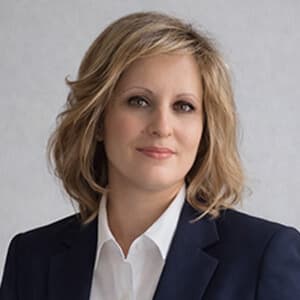
Ella Cullen

Your organization field and mission

I work at the intersection of technology, sustainability, and global supply chains — which sounds serious, but at its heart it’s about one simple idea: products should be honest about where they come from. At Minespider, we build Digital Product Passports and Digital Battery Passports that allow companies to trace the origin, carbon footprint, and lifecycle of the materials inside their products — from tin and gold to EV batteries and solar panels. Companies like Google, Renault, Ford Otosan, Microvast, Minsur, ABB, Tata Elxsi, PTL, and TEMSA use our technology to bring transparency into industries that historically operated behind spreadsheets and closed doors. Our mission is big: every product in the world should be traceable. Because when you can see where something comes from, you can improve it.

Please tell us briefly about your role in the company / at your organization

I now lead sales, marketing, and design, which means I sit right at the crossroads of vision and execution. I love that space. I get to tell our story to the world, work directly with global partners, and help shape how our technology evolves. I live in Lisbon now, and our team is fully remote — something I advocated for early on. Remote work has brought so much flexibility and richness to my life. We hire talent wherever it exists, and we’ve built a culture that’s diverse, international, and genuinely supportive. I feel incredibly lucky to work with a team that cares deeply about both technology and impact.

Your interest in STEM

I didn’t grow up dreaming of working in blockchain or mining. I grew up on a farm in rural New Zealand. What I did learn there was how to solve problems and how to build things from scratch.

When I moved to Europe and discovered blockchain technology, something clicked. I realised this wasn’t just about cryptocurrency — it could be used to make global supply chains transparent and accountable. That idea fascinated me. Suddenly STEM wasn’t abstract — it was a powerful tool to reshape entire industries.

And honestly? It’s been so much fun. This space moves quickly. You’re constantly learning. You’re surrounded by builders.

I didn’t have visible role models in tech growing up, which is probably why I care so much about being one now.

My early role models were my parents — practical, entrepreneurial, resilient. Today, I’m inspired by women who combine technical confidence with empathy. I’m especially inspired by the women on my own team who have grown into leadership roles and found their voices in a space that isn’t always welcoming at first.

Your studies

Studying across Italy, Portugal, and Denmark meant constantly adapting — new cultures, new expectations, new systems. The biggest challenge was building confidence in rooms where I often felt young or out of place.

That experience turned out to be the best preparation possible for working in male-dominated industries like mining and blockchain.

You don’t need to fit a stereotype to belong in STEM.

Curiosity is more important than perfection. The ability to learn quickly is more important than knowing everything already. And most people you admire are figuring things out as they go. Also, find your community. It makes the journey so much more worthwhile!

You at work

Inclusion at Minespider is practical, not performative.
We’re fully remote, which opens doors for women in regions where tech opportunities are limited.
We doubled the number of women on our team over the years.
We actively support flexible schedules, especially for parents.
In projects like Raw Material Radar in West Africa, we help train women to become mineral traders, opening access to responsible global markets. And honestly, one of the best parts of working in this industry is seeing women step into technical and commercial roles where they were previously underrepresented.

I’m proud that we’ve helped track roughly 10% of the world’s tin.
I’m proud that responsible operators in Rwanda and Uganda gained access to European markets through Digital Product Passports.
But most of all, I’m proud of my team. The women who now speak on panels, lead major projects, and confidently navigate regulatory conversations that once felt intimidating.

Your point of view

Technology empowers women when it increases access — to markets, to information, to networks, to flexible work.

Remote work has transformed my own life. It allows me to live in Lisbon, collaborate globally, and design a career that fits my life rather than the other way around.

When technology is designed inclusively, it becomes a tool for freedom.

Don’t let traditional industries scare you. Mining, supply chains, manufacturing — they’re some of the most exciting spaces right now because they’re undergoing massive transformation.

There’s so much opportunity to shape the future, and you absolutely belong there.

By 2030, I’d love to see gender balance become normal — not something we celebrate as exceptional.

I’d love to see more women in technical leadership roles in mining and supply chain tech. And I’d love for young girls to see blockchain and industrial innovation as creative, impactful, and open to them.

To finish with

Curiosity. Integrity. Courage.
And a strong belief that transparency improves everything — products, companies, and communities.

Scaling responsibly as Digital Product Passports become mandatory across Europe. Growth is exciting — but maintaining culture, inclusion, and impact as we grow will be the real leadership challenge.

By 2030, I hope Minespider is one of the global standards for Digital Product and Digital Battery Passports.

And I hope that a girl growing up somewhere remote, like I did, can look at industries like mining and deep tech and think: “That looks exciting. I could do that.

The current activity has been implemented in the framework of the Project: Code4Europe,
GA Number: 101158834. Official project website : 
https://codeweek.eu/ 
[ April 30, 2026 by ECWT 0 Comments ]

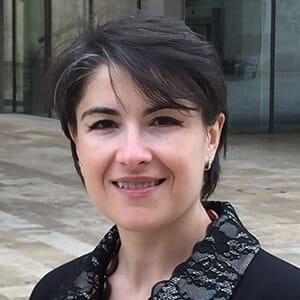
Elena Ziky

Your organization field and mission

Digital and business coaching in the education sector, with the mission of developing entrepreneurial skills, a digital mindset, and practical abilities in children and young people, helping them face the future with awareness through the project “Piccoli Imprenditori Academy”.

Please tell us briefly about your role in the company / at your organization

Founder and Digital & Business Coach: I design and lead educational programs for children and young people, develop content and training programs, and coordinate the activities of “Piccoli Imprenditori Academy.” I also work on digital learning pathways for schools, training students and teachers in coding, robotics, and artificial intelligence.

Your interest in STEM

My interest in STEM began about nine years ago, initially as a hobby. Through exploring new trends and innovations, it evolved into a passion and a professional commitment to digital education for children, young people, and teachers.

My first role model emerged from exploring the world of innovation and entrepreneurship rather than from a single person: individuals capable of transforming ideas into concrete projects and anticipating the future. Today, I continue to be inspired by innovators, educators, and entrepreneurs who work to make digital and STEAM skills accessible to new generations, with a positive impact on society.

Your studies

During my studies, one of the main challenges was navigating a context in which digital and STEM skills were not yet widespread or integrated into educational pathways.

  • Strengths: curiosity, initiative, and the ability to learn independently.
  • Weaknesses: an initial lack of clear references and structured pathways in the digital field.
  • Opportunities: the opportunity to explore new trends and build innovative skills before they became mainstream.
  • Threats: the rapid pace of technological change and difficulty in finding up-to-date educational environments.

My advice is to cultivate curiosity and confidence in your abilities, without being held back by stereotypes or the fear of not being “prepared enough.” The STEAM sector is constantly evolving and rewards those who experiment, make mistakes, and learn quickly.
Seek practical opportunities, explore coding, robotics, and artificial intelligence creatively, and build a network with other women and professionals in the field. Don’t wait until you feel ready—start, because skills and confidence develop through action.

You at work

In my organization, we promote DEIS initiatives by making digital education accessible to everyone, with particular attention to girls, young people, and communities with less exposure to technological opportunities.
We design inclusive coding, robotics, and artificial intelligence programs for schools and educational communities, adapted to different levels and learning styles, and actively work to reduce the gender gap in STEM. Additionally, we integrate sustainability and social impact themes into our programs, encouraging young people to develop innovative and responsible solutions for the future.

I am most proud of transforming OpenAIRE from a 3 year European project in 2008 into a sustainable organisation with a strong network of over 60 member universities. Equally important to me is having chosen a career that contributes to the public good (open science, science-technology-innovation) while working with diverse communities and partners across the world.

Your point of view

Through digital skills, women can create new career opportunities, start entrepreneurial projects, work more flexibly, and actively participate in innovation processes. Additionally, technology provides spaces to showcase skills and ideas, promoting greater female representation in STEM sectors and decision-making roles.

It is important not to be limited by stereotypes and to actively seek learning opportunities: courses, projects, school-based experiences, or educational innovation initiatives. Surrounding yourself with people who inspire you and share the same vision greatly supports both personal and professional growth.

I would like to see greater female participation in technological and entrepreneurial pathways starting from primary school, with programs accessible to all socio-economic contexts. I also hope that schools will increasingly become spaces of open innovation, where coding, robotics, and artificial intelligence are everyday tools for developing skills and reducing educational inequalities.

To finish with

The values that guide my work are curiosity, as a driver of continuous learning, and innovation, understood as the ability to transform ideas into concrete solutions. Another fundamental value is educational responsibility: using technology not only effectively but also consciously, with a focus on positive social impact.

My future professional challenges will mainly be linked to keeping pace with the rapid evolution of technology, particularly in the field of artificial intelligence, and integrating it effectively into educational pathways for children, young people, and teachers. Another challenge will be expanding the impact of my educational projects, making them increasingly scalable and accessible to different school and regional contexts, without losing quality or the personalized dimension of learning.

I hope to have expanded the reach of “Piccoli Imprenditori Academy” and training programs for schools and teachers at an international level, contributing to making coding, robotics, and artificial intelligence accessible as everyday tools for learning.

The current activity has been implemented in the framework of the Project: Code4Europe,
GA Number: 101158834. Official project website : 
https://codeweek.eu/ 
[ April 16, 2026 by ECWT 0 Comments ]

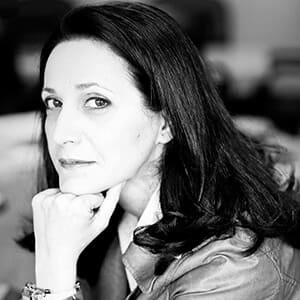
Anamaria Magri Pantea

Your organization field and mission:

Business advisory and management consulting.
Supporting effective and inclusive innovation, digital transformation and green transition in our society through targeted and tailored education and training, coaching and consulting across various sectors.

Please tell us briefly about your role in the company / at your organization:

I am one of the founders and the managing consultant.

Your interest in STEM

I was interested in these since my time in school, but afterwards I also chose to support these areas by facilitating their connection with the market and society.

My first role model was my mother, a very driver woman who by the age of 30 was the CFO of a major Romanian company with thousands of employees.

Your studies

While studying economics, finance and business administration, the pervasive role of digital technologies was not yet fully clear and hence insufficiently covered. I thus had to further apply myself and learn about these on my own. 

Combine social sciences with technology studies. For example, by stacking a BSc and MSc from these different areas. This will be crucial as we more forward in a world more and more influenced by automation, robotics and AI. We must be able to ensure that the human stay in the loop.

You at work

Having persistently pursued my own and other’s empowerment. Being ready to go the extra mile and collaborate with various stakeholders, including competitors. Being able to be both a starter and finisher of projects and initiatives.

Your point of view

Technology is nowadays a key factor of production, and the ones that are able to manage them effectively, can actually progress and thrive.

Working in and with digital technologies allows women to also improve their financial standing and security, get a seat and be better heard at the table. 

Don’t be afraid of entering the sector. Skill, reskill and upskill as necessary, leverage and build upon any other experience you have. The digital sector is not a vertical anymore but a horizontal enabler, thus allowing women to enter when any other previous work areas.

Have women equally shaping digital technologies, not just being users.

To finish with

Equity, sustainability, moral ambition.

Continuing to keep up with the fast pace of change in digital technologies and their permeation of all aspects of work and life.

Encourage and support for girls, women and people in general to wisely and effectively engage with the fast evolving digital technologies, to keep our humanity, critical thinking and the planet still able to sustain future generations. 

The current activity has been implemented in the framework of the Project: Code4Europe,
GA Number: 101158834. Official project website : 
https://codeweek.eu/ 
[ April 16, 2026 by ECWT 0 Comments ]

Marica Labrou

Your organization field and mission:

Business & Leadership Consulting – offer top-level leadership services to organizations and individuals eager to apply agile transformational strategies in a dramatically changing world.

Please tell us briefly about your role in the company / at your organization:

I founded CEL consulting company to offer top-level leadership services to organizations and individuals eager to apply agile transformational strategies in a dramatically changing world. My professionalism, passion, commitment to results, and forward-looking approach are a natural result of my authentic stance in life: fighting spirit, structured (engineering) approach, compassion, assertive resilience, and continuous learning alignment.

I have written the book “”Secrets of Success for Family Businesses in the New Era“” (2020), and have contributed to the book “”60 Leaders on Innovation“” (2021). I currently offer consulting services to medium and large family enterprises, also regarding AI strategy.

Your interest in STEM

I studied a STEM discipline — I am a Chemical Engineer. My first real professional exposure to the technology sector came when I joined HP in 1996 to take on the Product Management role for PCs and laptops. At the time, I was already a proven professional in product management, but relatively unfamiliar with the IT sector.

However, I quickly grew to love the industry — and it seemed to love me back. I went on to serve in several IT companies, both local and international, for more than 20 years, eventually moving up to the role of CEO of one of the largest IT groups in Greece.

I greatly admired Carly Fiorina, who served as Chief Executive Officer of Hewlett-Packard from 1999 to 2005 with the mission of transforming the company. She was also the first woman to lead a Fortune Top-20 company. I found her particularly inspiring for her dynamic spirit and her anti-stereotypical profile — a woman leading a global technology giant while having studied History and Philosophy.

Later on, I came across the remarkable story of Ping Fu, the Chinese-American entrepreneur who moved from China to the United States and founded Geomagic, an exceptional 3D printing company. She has also served on the U.S. National Advisory Council on Innovation and Entrepreneurship since 2010. In my view, Ping Fu is a powerful example of resilience.

Your studies

Being one of the few women studying Chemical Engineering at the time was not a problem to overcome; on the contrary, it was a source of pride and confidence. I truly enjoyed that experience.

STEM studies were still relatively uncommon for women, but those who chose that path and succeeded were widely admired. I carried that sense of confidence with me throughout my life.

The real challenges began after I graduated, when it was time to find a job as a woman engineer.

Some years ago, while speaking with young women who were considering pursuing studies in the IT sector, I shared with them what I called a “sailing decalogue” — a set of simple principles to help them navigate their journey. I believe these ideas remain just as relevant today.

The Sailing Decalogue
1. Be yourself
2. Aim high
3. Include effort in your dreams
4. Build resilience
5. Dare to fail
6. Never give up
7. Always look for the next great opportunity
8. Stay optimistic
9. Remember: we receive back what we send out
10. Enjoy life — (YOLO)

You at work

I can share some DEIS (Diversity, Equity, Inclusion, Sustainability) initiatives from previous organizations where I served as Managing Director or CEO:

1. Promoting equal opportunities in recruitment and career development, ensuring that talent and performance were the primary criteria for advancement.
2. Actively supporting women in leadership roles and encouraging more balanced representation in management teams.
3. Establishing internal mentorship programs, pairing senior women leaders with junior female employees to support their professional growth and confidence.
4. Organizing speaking events and discussions with inspiring external women leaders, who shared their experiences, challenges and lessons learned with our teams.
5. Holding monthly meetings for all women managers in the company, creating a space to discuss challenges, exchange perspectives and agree on initiatives that could further strengthen inclusion and development.
6. Creating a work environment based on respect, openness and meritocracy, where different perspectives were valued and encouraged.
7. Supporting flexible working arrangements and policies that helped employees better balance their professional and personal lives.
8. Encouraging a culture of learning, inclusion and collaboration, where people felt empowered to contribute their ideas.
9. Integrating responsible and sustainable practices into the organization’s operations and strategic priorities.
10. Last but not least, establishing a Women Managers Team to objectively oversee and support the company’s Diversity & Inclusion practices.

A few years after I had completed my studies, when I joined a global IT company as a Product Manager, I found myself in a professional environment that was overwhelmingly male-dominated. As I progressed in my career and assumed roles of greater responsibility and authority, this imbalance became even more evident — the higher I moved, the fewer women I saw in those positions.

At times, it could feel quite lonely: as a woman participating in Boards, and later as a Managing Director and CEO of large organizations. That said, I was fortunate that in business interactions I was always treated with respect and professionalism.

What I am most proud of, however, is leaving a positive “stamp” on the people I have worked with. I feel truly happy when I meet former colleagues, and they tell me that, in some way, I influenced them to make a positive change in their professional or personal lives. For me, that is the most rewarding achievement of all, especially if the recognition comes from women ex-colleagues

Your point of view

Technology — and especially Artificial Intelligence (AI) — can empower women in several powerful ways, both professionally and socially:
– Access to education and skills: AI-powered learning platforms enable continuous upskilling and easier access to STEM and leadership knowledge.
– Greater work flexibility: Digital tools and remote work allow better balance between professional and personal responsibilities.
– Entrepreneurship opportunities: Technology and AI tools help women start and scale businesses by automating tasks, and reaching global customers.
– Reducing bias: Well-designed AI systems can support more objective decisions in hiring, promotions, and evaluations.
– Amplifying women’s voices: Digital platforms allow women to share ideas and build networks, strengthening their professional influence.
– Better decision-making: AI tools help women leaders process complex information and make more informed strategic decisions.
– Mentorship and communities: Technology enables global networks for mentorship, collaboration, and support among women professionals

Follow the studies “decalogue” above plus: Never give up and never question your ability achieve even trh emore challenginf tasks. You can! Just dream and work!

Never give up and never doubt your ability to achieve even the most challenging goals. You can do it — just dream and work for it!

To finish with

Four years ago, while delivering a TEDx talk, I realized that my life and professional journey had been shaped by two seemingly opposite forces: ambition and humility. Ambition pushes me to aim high and pursue meaningful goals, while humility reminds me to keep learning, stay grounded, and respect the people around me. I try to practice both — and I draw inspiration from each of them.

Getting older usually means becoming wiser — and I hope this proves true for me as well. Of course, it can also mean becoming weaker, but I hope that moment will be delayed for as long as possible.

My challenge is to continue learning, staying curious, and remaining relevant so that I can keep contributing meaningfully to people around me.

I hope to continue being helpful to both individuals and organizations for many years to come. I would like to keep developing new and creative ideas that support my clients — especially family businesses — as they navigate the challenges of the future.

I also hope that I will finally find the time to write the book I dream about on leadership.

The current activity has been implemented in the framework of the Project: Code4Europe,
GA Number: 101158834. Official project website : 
https://codeweek.eu/ 

[ March 30, 2026 by ECWT 0 Comments ]

Ghita Ramdhiansing

Your organization field and mission:

Our Approach explains the perspective behind our work. Our products show how this perspective is applied in practice.
Interaction Intelligence is a way of understanding how interaction unfolds between people. It focuses on how meaning is shaped, how pressure influences interaction, and how patterns emerge in real situations.

Rather than starting from individual traits or intentions, Interaction Intelligence looks at interaction as a contextual system. It examines how interaction organises itself under pressure, and how small shifts in timing, framing, or response can change what becomes possible between people. This perspective brings structure to the human side of work by making interaction visible and discussable — without reducing people to profiles, traits, or types.

Please tell us briefly about your role in the company / at your organization:

I work at the intersection of business, psychology, and human interaction, helping leaders see what is actually happening when communication stalls, alignment slips, or decisions don’t land. As the founder of See Suite, I design diagnostic tools and targeted interventions that make interaction patterns measurable and actionable. These are used in six countries by organizations that need clarity under pressure, particularly during growth, change, or moments of tension.

My work focuses on one core question: How do people interact when it matters most, and what does that create?

Across executive teams and fast-growing companies, my role is to:

  • Diagnose interaction patterns that block alignment and decision quality
  • Surface strengths and friction without blame or personality labels
  • Help teams work through tension instead of around it

I am the author of People: The Manual and Good Enough to Get Ahead, both grounded in the science and practice of interaction. If you are noticing that smart people are talking but not truly aligning, this is usually where I come in.

Your interest in STEM

My interest in STEM didn’t start in a traditional way. It developed later, through working with organizations and seeing how much of what we call “people problems” are actually system problems.

I became increasingly interested in how data, technology, and structured thinking could make invisible patterns visible, especially in how people interact, make decisions, and perform under pressure.

STEM, for me, became a way to bring objectivity into complex human environments. That’s what drew me in and continues to drive my work today.

My first role model was someone in my early environment who challenged me to think for myself rather than follow what was expected. That early influence shaped how I approach problems — with curiosity, but also with a degree of skepticism.

Today, I don’t look for role models in the traditional sense. I’m inspired by people who are able to see what is really happening beneath the surface, especially in complex systems, and who act on that insight in a practical way.

That combination of clarity and execution is something I continuously aim to develop.

Your studies

One of my biggest challenges during my studies was staying engaged in environments that prioritised theory over application. I tend to learn fast when I can connect concepts to real situations, but I found it difficult when learning remained abstract.

At the same time, that pushed me to develop my own way of working. I started translating theory into practical frameworks and real-world examples, which not only helped me understand the material better but became a strength later in my career.

Another challenge was balancing depth with breadth. I am naturally curious and tend to explore topics beyond what is required, which can slow down execution. Over time, I learned to prioritise and focus on what creates the most impact.

Looking back, these challenges shaped how I work today: practical, structured, and focused on turning knowledge into something usable.

Don’t try to “fit into STEM.” Make STEM work for how you think.
The field needs different perspectives, especially people who can connect technical thinking with real-world application.
Start early with applying what you learn. Theory becomes powerful only when you use it.
And don’t underestimate how often hesitation, not ability, holds people back. If you have a point, say it. If you see something, question it.
Progress comes from participation, not from waiting until you feel certain.

You at work

We don’t treat DEIS as a separate layer — it’s built into how we approach interaction.
Our work is based on the idea that many inclusion challenges are not about intent, but about how interaction actually unfolds. Who speaks, who is heard, how decisions are made, and how pressure changes behaviour. By making these dynamics visible, we help teams create more balanced and effective environments where different perspectives can contribute. We also work across different countries and sectors, which requires us to design with diversity in mind from the start.
From a sustainability perspective, we operate primarily digitally and focus on creating tools that have long-term usability rather than one-off interventions.
As the organisation grows, formal initiatives may follow, but the principles are already part of how we work.

What I’m most proud of is building a way to make something intangible — human interaction — visible and usable.

In many organisations, performance issues are often attributed to strategy, skills, or structure, while the real friction sits in how people interact. I’ve been able to translate that invisible layer into something people can actually see, discuss, and work with in practice.

Seeing teams shift from confusion or stalled decisions to clarity and ownership — not by adding more content, but by changing the interaction, is what I value most.

That shift is subtle, but it has a direct impact on how work gets done

Your point of view

Technology doesn’t empower women by default. It creates the conditions for empowerment. The real shift happens when women move from being users to being contributors, shaping how technology is applied, questioning how systems work, and using it to solve real problems. It can remove barriers to entry, open up global opportunities, and make expertise more visible. But the key is not access, it’s participation. Empowerment starts when women actively use technology to influence outcomes, not just consume it.

Start before you feel ready.
In this field, progress doesn’t come from knowing everything, but from applying what you know and learning as you go.
Don’t stay on the sidelines observing. Get involved in real projects, ask questions, and test your thinking in practice.
Also, build your own way of approaching problems. You don’t need to fit a predefined profile to work in this sector, different perspectives are an advantage, especially when they are used actively. And finally, don’t underestimate how much clarity and consistency matter. The people who move forward are often not the ones who know the most, but the ones who engage, contribute, and keep going.

By 2030, I would like DEIS to stop being a parallel conversation and become part of how work actually happens.
Too often, it sits in policies and statements, while everyday interaction tells a different story.
Real progress would mean that organisations understand and actively shape the interaction layer — who contributes, how disagreement is handled, and how ownership is created. It would also mean moving beyond one-size-fits-all approaches, and designing environments where different perspectives are not just present, but used.
DEIS becomes real when it changes behaviour, not just language.

To finish with

I value clarity over assumption, action over intention, and substance over appearance.
In my work, that means making things visible rather than leaving them implicit, turning discussion into decisions, and focusing on what actually works in practice.
These values guide how I approach both people and problems.

One of my future challenges is scaling my work without losing depth.
Much of what I do is rooted in nuanced understanding and context, and the challenge is to translate that into tools and approaches that remain practical and relevant at scale. Another challenge is continuing to challenge assumptions — both in others and in myself, while working in environments that often prefer familiar ways of thinking.
This requires balancing clarity with adaptability, and staying close to real-world application rather than drifting into abstraction.

By 2030, I want my work to have moved from niche to recognised.
The focus remains the same, making interaction, which is often invisible, something organisations can actually work with.
I see this evolving into broader adoption of my tools, stronger integration into leadership and organisational development, and a clearer position at a strategic level.
Growth, for me, is not just reach, but relevance and impact in real decision-making environments.

The current activity has been implemented in the framework of the Project: Code4Europe,
GA Number: 101158834. Official project website : 
https://codeweek.eu/ 

[ March 24, 2026 by ECWT 0 Comments ]

Isidora Tourni

Your organization field and mission:

AI consulting and engineering. We build production AI systems for companies – LLM apps, agents, RAG pipelines – and help engineering teams figure out the hard technical stuff themselves.

Please tell us briefly about your role in the company / at your organization:

I do everything. Architecture, code, client calls, hiring decisions. It’s a small firm so I’m the one building the systems and also the one scoping the projects and advising the teams.

Your interest in STEM

Since I was a kid, I scored first in the Greek national exams, went into Electrical and Computer Engineering, and then got got into a PhD at Boston University.

My parents, they were both STEM PhDs and amazing as professionals and as human beings.

Your studies

Moving to Boston alone at 25 for a PhD. Imposter syndrome, being one of few women in my cohort, research progress being very slow, and then COVID hit at the 3rd year of my program and I also changed advisor and research area at the same time. The biggest lesson was that persistence and resilience matters for everything.

Do not be afraid to take the hard classes, and find mentors and peers in both genders in all stages of your career.

You at work

We do knowledge transfer by default – every engagement ends with the team being able to run things without us. We work remotely with teams globally, which removes geographic barriers. And as a woman-founded AI company, I actively mentor women entering the field.

Working on Google Translate’s on-device models – millions of people use that daily. And building my own company from a PhD.

Your point of view

One person with the right AI tools can now build what used to take a team often. That changes things for women everywhere, especially outside of the usual tech hubs.

More than ever today, AI is not just math and theory but the ability to have a critical mind and make decisions. Hence, being in tech needs creativity, judgment, and people who ask “should we?” not just “can we?

Women in AI leadership becoming boring – not newsworthy, just normal. And better STEM pipelines reaching Southern and Eastern Europe, where the talent exists but the access doesn’t.

To finish with

Honesty, craftsmanship, independence, sharing what I know.

Scaling the company without losing depth. Staying technical while growing as a business owner. Finding the balance between client work and building my own products.

Running a firm with its own AI products and having helped a real number of women get into technical AI roles. And ideally working on things I care deeply about beyond just the technology itself.

The current activity has been implemented in the framework of the Project: Code4Europe,
GA Number: 101158834. Official project website : 
https://codeweek.eu/ 
[ February 23, 2026 by ECWT 0 Comments ]

Marianne Andersen

Your organization field and mission:

Everything within STEM Science technology engineering mathematics.

Please tell us briefly about your role in the company / at your organization:

I founded High5Girls in 2018 as I have seen a lack of women in tech working as an engineer for 30 years in global corporate companies within medtech – and having been the only woman in the class when I studied engineering.

Your interest in STEM

After gymnasia where I studied languages when I had a young STEM teacher in physics, chemistry, programming and mathematics.

Your studies

I love to learn – when I studied electronics and was the only girl in the class I had to find some friends in the class… but they were all good guys and the teachers too.

Just do it – and if you need support from other women contact High5Girls or other organizations that can give you the help you need. And if you do not need any help then I think you have an obligation to help those girls/ women that need help to be in a male dominated sector.

You at work

Our focus is to get girls/ women interested in STEM – and not only that – we have learned that many girls keep away from STEM because they think it is for boys only or they think they are not good enought despite they are. Apart from this we always work with UN 17 goals whenever we do activities ( better health, clean water etc).

I have had an amazing career in Corporate and I loved it. 8 years ago I got tired of corporate life and formed High5Girls which has become an amazing association with lots of amazing supporters, role models, happy girls and parents. Right now I am very proud of this achievement.

Your point of view

It can give women a nice income – and if we get more women into the “stearing room” we will have more solution to women´s issues like health care issues. Also we need women in AI in order to change status quo as AI just tell things as they are today and then nothing will be changed.

It is amazing to work with STEM – interesting, challenging, it is about helping people and you are payed a good salary.

Equality 100% taking into consideration that men and women are not equal but we should have equal rights, salary for same jobs etc.

To finish with

Honesty, If you want a change – make it or do what you can to change it , be responsible, be good to other people, take good care of the nature.

To get more girls to see STEM is for them. To make teachers and parents se they have a huge responsibility in making this change.

I hope in 2030 High5Girls are in 10 different EU countries.

The current activity has been implemented in the framework of the Project: Code4Europe,
GA Number: 101158834. Official project website : 
https://codeweek.eu/